
Great Martyr
Lazar of Serbia
Prince of Serbia
Ruler of Serbia, killed in the battle of Kosovo Field in 1389 and honored as a martyr.
- Feast
- June 15old style June 28
- Reposed
- 138914th century
- Place
- Kosovo Field
- Order
- Great Martyrs
Life
Saint Prince Lazar of Serbia was the ruler of the strongest Serbian state that remained after the break-up of the empire of Stefan Dušan. He died in the battle of Kosovo Field on 15 June 1389 and is honoured as a martyr. The Serbian Church commemorates him on 15 June, which is 28 June in the civil calendar, the day called Vidovdan.
Beginnings
He was born around 1329 in the fortress of Prilepac, near Novo Brdo. His father, Pribac, was a logothete at the court of Tsar Stefan Dušan. Lazar held at court the office of stavilac, a modest rank at the ruler's table, but one that kept him close to the tsar. His family was not of the Nemanjić dynasty. Around 1353 he married Milica, who according to later genealogies descended from the Nemanjić line. They had at least eight children, among them Stefan Lazarević, his successor.
After Dušan died in 1355 the empire fell apart and the great nobles began to act each for himself. Lazar left the court around 1363 to 1365 and became a regional lord.
The prince
In 1371 the Turks destroyed the army of the Mrnjavčević brothers at Marica, and in December of that year Tsar Uroš, the last of the Nemanjić line, died. Lazar then took Priština and Novo Brdo and recovered Prilepac. In 1373, with Ban Tvrtko of Bosnia, he defeated Nikola Altomanović and became the most powerful lord in the former empire. His state, known to historians as Moravian Serbia, covered the basins of the Great, West and South Morava. The people later called him Tsar Lazar, but he held only the title of prince.
Lazar supported the Church. Since 1350 the Serbian Church had been in schism with the Patriarchate of Constantinople. The Athonite monk Isaiah urged Lazar to work for reconciliation, and in 1375 a delegation obtained the readmission of the Serbian Church to communion. Lazar founded the monastery of Ravanica, completed in 1381 and meant as his burial place, the church of Saint Stephen at Kruševac, called Lazarica, and the monastery of Gornjak. He was one of the founders of the Romanian monasteries of Tismana and Vodița and paid for building works at Hilandar and Saint Panteleimon on Mount Athos. His lands were a refuge for monks fleeing the Turks.
Kosovo
Sultan Murad I entered Serbia in the summer of 1389 with a large army. Lazar gathered his forces, with help from Vuk Branković and King Tvrtko, and met him on Kosovo Field near Priština. The battle was fought on 15 June 1389. Both Lazar and Murad lost their lives. According to tradition the sultan was killed by the Serbian nobleman Miloš Obilić, who pretended to be a deserter. Patriarch Danilo III and writers of the time say Lazar was captured and beheaded by the Turks. The sources are incomplete, but the battle seems to have had no clear victor. The heavy losses, however, weakened only Serbia, and his widow Milica, who ruled as regent for their son, accepted Ottoman suzerainty in 1390.
In the epic songs, the night before the battle a falcon brought Lazar the choice between the earthly kingdom and the heavenly one, and he chose the heavenly. This is poetic tradition, not a historical report.
Veneration
Lazar was first buried at Priština, in the church of the Ascension. In 1390 or 1391 his relics were moved to Ravanica in the presence of the high clergy of the Serbian Church, among them Patriarch Danilo III. It is thought that he was glorified at that time, though no account of the canonization was written. He was the first layman recognized as a saint after the centuries of the Nemanjić saints. Services and eulogies written in Serbia between 1389 and 1420, among them the Praise of Prince Lazar by the nun Jefimija, spread his veneration.
Under Ottoman rule the cult shrank to the area around Ravanica. In 1690, at the Great Migration of the Serbs, the monks took the relics with them, first to Szentendre and in 1697 to the monastery of Vrdnik-Ravanica on Fruška Gora. In 1942 they were taken to the cathedral in Belgrade for safety, and in 1989 they were returned to Ravanica, where they remain. Lazar stays in the memory of the Serbian people as a symbol of sacrifice for faith and nation.
Commemorated the same day June 15
 AugustineSaint · Bishop of HippoJun 15
 JeromeVenerable · Translator of the ScripturesJun 15
 AmosProphet · The ProphetJun 15
 Michael I of KyivSaint · First Metropolitan of KyivJun 15
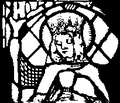 Eadburh of WinchesterVenerable · Nun of WinchesterJun 15
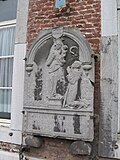 Landelin of CrespinVenerable · Abbot of CrespinJun 15
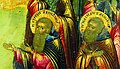 Cassian of AvnezhVenerable Martyr · Monk on the Sukhona RiverJun 15
- Gregory of AvnezhVenerable Martyr · Monk on the Sukhona RiverJun 15
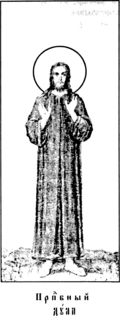 Doulas of EgyptPassion-Bearer · Monk in EgyptJun 15
- OrsisiusVenerableJun 15
 Ephrem of SerbiaSaint · Patriarch of SerbiaJun 15
 Simeon of NovgorodSaint · Archbishop of NovgorodJun 15