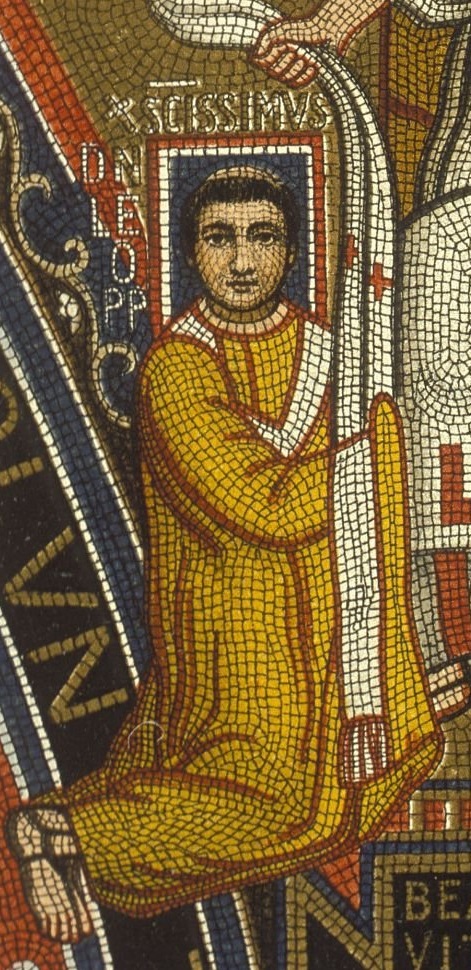
Saint
Leo III of Rome
Bishop of Rome
Bishop of Rome from 795 to 816, who crowned Charlemagne as emperor in the year 800.
Life
Pope Leo III of Rome was bishop of Rome from 26 December 795 to 12 June 816. He is known above all for crowning Charlemagne emperor and for refusing to let the word "Filioque" be added to the Creed. His status should be stated plainly: the Roman Catholic Church entered him in its martyrology in 1673, and no Orthodox patriarchate has formally glorified him; some English-language Orthodox calendars nevertheless list him on 12 June as a saint of the undivided Church.
Election and the attack of 799
He was a Roman, the son of Atzuppius and Elizabeth. Pope Adrian I made him cardinal-priest of Santa Susanna, and he also cared for the papal treasury. He was elected on 26 December 795, the day Adrian was buried, and consecrated the next day. He wrote at once to Charlemagne, king of the Franks, and received gifts from the treasure taken from the Avars; with these means he helped the churches and charitable institutions of Rome.
On 25 April 799, during the procession of the Greater Litanies, relatives and partisans of Adrian attacked him and tried to cut out his eyes and tongue. He escaped under the protection of the duke of Spoleto and went to Charlemagne at Paderborn, who received him with honour and sent him back to Rome. His enemies accused him of adultery and perjury. In 800 Charlemagne came to Rome, and on 23 December Leo cleared himself by a solemn oath; according to OrthodoxWiki, the death sentence on the conspirators was commuted to exile at the pope's request.
The coronation of Charlemagne
On Christmas Day 800 Leo placed the imperial crown on Charlemagne's head in the basilica of Saint Peter. At Constantinople the act caused displeasure; the throne was then held by Empress Irene, and the Byzantines were in no position to resist.
The Creed without addition
On the procession of the Holy Spirit Leo held the Western teaching of his day, that He proceeds also from the Son, saying that it is forbidden not to believe so great a mystery. Yet he refused to alter the text of the Creed, which he regarded as the fruit of the divine illumination of the Fathers of the council, and he would not allow Charlemagne's delegates, who came to Rome in 809, to add to it. He placed two silver shields with the Creed without the addition, in Greek and Latin, at the entrance of Saint Peter's, with an inscription that he set them there out of love and as a safeguard of the faith. The Eastern patriarchs in 1848 and the Ecumenical Patriarchate in 1895 both recalled him with praise for this.
Other deeds and repose
He settled disputes between the archbishops of York and Canterbury, restored Lichfield as an ordinary diocese in 803, and helped the monks of Constantinople, led by Theodore the Studite, who had been exiled for resisting imperial tyranny. He reposed on 12 June 816 and was buried in Saint Peter's, later in a tomb shared with the first four popes named Leo.
Commemorated the same day June 12
 Onuphrius the GreatVenerable · Hermit of the ThebaidJun 12
 John TornikeVenerable · Georgian general, monk at IvironJun 12
 Anna of KashinRight-Believing · Princess of TverJun 12
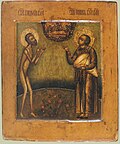 John of MoscowFool-for-Christ · Fool for ChristJun 12
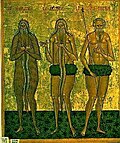 Peter the AthoniteVenerable · First hermit of Mount AthosJun 12
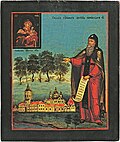 Arsenius of KonevetsVenerable · Founder of Konevets MonasteryJun 12
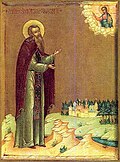 Stephen of KomelVenerable · Founder of Saint Nicholas MonasteryJun 12
- Auxentius of VologdaVenerableJun 12
- Onuphrius of MalskVenerableJun 12
- Onuphrius of VologdaVenerableJun 12
- Agatan of Disert AgatainSaintJun 12
- AmphionConfessor · Bishop and confessor of CiliciaJun 12