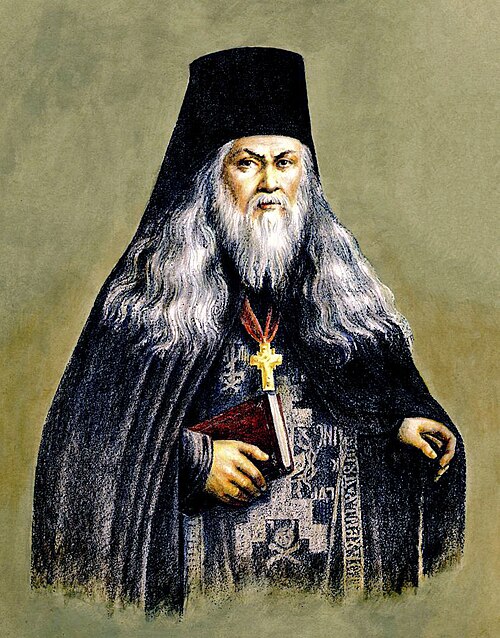
Venerable
Leo of Optina
Elder of Optina Monastery
Hieroschemamonk and elder at Optina, regarded as the founder of the eldership there; died in 1841.
- Feast
- October 11old style October 24
- Reposed
- 184119th century
- Place
- Optina Pustyn
- Order
- Venerables
Life
Saint Leo (Lev), in monastic life Leonid, of Optina (1768-1841) was a hieroschemamonk and the first elder of Optina Monastery, the founder of eldership in that community. Even in his lifetime he was honoured for his discernment and for many healings and signs.
Early life and the road to monasticism
He was born in Karachev, in 1768 according to some sources and about 1772 according to others, in the townsman family of Danila Vasilyevich Nagolkin and Ulita Egorovna. In his youth he was a clerk to a merchant of Bolkhov who traded in hemp and hemp oil. Quick and capable, he often travelled to the villages. On one of these journeys a wolf sprang into his sleigh and tore a piece of flesh from his calf. The young man, very strong, managed to strangle the beast. The wound healed, but he remained lame all his life.
In 1797, aged twenty-nine, he left the world and entered Optina Monastery as a novice, just as it was being reborn. After two years, being ill, he moved to the Belye Bereg monastery in the diocese of Orel, where Hieromonk Basil Kiskin was abbot. There he trained in obedience, patience and the labours of the community. In 1801 he was tonsured with the name Leonid. He was ordained deacon on 22 December and priest on 24 December of the same year.
Spiritual apprenticeship
His zealous obedience drew the attention of his superiors. He spent some time at Cholnsk monastery, where he met Schemamonk Theodore, a disciple of Saint Paisius Velichkovsky, about ten years older than he and also from Karachev. From him he learned much about spiritual struggle and the acquiring of the grace of the Holy Spirit. Theodore's disciple, Hieroschemamonk Cleopas, stayed at his side.
In 1804 Bishop Dorotheus of Orel appointed him abbot in place of Basil. Theodore also came to Belye Bereg, and in 1808 Leonid gave up the abbacy, to live in solitude, settled with Theodore and Cleopas in a cell a mile from the monastery, and received the schema with the name Leo. People began to come to them, so they moved away in 1809 and then to Valaam (1811 or 1812), to the All Saints Skete. In 1816 Cleopas died, and in 1817 Leo and Theodore moved to the monastery of Saint Alexander of Svir. Theodore reposed on Bright Friday, 7 April 1822. Looking for a more secluded place, Leo came to Ploshchansk Hermitage, where he met Father Macarius.
Optina and the founding of eldership
Invited by Father Moses, he arrived once more at Optina in April 1829 with six disciples. He was given a cell in the skete near the apiary. His arrival began a new chapter in the monastery's history, for he brought eldership there, the spiritual guidance of a seasoned elder, a path known from the deserts of Egypt and Palestine, then from Mount Athos and later from Russia. Father Leo had received this teaching from Theodore, the disciple of Paisius. Through him and his disciple Saint Macarius, who came to Optina in 1834, eldership took root there.
His wisdom and counsel made him known beyond the monastery. People of every condition came to him, and he healed their spiritual wounds with the skill and experience gained in thirty years of asceticism. Among his disciples were the future elders Macarius and Ambrose of Optina and, at the end of the 1820s, Dmitry Brianchaninov, who became Saint Ignatius, Bishop of the Caucasus. In 1836 he was confirmed as confessor of the monastery.
Not everyone understood him. In 1835-1836 some monks, who did not grasp what eldership was, complained to the bishop that the crowds of visitors disturbed the peace of the monastery. In 1841 he was drawn into a quarrel among the nuns of a nearby convent over his spiritual counsel, and Mother Anthia and another sister were unjustly expelled. Metropolitan Philaret of Kiev intervened, and the sisters were received back on 4 October 1841.
His end
In September 1841 his strength began to fail. He received Holy Unction on 15 September and prepared for death. He received Communion on 28 September and, taking no food and only a little water, was sustained by the Holy Mysteries alone. On the evening of 11 October 1841 (old style) he closed his eyes and gave his soul to God. The funeral was served on 13 October by Father Moses.
His prayer for those who died unbaptized, without repentance, or by their own hand has remained well known: a petition to the Lord to seek the lost soul of His servant and to have mercy if it is possible, leaving all to His holy will. His counsels are simple: attend to yourself rather than judging the deeds of others; beware of attachment to the world; live simply, and God will not forsake you. Saint Leo is commemorated on 11 October, the day of his repose.
Commemorated the same day October 11
 Philip the DeaconApostle · One of the Seven DeaconsOct 11
 Bruno the GreatSaint · Archbishop of CologneOct 11
 Philotheus KokkinosSaint · Patriarch of ConstantinopleOct 11
- Arsacius of TarsusSaintOct 11
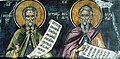 Theodore and Theophanes the BrandedHoly Confessors · Brothers from JerusalemOct 11
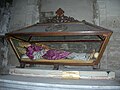 Firminus of UzèsSaint · Bishop of UzèsOct 11
- Sisinnius ISaint · Patriarch of ConstantinopleOct 11
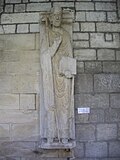 Sanctinus of MeauxSaint · Bishop of Meaux and VerdunOct 11
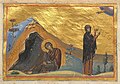 Zenaida and PhilonellaHoly Unmercenary Healers · Unmercenary physicians of TarsusOct 11
 Nicasius of RouenHieromartyr · Apostle of the VexinOct 11
 Theophanes the BrandedConfessor · Metropolitan of NicaeaOct 11
 John the God-pleasingVenerable · Monk of the Kiev CavesOct 11