Holy Unmercenary Healers
Zenaida and Philonella
Unmercenary physicians of Tarsus
Sisters and physicians of Tarsus who healed the sick without payment, after the Apostle Luke.
- Feast
- October 11old style October 24
- Era
- unknown
- Place
- Ancient Thessaly
- Order
- Unmercenary Healers
Life
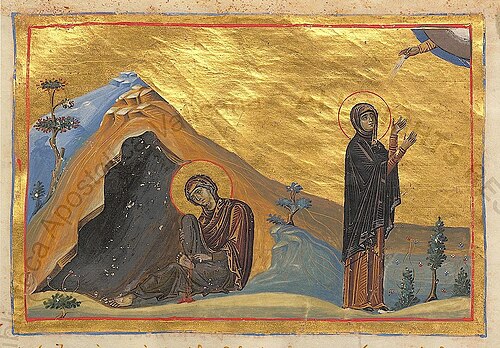
Saints Zenaida and Philonella (Philonilla) were sisters of Tarsus, regarded by tradition as the first Christian women physicians after the Evangelist Luke and among the first unmercenary physicians, that is, doctors who did not take payment from the sick. They are commemorated on 11 October by the old calendar (24 October), and Catholics commemorate them on 11 October by the Gregorian calendar. The data on their life and end differ between the sources.
They were sisters from a learned Jewish family and are said to have been relatives of the Apostle Paul. They were instructed and baptized in the Christian faith by their brother Jason, bishop in their city, Tarsus. Entering the philosophical school of Tarsus, they devoted themselves to the study of medicine and, when they had finished their studies, moved to the mountains around Pelion, near Demetrias in Thessaly, a region known for healing springs and temples of Asclepius. The physicians there served the rich, charging large sums, and increased their income by selling magical amulets. The sisters set themselves against the custom. Finding a cave with a mineral spring, they raised a chapel and cells and opened a clinic in which they treated whoever came, without asking payment. According to later accounts, Philonella devoted herself to experimental medicine, trying to separate effective remedies from superstition, and Zenaida to the illnesses of children.
According to a long anonymous Greek Life (BHG 1883), after Paul's preaching, Zenaida left her sister and settled in a cave on a mountain north of Demetrias. She led the life of a hermit, healed the sick and those possessed by unclean spirits, anointing them with oil. Leaving her dwelling once, she pricked her foot with a thorn and died on the spot. After her sister's departure Philonella stayed in the house, led a pious life, received the gift of working miracles and fell asleep in peace. In later Greek sources both sisters were martyrs, stoned to death; in the Lives of the Saints of Saint Demetrius of Rostov the reports of martyrdom and of a peaceful end are mixed. In the English source, by one version they were stoned to death by pagans on the same night, and by another both died in peace, Philonella surviving her sister by some years.
In Russian painters' manuals of the eighteenth century Zenaida holds a scroll with a prayer to the God of our fathers, giving thanks that He always hears her, for the sick and those tormented by evil spirits. The name Zenaida comes from the Greek and means of Zeus; the fact that she became a Christian and a venerated saint kept the name in use in Christian countries, its pagan origin forgotten.
Commemorated the same day October 11
 Philip the DeaconApostle · One of the Seven DeaconsOct 11
 Bruno the GreatSaint · Archbishop of CologneOct 11
 Philotheus KokkinosSaint · Patriarch of ConstantinopleOct 11
- Arsacius of TarsusSaintOct 11
 Leo of OptinaVenerable · Elder of Optina MonasteryOct 11
 Theodore and Theophanes the BrandedHoly Confessors · Brothers from JerusalemOct 11
 Firminus of UzèsSaint · Bishop of UzèsOct 11
- Sisinnius ISaint · Patriarch of ConstantinopleOct 11
 Sanctinus of MeauxSaint · Bishop of Meaux and VerdunOct 11
 Nicasius of RouenHieromartyr · Apostle of the VexinOct 11
 Theophanes the BrandedConfessor · Metropolitan of NicaeaOct 11
 John the God-pleasingVenerable · Monk of the Kiev CavesOct 11