Confessor
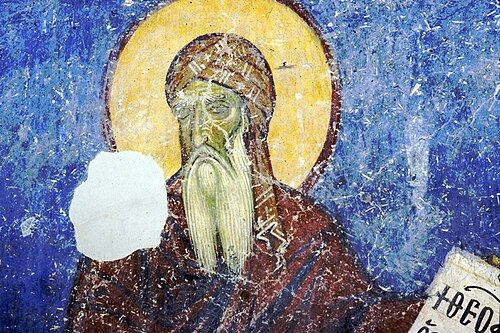
Theophanes the Branded
Metropolitan of Nicaea
Byzantine monk and hymnographer, a confessor in the age of iconoclasm, later Metropolitan of Nicaea.
- Feast
- October 11old style October 24
- Reposed
- 8459th century
- Place
- Nicaea
- Order
- Confessors
Life
Saint Theophanes the Branded (the Graptos, from Greek "written upon") was a Byzantine monk and hymnographer, a confessor of the veneration of the holy icons in the second period of iconoclasm, then metropolitan of Nicaea, from 842 until his death in 845. He is commemorated on 11 October. His brother, Saint Theodore the Branded, is commemorated on 27 December, and both, like Theophanes, in the Roman Catholic Church.
The brothers from Jerusalem
Theophanes (about 778 to 845) and his brother Theodore (about 775 to about 842) were both from Jerusalem, sons of the Venerable priest Jonah. They grew up at Jerusalem, entered together the monastery of Saint Sabbas near Bethlehem and became disciples of Michael the Synkellos, later syncellus of the Patriarch of Jerusalem. In 813 Michael and his two disciples left Jerusalem, sent by the patriarch to support the pope in his stand against the Franks over the Filioque, recently introduced at Jerusalem by some Western Benedictines. On the way they reached Constantinople, entered a monastery and, against the emperor Leo V (813 to 820), defended the veneration of icons vigorously. But the Seventh Ecumenical Council had condemned iconoclasm as a heresy, so in 815 they were detained, interrogated, beaten and imprisoned by order of Emperor Leo the Armenian. In the whole second period of iconoclasm, nearly thirty years, they suffered at various times exile, imprisonment and torture.
The Branded
Under Emperor Michael II (820 to 829) they were brought to the monastery of Sosthenes on the Bosphorus. His successor Theophilus, tyrannical and iconoclast (829 to 842), exiled them again, but in 836 recalled them to the capital, imprisoned them in the Praetorium, scourged them several times and ordered twelve lines of verse to be cut or written into their skin; hence the nickname "the Branded" (Graptoi, "written upon"). Theophilus beat them with his own hand and ordered them branded on their faces with twelve iambic verses "badly composed", the emperor's own words, though metrically correct. The ordeal took two days. They were thrown into a prison in the town of Apamea in Bithynia, where Theodore died of his wounds in 841. Michael and Theophanes lived to see the triumph of Orthodoxy over iconoclasm in 842, in the reign of Empress Theodora. Michael was made abbot of the Chora monastery, where he died in January 846, two months after Theophanes.
Metropolitan and hymnographer
Theophanes was consecrated metropolitan of Nicaea by Patriarch Methodius in 842 and governed it until his death, in 845. He wrote many religious poems, among them one on his dead brother. As a hymnographer he belongs to the tradition of the Lavra of Saint Sabbas, which includes many of the great writers of canons, among them Saints Andrew of Crete, Cosmas of Maiuma and John of Damascus. Together with Joseph the Hymnographer he is the major contributor to the liturgical book called the Parakletike: his contribution consists of sets of canons in all eight tones, for the Angels and for the departed. Not all are "signed" in an acrostic, but the canon for the Angels in Tone 1 has as acrostic "The first hymn of Theophanes for the Angels", and that for the departed in Tone 5 "The fifth canon of Theophanes for the dead". Unfortunately none of these texts has been critically edited, and the printed service books often differ widely in their ascriptions. Theodore the Branded was cited frequently in the fourteenth century in the polemics of the Hesychast controversy, beginning with Nikephoros Gregoras, but the anti-iconoclast work attributed to him was in fact written by Nikephoros of Constantinople.
Commemorated the same day October 11
 Philip the DeaconApostle · One of the Seven DeaconsOct 11
 Bruno the GreatSaint · Archbishop of CologneOct 11
 Philotheus KokkinosSaint · Patriarch of ConstantinopleOct 11
- Arsacius of TarsusSaintOct 11
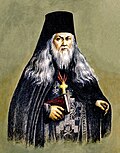 Leo of OptinaVenerable · Elder of Optina MonasteryOct 11
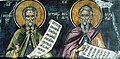 Theodore and Theophanes the BrandedHoly Confessors · Brothers from JerusalemOct 11
 Firminus of UzèsSaint · Bishop of UzèsOct 11
- Sisinnius ISaint · Patriarch of ConstantinopleOct 11
 Sanctinus of MeauxSaint · Bishop of Meaux and VerdunOct 11
 Zenaida and PhilonellaHoly Unmercenary Healers · Unmercenary physicians of TarsusOct 11
 Nicasius of RouenHieromartyr · Apostle of the VexinOct 11
 John the God-pleasingVenerable · Monk of the Kiev CavesOct 11