Saint
Makarios of Glinsk Hermitage
Russian elder of the Glinsk Hermitage, honored in the Russian Church.
- Feast
- February 21old style March 6
- Reposed
- 186419th century
- Place
- Glinsk Hermitage
Life
Saint Makarios of Glinsk Hermitage, an elder and hieromonk, born Matthew Terentievich Sharov, was born in 1802 into a wealthy merchant family in the city of Efremov in Tula Province. His mother was deeply devout and raised her children in the fear of God. Following his parents' example, Matthew was humble and restrained, read spiritual books, avoided worldly fuss, diligently went to church and often prayed at home. In 1822, at the age of twenty, he decided to forsake the world and entered Glinsk Hermitage under Abbot Philaretos (Danielevsky), a man known for the holiness of his life.
Novice and priest
At Glinsk Matthew found a knowledgeable guide who had learned from experience how hard the path of salvation is. He entrusted himself to him in complete obedience. At first he was assigned to the apiary, where the abbot often visited him and instructed him as a father. He was enrolled in the brotherhood in 1828 and tonsured a monk on 16 December 1833, receiving the name Makarios. Keeping watch over his soul, he closed his heart to the passions with noetic prayer. He was ordained priest on 29 February 1839 and served with a special reverence that he tried to hide. On 31 March 1841 the hermitage lost its abbot, and Makarios lost his "earthly guardian angel," but the seeds the elder had sown bore fruit a hundredfold.
Dean and elder
He studied the Holy Scriptures and had great knowledge of the Christian and monastic virtues. In 1844 he was appointed dean of the monastery and bore the heavy duty with humility and love. He divided his love in half, as it were, one half for the abbot, whose orders he held sacred, the other for the brethren. When some refused their assigned obediences out of stubbornness, he did the work himself, often making the bread dough at night, and he tried to conceal their weaknesses from the abbot, which often brought him trouble. He begged them with tears to correct themselves, and his words, coming from a heart aflame with love, won them over.
Because his health had been weakened by his labors, at his own request he was relieved of his duties in June 1848. After that he did not leave his cell except to go to church and, rarely, for solitary walks in the woods, where he would place a book on a tree stump and kneel before it in prayer. Yet his cell was always full of people from Matins to Vespers: peasants and nobles, simple and learned. He received every request patiently, his teaching was simple and full of humility, and those who came sorrowing left glad. Many wrote to him for advice. He had the gift of clairvoyance; his disciples tell that he would call someone out of the crowd by name without ever having seen him, and knew his future.
Repose and veneration
In June 1863 he received the great schema, keeping the same name, and lived with increased labor to the end, standing through the services on his crutch. Ill, he reposed peacefully on 21 February 1864, aged sixty-three, after receiving the Holy Mysteries. After his death many received help at his grave. A poor woman whose husband had lain ill for four years saw the elder in a dream, who told her to ask for a moleben to the Mother of God at Glinsk. The husband was healed during the moleben. To this day people take dust and rain water from his gravestone with faith.
On 16 August 2008, at the Glinsk Nativity of the Mother of God Hermitage, he was glorified for local veneration together with the other venerable elders of Glinsk, and in 2017 the Council of Bishops of the Russian Orthodox Church decided to add his name to the Menaion. He is commemorated on 21 February (new style; 6 March on the old calendar).
Commemorated the same day February 21
 Pepin of LandenRight-Believing · Mayor of the Palace of AustrasiaFeb 21
 Eustathius of AntiochSaint · Patriarch of AntiochFeb 21
- John III ScholasticusSaint · Patriarch of ConstantinopleFeb 21
 Zacharias of JerusalemSaint · Patriarch of JerusalemFeb 21
 Germanus of GranfeldenVenerable Martyr · First abbot of Moutier-GrandvalFeb 21
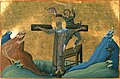 Peter of CapitoliasHieromartyr · Priest of CapitoliasFeb 21
- George of AmastrisSaint · Bishop of AmastrisFeb 21
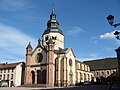 GondelbertVenerable · Founder of Senones AbbeyFeb 21
- Felix of MetzSaint · Bishop of MetzFeb 21
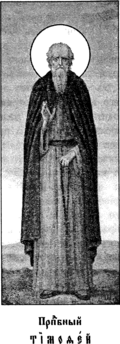 Timothy of SymbolaVenerable · Hermit of BithyniaFeb 21
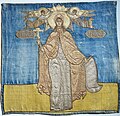 IreneSaintFeb 21
 Avitus II of ClermontSaint · Bishop of ClermontFeb 21