Saint
Marcus of Jerusalem
Bishop of Jerusalem
First non-Jewish bishop of Jerusalem (Aelia Capitolina), serving from 135 to 156.
- Feast
- October 22old style November 4
- Reposed
- 1562nd century
- Place
- Jerusalem
- Order
- Hierarchs
Life
Saint Mark (or Mahalia) was the sixteenth bishop of Jerusalem, in office from 135 until his death in 156, and the first non-Jewish bishop of Jerusalem, then renamed Aelia Capitolina. His commemoration is on 22 October, according to the Roman Martyrology and the Serbian and Ukrainian sources. His veneration comes mainly through the Western martyrologies: the Greek source observes that the Roman Martyrology calls him a martyr on 22 October, but this does not prove that he was a martyr: in the ancient Church he had no liturgical cult, and his name entered the Martyrology of Ado.
The emperor Hadrian forbade Jews to live at Aelia Capitolina after the Bar Kokhba revolt (132 to 136) was put down, and only Gentiles could inhabit it, so the city became in effect a Roman colony. The Christians of Jewish origin were pushed aside; they were driven out of Jerusalem to Pella, and the bishops of Jerusalem were no longer from among the Jewish Christians but were chosen Greeks. According to the Greek source, Mark was elected by the Christians of Greek origin, in 134, after the Gentile Christians coming from Pella were allowed to settle in Jerusalem. According to the Serbian source, he was elected in 135 bishop of Aelia Capitolina by the metropolitan of Caesarea of Palestine, still during the episcopate of Judas of Jerusalem, great-grandnephew of the Lord's brother.
It is said that, when Hadrian forbade Jews to enter Aelia Capitolina, Mark persuaded most of his flock to cease to keep Jewish laws and customs, and so they gained entry to the city. The few who persevered in Jewish ways became the Ebionites. His secretary was traditionally thought to have been Aristo of Pella, but the evidence of the Armenian chronicler Movses Khorenatsi is insufficient, late (seventh century) and unclear. It is not known when his episcopate ended. He may have died in 156, in the time of Antoninus Pius. His successor was Bishop Cassianus of Jerusalem.
Commemorated the same day October 22
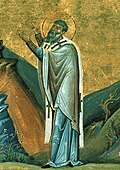 Abercius of HierapolisSaint · Bishop of HierapolisOct 22
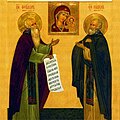 Paul of RostovVenerable · Abbot of Boris and Gleb MonasteryOct 22
- Theodore of RostovVenerable · First abbot of Boris and Gleb MonasteryOct 22
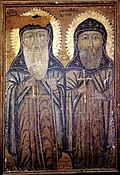 Abib and ApolloHoly Martyrs · Ascetics of AkhmimOct 22
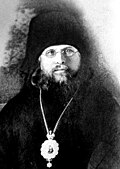 Seraphim SamoylovichHieromartyr · Archbishop of UglichOct 22
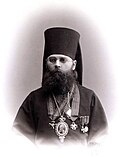 Nicodemus KononovHieromartyr · Bishop of BelgorodOct 22
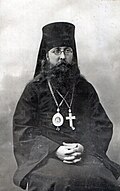 Gregory LebedevHieromartyr · Bishop of ShlisselburgOct 22
- Solarius of LuniHieromartyr · Bishop of LuniOct 22
- Symmachus of CapuaSaint · Bishop of CapuaOct 22
- Alexander AndreyevHieromartyr · ArchpriestOct 22
- Mina ShelaevVenerable Martyr · ArchimandriteOct 22
- Nicholas BogoslovskyHieromartyr · ArchpriestOct 22