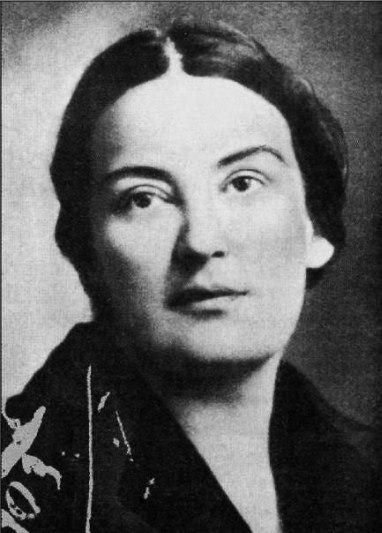
Venerable Martyr
Maria of Paris
Nun and member of the Resistance
Russian nun in France, a poet and member of the French Resistance, who died at Ravensbrück in 1945.
Life
Saint Maria of Paris, venerable martyr (born Elizaveta Yurievna Pilenko, later Skobtsova), was a Russian nun in France, a poet and a member of the French Resistance, who died in the Ravensbrück camp on 31 March 1945. She is also known as Mother Maria. She was glorified by the Ecumenical Patriarchate in 2004, and her name is also on the list of the Righteous Among the Nations at Yad Vashem.
Youth
She was born on 8 December 1891 (20 December, New Style) in Riga, into a noble family of jurists. Her father died in 1906, and she said later that she lost her faith in God then. Her mother moved the family to St Petersburg, where Elizaveta entered radical intellectual and literary circles, met poets such as Alexander Blok and, in 1910, married Dmitry Kuzmin-Karavaev, a former Bolshevik. In 1912 she published her first volume of poems, Scythian Shards. The marriage ended in 1913. Her daughter Gaiana was born of it.
During the civil war she drew close to Christ again, through contemplating His humanity. She joined the Socialist-Revolutionary party and in 1918 was elected mayor of the town of Anapa in southern Russia. The Whites tried her as a Bolshevik, but the judge, her former teacher Daniil Skobtsov, acquitted her; the two fell in love and were married.
Exile and monastic calling
When the political situation changed again, the family fled: first to Georgia, where her son Yuri was born, then to Yugoslavia, where her daughter Anastasia was born, and at last to Paris, in 1923. She began to study theology and to work in the service of the poor. In 1926 Anastasia died of influenza. The marriage fell apart, Yuri stayed with his father, and Gaiana was sent to boarding school in Belgium. Elizaveta moved to the centre of Paris to be near those in greatest need. The bishop urged her to become a nun, and she agreed only on condition that she need not live in a monastery cut off from the world. In 1932, with Daniil Skobtsov's consent, an ecclesiastical dissolution of the marriage was obtained, and she was tonsured with the name Maria. Her confessor was Father Sergei Bulgakov. Later Father Dimitri Klepinin came as chaplain of the house.
Mother Maria made a rented house in Paris her convent, with an open door for refugees, the needy and the lonely; it was also a place of intellectual and theological discussion. With her, service to the poor and theology went hand in hand.
Martyrdom
After the fall of France, in 1940, Jews began to come to her house, asking for baptismal certificates, which Father Dimitri gave them. Many found shelter there, and others were helped to flee the country. In the end the house was closed, and Mother Maria, Father Dimitri, Yuri and her mother Sophia were arrested by the Gestapo. Father Dimitri and Yuri died in the Dora camp. Mother Maria was taken to Ravensbrück, where she was sent to the gas chamber on 31 March 1945, Holy Saturday. In July 1942, when the order was issued for Jews to wear the yellow star, she wrote the poem Israel.
Veneration
The Holy Synod of the Ecumenical Patriarchate glorified her on 16 January 2004, and on 1 and 2 May 2004, in the Cathedral of Saint Alexander Nevsky in Paris, her glorification took place together with Father Dimitri, Yuri and Ilya Fondaminsky. Their feast day is 20 July. In 2020 a memorial plaque to her was unveiled at the Russian cemetery of Sainte-Geneviève-des-Bois. In Calais a house and an association for refugees bear her name.
Commemorated the same day July 20
 ElijahProphet · The TishbiteJul 20
 Ilia ChavchavadzeMartyr · Georgian writer and public figureJul 20
 Aurelius of CarthageSaint · Bishop of CarthageJul 20
 Elisaeus of Caucasian AlbaniaSaint · First bishop of Caucasian AlbaniaJul 20
- Flavian II of AntiochSaint · Patriarch of AntiochJul 20
 Dimitri KlepininHieromartyr · Russian priest of ParisJul 20
 Lucanus of SabionaSaint · Bishop of SabionaJul 20
 Alexis of UgineRighteous · Priest at Ugine, FranceJul 20
- Yuri SkobtsovMartyr · SubdeaconJul 20
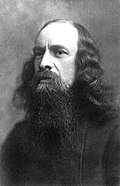 John Steblin-KamenskyHieromartyr · ArchpriestJul 20
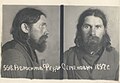 Theodore AbrosimovVenerable Martyr · Novice of PechengaJul 20
- Alexander ArkhangelskyHieromartyrJul 20