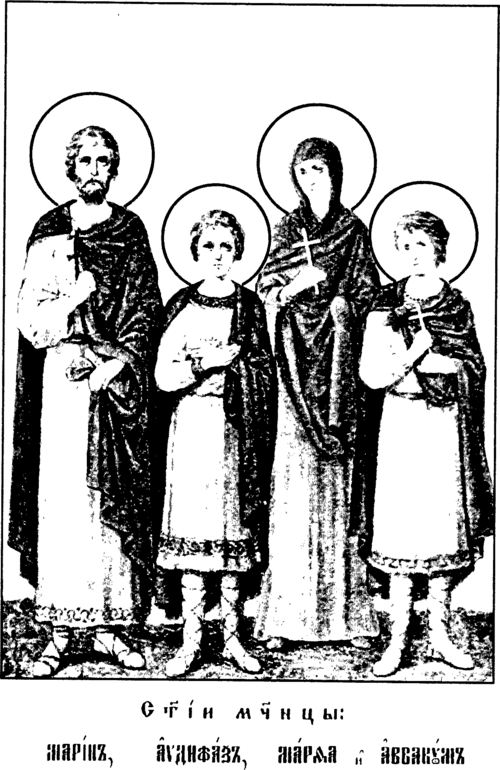
Holy Martyrs
Marius, Martha, Audifax and Abachum
A family from Persia, husband, wife and two sons, who confessed Christ in Rome and were put to death around 270.
- Feast
- January 19old style February 1
- Era
- 3rd century
- Order
- Martyrs
Life
Holy Martyrs Marius, Martha, Audifax and Abachum were, according to their largely legendary Passion of the sixth century, four saints of the same family (a husband and wife and their two sons), who came from Persia to Rome and were put to death in 270. Their commemoration is on 19 January (according to the Roman Martyrology), and the Russian source also gives 6 July. The record gives 19 January. Our sources show no separate Orthodox glorification; the saints were removed from the General Roman Calendar in 1969 because the reformers held that, apart from their names and the place and date of burial, there is no certain information about them.
They were martyred in 270 for sympathising with the Christian martyrs and burying their bodies. Some old martyrologies place their death between 268 and 270, in the reign of Claudius II, although there was no persecution of Christians during this time. The help the family gave to Christians led them to persecution. They were seized and brought to the judge Muscianus or Marcianus, who, unable to persuade them to renounce their faith, condemned them to various tortures. Despite the torments the saints did not renounce. Marius and his two sons were thus beheaded on the Via Cornelia, and their bodies were burnt. Martha, meanwhile, was killed at a place called in Nimpha or Nymphae Catabassi (later Santa Ninfa), thirteen miles from Rome. According to tradition, Martha was cast into a well.
According to tradition, a Roman woman named Felicitas preserved the half-lost remains of the father and sons and drew the mother's body from the well. She secretly buried the holy relics on her estate, at Buxus, now Boccea, on 20 January. At Boccea a church was built, which became a place of pilgrimage. Later the relics were moved: part was brought to Rome, to the church of Sant'Adriano al Foro and the basilica of Saint Praxedes; another part was given to Einhard, historian and biographer of Charlemagne, who placed it in the monastery of Seligenstadt; part went to the monastery of Prüm, where its presence was attested at the beginning of the eleventh century. The original reliquary was destroyed during the French occupation at the end of the eighteenth century; the present one is of the nineteenth century.
Commemorated the same day January 19
 JosephRighteous · Betrothed of the Virgin MaryJan 19
 AaronProphet · The High PriestJan 19
 Macarius of EgyptVenerable · Father of the Scetis DesertJan 19
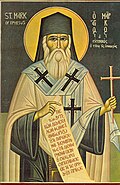 Mark of EphesusSaint · Metropolitan of EphesusJan 19
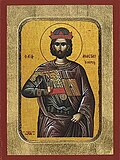 Anastasius of SinaiVenerable · Abbot on Mount SinaiJan 19
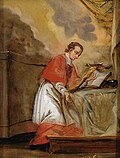 Agricius of TrierSaint · Bishop of TrierJan 19
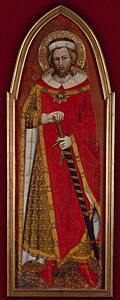 Pontianus of SpoletoMartyr · Martyr of SpoletoJan 19
 Contentius of BayeuxSaint · Bishop of BayeuxJan 19
 Euthymius the Confessor of GeorgiaConfessor · Georgian ascetic monk and scholarJan 19
 Anton of MartqopiStylite · One of the Syrian FathersJan 19
- Arsenius of CorfuSaint · Archbishop of CorfuJan 19
 Euphrasia of NicomediaMartyrJan 19