Venerable
Nikephoros the Solitary
Athonite monk
Athonite monk and spiritual writer of the thirteenth century, author of a treatise on watchfulness in the Philokalia.
- Feast
- May 4old style May 17
- Reposed
- 129513th century
- Place
- Mount Athos
- Order
- Venerables
Life
Venerable Nikephoros the Solitary (also called the Monk, the Hesychast or the Athonite) was in the thirteenth century a monk on Mount Athos and a spiritual writer, one of the authors of the Philokalia. Our record places him in the years 1201 to 1295 and gives his commemoration on 4 May; the sources do not give a date of canonization and say nothing of any particular canonization.
Life
He struggled on Athos in the time of the emperor Michael VIII Palaiologos. Saint Gregory Palamas says that he was born in Italy in a Catholic family and renounced Catholicism, receiving Orthodoxy and monasticism on Athos. The Ukrainian source points out that it is not known for certain whether he had been a Latin who became Orthodox or an Orthodox who left Italy because of the spread of wrong teachings; in the second case he might come from a Greek milieu in Italy, probably Calabria, where Greek-speaking monks lived in remote places. About 1240 he settled on Athos. In 1261 the Romans recovered Constantinople, and the emperor Michael VIII began negotiations for union with the West, concluded at Lyons in 1274, a union rejected by the clergy and a large part of the people. Nikephoros was one of the firm critics of the union and, according to Gregory Palamas's account, was imprisoned and exiled; he himself wrote an account of the ordeal. Like Theoleptus of Philadelphia, he opposed the union.
Writings
In the Philokalia the theme of his writings is watchfulness (nepsis), which he describes as vigilance of the mind, for those inexperienced in prayer whose mind wanders into imaginations; he shows a method, not obligatory, of breathing in prayer, to gather the mind in the heart and strengthen watchfulness. The style is simple and practical. He asks for a spiritual father in hesychast practice, but also allows the work of monks on their own and gives practical counsels. He is a forerunner of Saints Gregory of Sinai and Gregory Palamas, who knew his writings, though they no longer found his disciples on Athos. At the beginning of the hesychast disputes his writings were criticized and mocked by Barlaam of Calabria; Palamas defended them, for the sincerity and spiritual experience that he thought more precious than philosophical learning.
Commemorated the same day May 4
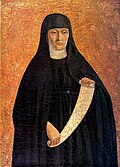 MonicaFool-for-Christ · Mother of Augustine of HippoMay 4
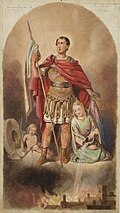 FlorianMartyr · of LauriacumMay 4
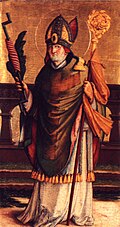 Erasmus of FormiaHieromartyr · Bishop of FormiaMay 4
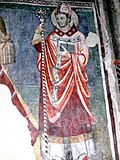 Godehard of HildesheimSaint · Bishop of HildesheimMay 4
 Pelagia of TarsusMartyrMay 4
 Sylvanus of GazaHieromartyr · Bishop of GazaMay 4
 Alvian of AneaHieromartyr · Bishop of AneaMay 4
 Alfanov Brothers of NovgorodHoly Venerables · Five monk brothers of NovgorodMay 4
 Trendafil KerelovNew Martyr · Priest of BatakMay 4
 Mavra of Mount CeahlăuVenerable · Schemanun of Mount CeahlăuMay 4
- New Martyrs of BatakHoly New MartyrsMay 4
- Aedh son of BrecSaintMay 4