Fool-for-Christ
Onuphrius of Romanov
Fool for Christ from Romanov in the Yaroslavl region, venerated in the Russian Orthodox calendar.
- Feast
- September 2old style September 15
- Reposed
- 166917th century
- Order
- Fools-for-Christ
Life
Holy Blessed Onuphrius of Romanov was a fool for Christ of the city of Romanov (today Tutaev), in the Yaroslavl province, who died on 2 (15) September 1669.
His life
History keeps no data about his birth, homeland and origin. Probably taking example from his heavenly patron, Onuphrius the Great, he one day left the worldly life and struggled, like the fools for Christ Andrew of Constantinople and Basil of Moscow, among people as in a desert, in poverty, hunger and cold, patiently bearing the mockery and humiliations of the inhabitants of the ancient city of Romanov. Some researchers think that he was born at the end of the sixteenth century and took up the labour of foolishness shortly before the events of the Time of Troubles. Like all the inhabitants of Romanov, he lived through, in 1609, the burning and occupation of the town by a Polish-Lithuanian band, watching the townspeople flee in terror and abandon their houses, the churches and the chief holy thing of Romanov, the wonderworking Kazan Icon of the Mother of God.
The first chronicle mention of his deeds is preserved in a fragment of the "Tale of the Smolensk Icon of the Mother of God" and refers to the year 1626. There lived then in Romanov a merchant, Samson, nicknamed "the Pilgrim", a pious man fond of strangers, who did not miss vespers and matins, had five sons and a large household. Thinking to widen his trade, he had begun to build a large new house. One late evening, when all in the house were asleep and he was doing his evening prayer rule, there appeared to him in a vision the image of the Mother of God in a "many-leaved tree" and before the image a burning censer. Astonished, Samson spent the night without sleep, and toward morning, when the first bell was heard, the local fool Onuphrius came into Samson's yard and, interpreting the apparition, foretold him many sorrows, "and to all his household, monasticism". After many years the prophecy of the blessed Onuphrius was fulfilled: Samson's business fell into complete decline, and his last property was plundered; after many insults and reproaches, he died in Romanov seven years after the vision of the image of the Mother of God. In this time his wife and all his sons took the monastic habit. The eldest, Joel, who became abbot of Tolga, by a revelation founded on the left bank of the Volga, opposite Yaroslavl, the Smolensk Monastery on the Bor (1642). The second son, Gordian, abbot of Tolga and then of the new Smolensk monastery (from 1659), was a chronicler and church builder. It seems that the other three brothers, Akila, Samson and Macarius, took the habit there too, and the mother, the nun Leonila, found her rest there. Ten years after his death, Samson's body was moved by his son Joel to the Smolensk Monastery, and twenty years later (about 1663) Samson appeared in spirit, standing in the middle of the church at matins and singing with all the song of the Mother of God. So the prophecy of the blessed Onuphrius was fulfilled.
Death and veneration
The blessed Onuphrius departed to the Lord, after a long life full of sorrows and spiritual labours, on 2 (15) September 1669 and was buried on the left bank of the Volga, at the wooden Transfiguration church of the Kazan convent. According to the inhabitants, he was a man of God-pleasing and temperate life, and therefore held in great honour. Another inhabitant of Romanov, Savva Andreevich Timanov, over ninety, recalled in 1739: he wore the honourable cross on him, prayed always, walked ceaselessly, winter and summer in one thin long garment, barefoot; sometimes he warmed himself at the big stove in the stone church of the Resurrection, sometimes he went into the tavern in the square to warm himself and said: "I am frozen through." In 1712, with the blessing of Bishop Dositheus of Rostov and Yaroslavl, the people of Romanov raised on the place of the old grave a large stone chapel. In the chapel were a wooden shrine and a hollow in the floor, from which those who came took sand from the grave. The same Savva told that when he married, his wife was ill a long time with a "great inward illness"; she asked the priest for a memorial service at the blessed one's grave, then took sand from the shrine and drank it with water, and the illness left her. There were other healings too. In 1739 the Holy Synod asked by an ukaz for information on the veneration of Onuphrius in Romanov, and from 1649 documents are preserved which attest his veneration and miracles.
In the middle of the eighteenth century the decayed wooden church was taken down, then the stone chapel. The church functioned for a time, until 1931, when it was closed, and the building given to a brewery. The grave of the blessed Onuphrius was demolished and the floor poured with concrete. The church was returned to the diocese of Yaroslavl on 12 November 1997. In 1964, on the initiative of Archbishop Nikodim (Rotov), the celebration of the Synaxis of the Saints of Rostov and Yaroslavl was decided, and in it the blessed Onuphrius was included. On a processional icon of the Mother of God of Smolensk, kept in the Yaroslavl museum, the vision of Samson appears.
His memory is kept on 5 June, in the Synaxis of the Saints of Rostov and Yaroslavl, on 25 June, and on 2 (15) September, in the new style.
Commemorated the same day September 2
 Mammes of CaesareaMartyrSep 2
 NonnosusVenerable · Prior of Monte SoratteSep 2
 Agricola of AvignonSaint · Bishop of AvignonSep 2
 Antoninus of PamiersMartyr · Apostle of the RouergueSep 2
 Justus of LyonSaint · Bishop of LyonSep 2
 Elpidius the CappadocianVenerable · Abbot of CappadociaSep 2
 Barsanuphius LebedevHieromartyr · Bishop of KirillovSep 2
- Maxima of RomeMartyrSep 2
 Vladimir MorinskyHieromartyr · PriestSep 2
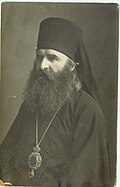 Damascene TsedrikHieromartyr · Bishop of GlukhovSep 2
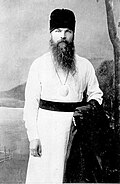 German RyashentsevHieromartyr · Bishop of VyaznikiSep 2
- Hieu of TadcasterVenerable · Abbess of TadcasterSep 2