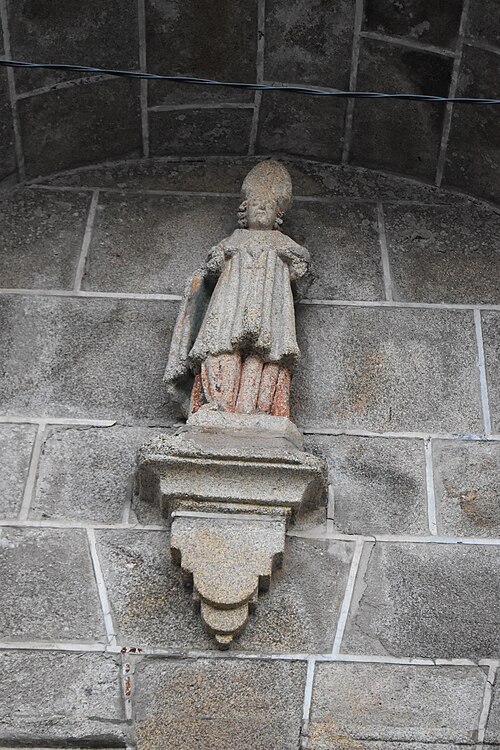
Saint
Orientius
Latin Christian poet
Christian Latin poet of the fifth century.
- Feast
- May 1old style May 14
- Reposed
- 4445th century
- Place
- Auch
Life
Orientius was a Latin Christian poet of the fifth century, author of the poem Commonitorium, a guide to heaven. Most scholars regard him as the same as Orientius, bishop of Auch in Gaul. He is venerated as a saint mainly in the West, on 1 May.
Life His life is known first of all from legends of the saints. According to them he was born in Roman Spain, in what is now Catalonia, in the family of a governor, and was educated in the best schools. After the death of his father and elder brother he inherited the office of governor, but, out of longing for a pious life, he left the office, gave his wealth to the poor and became a hermit in the valley of Lavedan. Beside the river Isaby he arranged a shelter for the needy and a mill. It is said that the crowd of pilgrims who came to ask his counsel was so great that he hid in a cave, where he fasted strictly and spent his time reading the Psalms. The legends attribute to him healings and the destruction of pagan shrines.
He was bishop of Auch, chosen, according to the legend, by God's prompting shown to the inhabitants. When he was old, in 439, he was sent by the Gothic king Theodoric I as envoy to the Roman commanders Aetius and Litorius, and through his efforts an armistice is said to have been concluded. After that he returned to his cave, to flee from fame, though he had been offered a place at the cathedral. He was buried at Auch.
The poem Under his name there survives the poem Commonitorium (Admonition), of 1036 verses, in two books, written in elegiac couplets. Its guiding thought is stated at the start: whoever desires eternal life, let him learn here the way to it. In the first book he speaks chiefly against adultery and greed, in the second he condemns vanity, lying and drunkenness. It was written when Gaul was being devastated by the barbarian invasions, and the author was evidently an experienced pastor, converted after a life of sin. The poem quotes classical Roman poets such as Virgil, Ovid and Catullus and may have been influenced by Prudentius. It survives in a single tenth-century manuscript. Two prayers in verse are also ascribed to him, but the other poems in the manuscript are not his. The best modern edition is that of Ellis, of 1888.
Veneration Orientius is commemorated on 1 May.
Commemorated the same day May 1
 JeremiahProphet · The ProphetMay 1
 Tamar of GeorgiaRight-Believing · Queen of GeorgiaMay 1
 Sigismund of BurgundyPassion-Bearer · King of the BurgundiansMay 1
 Bertha of KentRight-Believing · Queen of KentMay 1
 Theodulf of OrléansSaint · Bishop of OrléansMay 1
 Æthelred of MerciaRight-Believing · King of MerciaMay 1
 Isidore of ChiosMartyrMay 1
 Marculf of NantusVenerable · Abbot in the CotentinMay 1
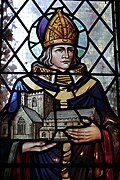 Asaph of LlanelwySaint · First Bishop of St AsaphMay 1
 AndeolusMartyr · Missionary in GaulMay 1
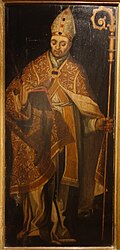 Torquatus of GuadixSaint · Bishop of GuadixMay 1
 Arigius of GapSaint · Bishop of GapMay 1