Venerable Martyr
Parthenius of Kiziltash
Monk martyred for the faith of Christ.
- Feast
- September 4old style September 17
- Reposed
- 186619th century
- Place
- Kiziltash Monastery
- Order
- Martyrs
Life
Saint Parthenius of Kiziltash, an abbot and venerable martyr, was born in 1815 in Elisavetgrad. On 23 December 1845 he received monastic tonsure, and on 8 April 1846 he was ordained hieromonk. From July 1848 he was dean of the Korsun Monastery in Kherson, then steward of the bishop's house in Kherson. In 1852, at the Tengin fortification of the Black Sea coast guard, he showed his talent as an engineer by proposing a very easy way of raising sunken cargo; a special commission approved it, and the rear-admiral of the Black Sea fleet thanked him. In the Crimean War, during the bombardment of Novorossiysk by enemy ships between 28 February and 4 March 1855, he ceaselessly confessed and gave communion to the wounded and buried the fallen.
For his courage and inventiveness the Holy Synod gave him a pectoral cross on 20 March 1857, and on 7 April he was raised to the rank of hegumen. On 20 August 1858 he was appointed abbot of the Kiziltash koinonia in the Taurida diocese. In the eighth century this was the summer residence of Saint Stephen, the confessor and Archbishop of Surozh, but the place had fallen into desolation. With energy, talent and zeal for God's glory, Father Parthenius began to restore the ancient monastery. His contemporaries praised his remarkable abilities, his gift for organizing and managing, and his unflagging energy, through which he achieved what no one else had achieved in the monastery's history. From ruin and poverty, without outside help, with brethren who were almost illiterate, he came to be valued throughout the region. He was an ascetic and taught his community by example, worked from dawn to dusk and forbade the brothers to beg for alms. Before him Kiziltash had only a cave with a healing spring and two or three wattle huts; he made roads, gardens and vineyards, and from the little cave in the rock grew a skete with two guesthouses and a stone church. Pilgrims began to come in numbers.
There were also sorrows. From 1863 began the clashes, which proved fatal, with the local Tatars, who cut down the forest and grazed cattle on monastery land. The abbot was unable to settle matters with them and complained without result to the governor of Taurida. The Tatars continued their raids, and once beat a priest cruelly who had caught them stealing. Four Tatars, one of them a softa, no longer willing to tolerate a witness who exposed them, resolved to kill him. They waited for several days at the roadside, and on 4 September, on the eve of the leave-taking of the feast of the Dormition, as he was riding back from Sudak to the monastery in haste for the service, they shot him three times. To hide the traces, they burned his body from five in the evening until two in the night, breaking the bones with clubs, and they killed the horse and buried it in the forest. The crime would have remained unknown but for chance witnesses, Muslims, whom the killers did not dare to touch. Stung by conscience, they told what they had seen, and at the place of the crime the ashes and remains of the abbot were found. The relics were gathered with care and buried solemnly, with the blessing of Bishop Alexis of Taurida, by a council of clergy near the monastery on 2 December 1866.
The Council of Bishops of the Russian Orthodox Church in August 2000 numbered him among the saints. Saint Parthenius is commemorated on 4 September, old style, that is 17 September in the new style.
Commemorated the same day September 4
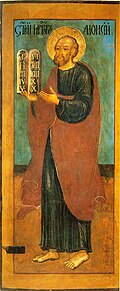 MosesProphet · The LawgiverSep 4
 Joseph the All-ComelyRighteous · Son of JacobSep 4
 Boniface I of RomeSaint · Bishop of RomeSep 4
 Babylas of AntiochHieromartyr · Patriarch of AntiochSep 4
 Hermione of EphesusMartyr · Martyr of EphesusSep 4
 Candida the ElderMartyr · Patron of NaplesSep 4
 Peter ZimonjićHieromartyr · Metropolitan of Dabar and BosniaSep 4
 Theodore, Mian, Julian and KionHoly Martyrs · Martyrs of NicomediaSep 4
- Ultan of ArdbraccanSaint · Abbot-bishop of ArdbraccanSep 4
- Babylas of NicomediaMartyrSep 4
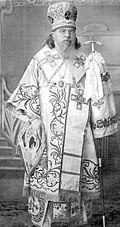 Sergius DruzhininHieromartyr · Bishop of NarvaSep 4
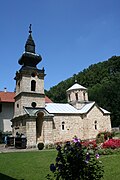 Stephen of TronošaVenerable · ArchimandriteSep 4