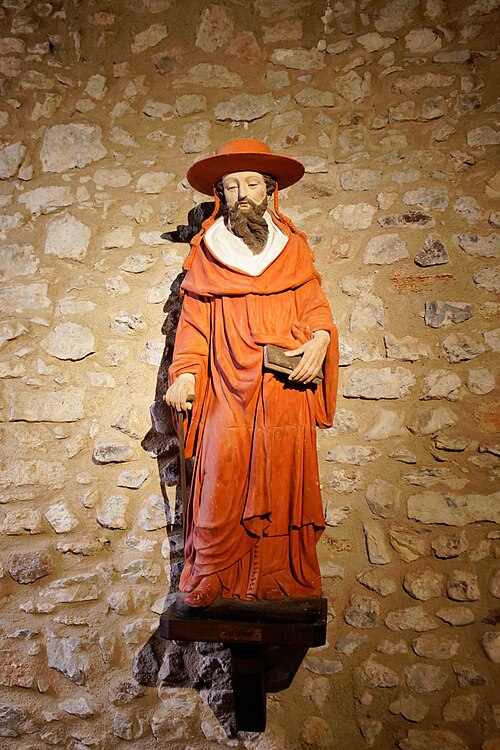
Venerable
Senere of Saulges
A saint of Saulges in France, who reposed in 680.
- Feast
- May 7old style May 20
- Reposed
- 6807th century
- Place
- Saulges
- Order
- Venerables
Life
Senere of Saulges (in French Cénéré, sometimes Sénéré or Sérène) was an Italian Benedictine monk, born about 600 at Spoleto in Umbria and reposed around 680. He is venerated in the Western Church and commemorated on 7 May with his brother Serenicus (Cénéri), and locally on 16 August.
He came from a noble family. According to tradition his reputation for holiness might have made him a cardinal-deacon at Rome, and he has been shown in that dress since the 12th century. Fleeing honors, he arrived in the province of Maine in 649, in the reign of the Merovingian king Clovis II, with his brother, to live as a hermit in repentance and to preach to the local people. He was one of the evangelizing hermits of Maine. He is said to have caused a spring to well up beside his hermitage; after his death the spring was venerated and became a pilgrimage site, and the chapel was rebuilt in 1849 as the Oratory of Saint Cénéré. Tradition tells that he healed a leper by prayer and gave sight to a blind man with the sign of the cross, and at the request of Bishop Berecharius of Le Mans he delivered the countryside from drought, famine and disease.
He reposed after an illness around 680 and was buried in the church of Saint Peter at Saulges. In the 8th century his relics were taken to the cathedral of Saint-Maurice in Angers and later returned, and a part of his body rests in a reliquary in the church at Saulges. An annual pilgrimage to the spring takes place every August.
Commemorated the same day May 7
 Acacius the CenturionMartyr · Centurion of the imperial armyMay 7
 Nilus of SoraVenerable · Founder of the Sora HermitageMay 7
 Domnius of SalonaSaint · Bishop of SalonaMay 7
 Alexis Toth of Wilkes-BarreConfessor · Protopresbyter and missionary in AmericaMay 7
 John of BeverleySaint · Bishop of YorkMay 7
 Abibus of NekresiSaint · Bishop of NekresiMay 7
 David of GarejiVenerable · One of the Syrian FathersMay 7
- Thaddeus of StepantsmindaVenerableMay 7
 Pachomius the RussianVenerable MartyrMay 7
- John of ZedazeniVenerableMay 7
- Agapius of VatopediVenerableMay 7
- Akaki AsistaviSaintMay 7