Venerable
Seraphim Romantsov of Glinsk
Venerable monk of Glinsk, venerated in the Orthodox calendar; died in 1976.
- Feast
- September 9old style September 22
- Reposed
- 197620th century
- Order
- Venerables
Life
Holy Venerable Seraphim Romantsov of Glinsk, a schema-archimandrite, was a spiritual elder of the Glinsk Hermitage, who passed through war, exile and persecution. He departed to the Lord on 1 January 1976, at Sukhumi.
He was born on 28 June 1885 in the village of Voronok, Kursk province, in the family of the peasant Roman Romantsov, and at baptism received the name John. He attended the parish school, and after the death of his parents came, in August 1910, to the Glinsk Hermitage, where he first had the obedience at the bakery, then at the cooperage. In the First World War he was drafted; in 1916 he was wounded, recovered and returned to the hermitage. In 1919 he was tonsured a monk with the name Juvenal, in 1920 ordained hierodeacon by Bishop Paulinus (Kroshechkin). After the closure of the hermitage he went to Sukhumi, then to the Dormition Monastery of Drandy, where some of the monks of New Athos, closed, had been received; the monastery was turned into an agricultural cooperative to prolong its life, and held until 1928, when it was closed. In 1926 Bishop Nikon ordained him hieromonk and tonsured him into the schema, with the name Seraphim. Later he told how he and another monk lived in the mountains, sharing the chores and praying without ceasing; if one fell silent, the other began to read in a low voice. Fervent prayer, he said, protected him in all the trials of his life. The hermits were driven from the mountains too. In 1930 Seraphim went to Alma-Ata and worked as a watchman at an apiary near the city; in the same year he was arrested and sent to the construction of the White Sea Canal.
In 1934 he came to Kyrgyzstan, to Toktogul and to Tash-Kumyr, where he stayed until 1946. In summer he had made a cell in the mountains: he found a rock jutting over a spring, attached a wattle hut to it, and the rock served as table and seat. The inhabitants of the surrounding villages fed him; he went down to pray with them, served vigil on the eves of Sundays and feasts, and, seeing the need for spiritual guidance, served, confessed and preached, especially at night. In winter he lived with a devout family, in a room hidden behind the hen-house. In 1946 he was in Tashkent, where he could serve openly in the cathedral. Learning, it seems, that the Glinsk Hermitage had reopened, he returned to it on 30 December 1947. His long spiritual experience was at once of use to the gathered brotherhood and to the pilgrims, ever more numerous, who poured into the still unsure walls (in places only a wattle fence). People came from far to find with the elders attention to their troubles, understanding, counsel and guidance. Father Seraphim gave all his strength, time and life to the spiritual guidance of the brotherhood and of those who came. He was the confessor who decided for each where to stay and how to help the monastery. At confession nothing remained of his outward severity; he always reminded them of the struggle with bad habits, self-justification, cunning, laziness, judging. He gave them to write and copy paragraphs from the teachings of St Ignatius Brianchaninov, St Theophan the Recluse, Fr John of Kronstadt and others. His day was loaded to the utmost; sometimes he entered the cells of the brothers, and exactly at the right moment, as if by chance, to set right what needed it. He spoke briefly and clearly, only what was necessary.
In 1961 the Glinsk Hermitage was closed again; no one was put in prison, but all were scattered. Father Seraphim went to Georgia, first to Ochamchire, then to Sukhumi. There he helped the local priests at the cathedral, confessed most often, served with them sometimes. More and more people came to him, from far away. As at Glinsk, he lodged each with someone of the locals and organized pilgrimages to the holy places of ancient Iveria, which the locals themselves had forgotten: to the monastery of Venerable Shio of Mgvime, to Signagi, where St Nina died and is buried, to Comana, where the church at the place of death of St John Chrysostom was almost in ruins, to the Iveron mountain and other places. The monks of the closed hermitage also came to him. Those who in the world had caught the spirit of pride he was stern with at confession, but the sternness brought sobriety; when the person understood and repented, the elder softened at once.
At the end of his life, in full lucidity, he read the Jesus Prayer aloud, receiving communion daily. When tired, he asked others to read. He saw many brethren in spirit who sang the hymn of the Mother of God, The eternal counsel, and he too sang in a weakening voice: Taste and see that the Lord is good. After the vision he said that what he had prayed for all his life and sought was revealed in his heart, and that his soul was so filled with grace that he could not contain it. His last words: Now I shall die. On 31 December he closed his eyes and said nothing more. On 1 January 1976 he departed in peace. The canon for the departure of the soul was read by Hegumen Isaiah, a former novice of Glinsk. On 2 January the coffin was placed in the cathedral of Sukhumi; for three days the reading of the Gospel and the memorial services did not stop, and the cathedral was full of his spiritual children. On 4 January, the Sunday before the Nativity, Metropolitan Elias served the Liturgy and the funeral. He was buried in the Mikhailovsky cemetery of Sukhumi.
On 21 August 2010 the service of glorification of three ascetics of the twentieth century took place at the Glinsk Hermitage in Sosnovka, Sumy region: schema-metropolitan Seraphim (Mazhuga), schema-archimandrite Seraphim (Romantsov) and schema-archimandrite Andronicus (Lukash). The decision to canonize had been taken by the Holy Synod of the Ukrainian Orthodox Church on 25 March 2009, and the relics of Father Seraphim were brought from Abkhazia to Glinsk. On 30 November 2017 the Council of Bishops of the Russian Orthodox Church decided his glorification for the whole Church, setting the commemoration on 22 September, in the Synaxis of the Saints of Glinsk. He is also commemorated on 1 August in the Synaxis of the Saints of Kursk, in the new style.
Commemorated the same day September 9
 JoachimRighteous · Father of the TheotokosSep 9
 Ciarán of ClonmacnoiseVenerable · Abbot of ClonmacnoiseSep 9
 Joseph of VolotskVenerable · Abbot of Volokolamsk MonasterySep 9
 Gorgonius of NicomediaMartyr · Martyr of NicomediaSep 9
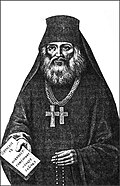 Philaret of GlinskVenerable · Abbot of Glinsk HermitageSep 9
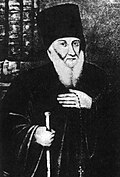 Basil KishkinVenerable · Hieromonk of PloshchanskSep 9
- Zenobius MazhugaSaint · Metropolitan of the Georgian ChurchSep 9
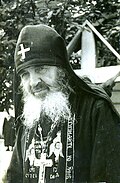 Andronik LukashVenerable · Schema-archimandrite and elderSep 9
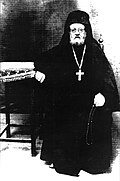 Joanicius of RakotinciVenerableSep 9
 Zacharias LobovHieromartyr · Archbishop of VoronezhSep 9
- Joachim of OpochkaVenerable · Disciple of St. Euphrosynus of PskovSep 9
- Nikita of ConstantinopleFool-for-Christ · Clerk of ConstantinopleSep 9