Venerable Martyr
Seraphima Sulimova
Nun of Ferapontovo and Leushino, martyred for the faith of Christ.
- Feast
- September 2old style September 15
- Reposed
- 191820th century
- Order
- Martyrs
Life
Holy Venerable Martyr Seraphima Sulimova, abbess of the Ferapontov Monastery, was shot on 15 September 1918 near Kirillov, together with Bishop Barsanuphius of Kirillov, the priest John Ivanov, and the laymen Nicholas Burlakov, Anatoly Barashkov, Michael Trubnikov and Philip Maryshev.
She was born in 1858 at Ustyuzhna, in Novgorod province, in the world with the name Elizabeth Nikolaevna Sulimova. In 1874 she entered the Leushino Monastery, ten years later she was a novice, on 14 February 1901 she was tonsured a nun with the name Seraphima, in 1902 she was named treasurer of the monastery, and on 2 July 1906 abbess of the Ferapontov Monastery, twenty kilometres from the Kirillo-Belozersky Monastery, founded by the friend of Venerable Cyril, Venerable Ferapont. The monastery had been abolished under Catherine II and made a parish church; only at the beginning of the twentieth century was permission received to open a women's monastery at Ferapontovo. The founder of the Leushino Monastery, Abbess Taisia (Solopova), urged those who wished to go there; among them went Seraphima. She was prudent, gentle with the sisters and, as circumstances required, strict, taking care that the life of the monastery should follow the rule.
At the end of January 1918 the decree of the Soviet power on the separation of the Church from the state passed all church property into state ownership. In May 1918 the executive committee of Kirillov decided on a new inventory of the sacristies of the monasteries of the district. On Sunday 6 May Abbess Seraphima asked the monastery priest, John Ivanov, to announce to the parishioners the arrival of the commission. After the liturgy the priest told them that the inventory would be made, that it was for them to decide whether to let them in, but if the church and the sisters were wronged, they should defend them. The parishioners answered that they would not allow it. In the evening four members of the commission arrived; when the abbess told them that she must inform the parish council, the peasants gathered in front of the monastery, discontented, and drove out the commissars, with fists and logs. In the church the service was going on, and Father John went on serving; seeing that the people were drawn by the noise, he said aloud: with God is eternity, with God is beauty, and all this noise is passing. Three of the commissars fled, and the fourth, seized by the crowd, was saved by Father John, who intervened.
The same day members of the Ferapontovo committee telephoned Kirillov that the expulsion of the commission was the result of the priest's agitation. On 9 May, returning from services and a procession, Father John was arrested by a detachment of Red Guards, mostly local deserters, who remembered how he had rebuked them in a sermon, in the autumn of 1917, for cowardice. They hurried him, struck him, would not let him dress warmer. He blessed them and got into the cart; on the road he was offered to renounce God, with the promise that he would be spared, but he refused and was imprisoned at Kirillov. The dean Alexander Fomin learned from Bishop Barsanuphius that the investigation had shown the priest's innocence, but the authorities formally sent the file to Cherepovets. The parishioners, paralysed by fear of the terror, did not dare defend him; only a month later did they realize how shameful it was and gather signatures for his release.
On 12 May Abbess Seraphima was called to the executive committee in Kirillov, interrogated and arrested, charged with stirring up the peasants' revolt. The evening before, some forty peasants had come to her to demand the keys of all the storerooms and, finding a few sacks of oats and rye, took them. The next day a great crowd gathered at the monastery and the plundering began; it lasted two days, with insults to the sisters, and on 29 May it was repeated, with an order to empty the monastery; eight sisters remained for the gardens, cattle and guesthouse, with not a crumb of bread.
On 14 September, Bishop Barsanuphius, on a visit to Goritsy together with the archaeologist Alexander Anisimov, was returning to Kirillov when he was stopped by two Red Guards with a warrant of arrest. On the road he said that if they shot him, nothing could be done; as he passed, children crossed themselves. He was taken to prison, where he met Abbess Seraphima and other arrested; he said that he did not fear a violent death, but did not dare think that the Lord found him worthy of martyrdom, and spent the night in prayer. On Sunday 15 September, about five in the morning, the bishop, the abbess and four laymen were brought out and led toward Goritsy, with a detachment of twenty executioners. The bishop asked to enter the monastery to receive communion and was refused. On the way, when he wished to cross himself before the icon of St Philip at the metochion, a guard struck his hand with a rifle butt. They went along the old road, from the time of Venerable Cyril, on the shore of Lake Siverskoe, in quiet and peace. At the milestone that showed five versts to Goritsy and two to Kirillov they were forced to turn right; it was clear that they were being led to be shot. The bishop said that this was their Golgotha. The abbess staggered, and the bishop held her up and said: Mother, take courage. You are a spiritual person; we must go to death without fear, as to a wedding feast, with joy. A time will come when they will envy us. To one who began to speak harshly of those who had condemned them, he said that, after the example of the Saviour, we must forgive all and pass into the other life at peace with all.
They were set facing Mount Zolotukha, with their backs to the monastery. After vespers, Abbess Seraphima asked forgiveness of the sisters every day, bowing to the ground and saying: Forgive me, the wretched. Now she said the same quietly to the killers, who thought that she had called them wretched, and shot her. Five volleys followed and all fell, only the bishop remained standing, praying with raised hands, reading the service for the departure of the soul; when he had finished he said amen, and one of the executioners shouted to him to lower his hands. He said that he had finished and that they should finish too, then turned his face to the monastery, blessed it and lowered his hands; a shot at close range felled him. The grave was dug by merchants; the bodies were lowered with great care, nearer the monastery the bishop, then Nicholas Burlakov, Abbess Seraphima, and at the feet Anatoly Barashkov and Philip Maryshev. When the townspeople heard the shots and ran, the Red Guards told them in mockery: Run, run, your man has risen; in three years he will appear as relics. The brothers asked that the bishop's body be moved to the monastery, but were stopped by guards who fired into the air; the next day it was forbidden again. In the evening of the same day, Bishop Misail (Krylov), retired in the monastery, secretly served the funeral in absentia.
She is commemorated on 15 September, on 11 July (a movable date) in the Synaxis of the Saints of Vologda and Novgorod and on 7 February (a movable date) in the Synaxis of the New Martyrs and Confessors of the Russian Church, in the new style.
Commemorated the same day September 2
 Mammes of CaesareaMartyrSep 2
 NonnosusVenerable · Prior of Monte SoratteSep 2
 Agricola of AvignonSaint · Bishop of AvignonSep 2
 Antoninus of PamiersMartyr · Apostle of the RouergueSep 2
 Justus of LyonSaint · Bishop of LyonSep 2
 Elpidius the CappadocianVenerable · Abbot of CappadociaSep 2
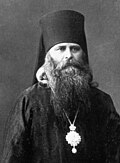 Barsanuphius LebedevHieromartyr · Bishop of KirillovSep 2
- Maxima of RomeMartyrSep 2
 Vladimir MorinskyHieromartyr · PriestSep 2
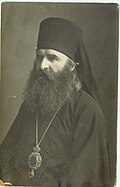 Damascene TsedrikHieromartyr · Bishop of GlukhovSep 2
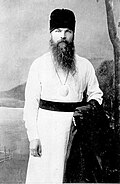 German RyashentsevHieromartyr · Bishop of VyaznikiSep 2
- Hieu of TadcasterVenerable · Abbess of TadcasterSep 2