Hieromartyr
Sergius Skvortsov of Drezna
Cleric of Drezna, martyred for the faith of Christ.
Life
Holy Hieromartyr Sergius Skvortsov of Drezna was a priest in the settlement of Drezna in the Moscow region and died in a camp on 25 March 1943.
Arrest
He was born on 4 July 1896 in the village of Smolnikovo, Klin district, in the family of the stove-maker Joseph Skvortsov and his wife Catherine. He finished the teachers' seminary in 1914 and worked as a teacher in the lower classes. He soon married Claudia Nikolaevna Mikhailova, daughter of a railway employee; they had three children: Lydia, Nicholas and Alexander. In 1918, when the Church was outlawed, he was ordained deacon, and in 1926 priest for the church of the holy martyr Paraskeva Friday in Drezna, Orekhovo-Zuevo district, where he served until his arrest; in the early thirties he was named rector. The parishioners loved him because he gave all his time to the parish and performed services without charge for the poor. In 1926 Renovationists tried to seize the church, but he defended it; then the authorities decided to close it, and he fought with petitions and journeys to Moscow until the church was kept; it was closed only in 1953. He was asked to renounce his rank by a declaration in the newspaper saying that he did not believe in God, and he rejected it with indignation; he was urged to leave, but answered, "Where shall I go? How shall I look the people in the eyes?"
Prison and death
In the spring of 1937 his wife Claudia fell gravely ill, the illness turning into tuberculosis, and she died, leaving three children of fourteen, twelve and nine, who stayed with their father and their grandmother Catherine Nikitichna. Father Sergius was arrested on 28 September 1937, after serving the patronal Liturgy at the church of the Great Martyr Nicetas in Kabanovo, where his friend Archpriest Basil Maksimov had been arrested shortly before. At dead of night someone knocked at the window. He had long awaited the hour and said calmly that they had come for him. Three men of the NKVD searched the house and told him to take his warmest things. The children and grandmother wept; he blessed them all and left. The arrest shook the children, and the little girl, beside herself, began to cry for help, so that the NKVD men fired into the air to quiet her.
At first he was held at Pokrov, where his children's grandmother and the children brought him food and clothes; once he sent them back his linen and a lock of his hair, and the children understood that his head had been shaved. Then he was moved to Taganka in Moscow. A witness, the photographer Tsvetkov, said that he, using his priestly rank, often held conversations with believers. The secretary of the Drezna village council said that he conducted anti-Soviet agitation and kept ties with the recently arrested priest Maksimov. On 3 and 4 October he was questioned about Maksimov's statements and about the alleged agitation; he answered that he had no counter-revolutionary ties with him and denied it all. The inquiry closed on 5 October, and on 13 October 1937 an NKVD troika sentenced him to ten years in a camp. From Taganka he was sent to Bezymyanlag. In 1943 his children received his last letter: "My dear children, my affairs are going badly, I have fallen ill with dysentery." He died in Bezymyanlag on 25 March 1943 and was buried in an unknown place.
He is commemorated on 25 March and, in the new style, on 7 February (a movable date) in the Synaxis of the New Martyrs and Confessors of the Russian Church and on 5 September (a movable date) in the Synaxis of the Saints of Moscow.
Commemorated the same day March 12
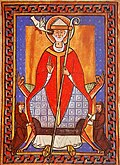 Gregory the DialogistSaint · Pope of RomeMar 12
 Innocent I of RomeSaint · Bishop of RomeMar 12
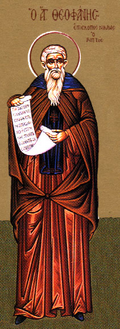 Theophanes the ConfessorVenerable · Chronicler and AbbotMar 12
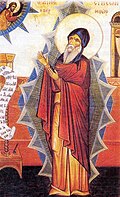 Symeon the New TheologianVenerable · Abbot of Saint Mamas MonasteryMar 12
 PhinehasProphet · Priest, grandson of AaronMar 12
 Demetrius II the Self-SacrificerRight-Believing · King of Eastern GeorgiaMar 12
- Maximilian of TebessaMartyr · Martyr of NumidiaMar 12
 Nicodemus of MammolaVenerable · Italo-Greek monk of CalabriaMar 12
 Alexander DerzhavinConfessor · PriestMar 12
- John PlekhanovHieromartyr · PriestMar 12
- Symeon the PiousVenerable · Monk of StoudiosMar 12
- Almut of WetterSaintMar 12