Venerable
Sturm of Fulda
Abbot of Fulda
Disciple of Saint Boniface, founder and first abbot of Fulda, who reposed in 779.
- Feast
- December 17old style December 30
- Reposed
- 7798th century
- Place
- Saxony
- Order
- Venerables
Life
Saint Sturm of Fulda (Sturmi) was a disciple of Saint Boniface, founder and first abbot of the monastery of Fulda in Germany, and is considered, after Boniface, the second Apostle of Germany. He was born around 705 at Lorch in Austria and reposed on 17 December 779.
He probably came from the Bavarian ducal house of the Agilolfings. His parents placed him in the care of Saint Boniface, and he studied at the monastery of Fritzlar under abbot Wigbert. He worked as a missionary in northern Hesse, where in 736 he established a community at Hersfeld, and was ordained priest in 740. Boniface sent him for three years as a missionary to Westphalia, after which he lived as a hermit at Hersfeld until raiding Saxons drove him away. In 744 Boniface instructed him to found a monastery in the region of Eichloha, on the river Fulda, in the ruins of a former Merovingian royal camp. There he was named first abbot. Around 748 he went with two other monks to learn the Benedictine life at Monte Cassino and establish it at Fulda; on his return he obtained from Pope Zachary the exemption of the monastery from the bishop. After the murder of Boniface in 754 he succeeded in having him buried at Fulda, which made the abbey a great place of pilgrimage. In 763 Archbishop Lull banished him to Jumièges, but within two years he was called back; from the time of exile, living among simple people, he gained a humility that earned him among the common folk the name of the Quaint Saint. In 774 the abbey received the protection of Charlemagne and mission territories in Saxony, and Sturm founded the abbey of Saint Boniface at Hamelin. In 779 he accompanied Charlemagne into Saxony, fell ill and died at Fulda, where he was buried in the cathedral. His Life was written by his successor Eigil.
He is a saint of the undivided Church and is commemorated on 17 December (New Calendar).
Commemorated the same day December 17
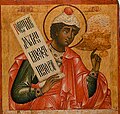 DanielProphet · The ProphetDec 17
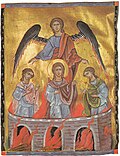 Ananias, Azarias and MisaelHoly The Righteous · The Three Holy YouthsDec 17
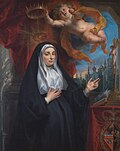 BeggaVenerable · Founder of Andenne AbbeyDec 17
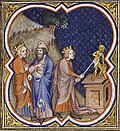 AzariahProphet · Old Testament prophetDec 17
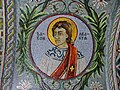 Avakum the DeaconNew Martyr · Deacon of Moštanica MonasteryDec 17
- Sergius FlorinskyHieromartyr · Archpriest at RakvereDec 17
- Hadji-Georgis the AthoniteVenerable · Monk from CappadociaDec 17
- Michael the SynkellosVenerable · Confessor of ConstantinopleDec 17
- Abramius of EleutheropolisMartyrDec 17
- Alexander SavelovHieromartyrDec 17
- AnaniasMartyr · Youth of BabylonDec 17
- AnthonyHoly VenerablesDec 17