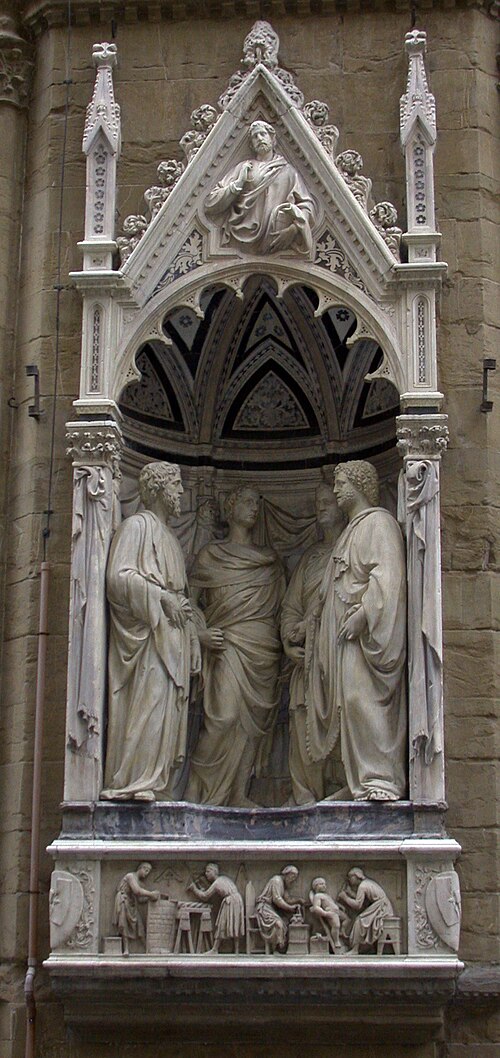
Holy Martyrs
The Four Crowned Martyrs
Nine martyrs of early Christianity, venerated together under the name of the Four Crowned Ones.
- Feast
- November 8old style November 21
- Reposed
- 2873rd century
- Order
- Martyrs
Life
The Four Holy Crowned Martyrs (in Latin, Sancti Quatuor Coronati) are nine martyrs of early Christianity, venerated together, whose names have been gathered in the story of three distinct groups. They are known at Rome from the fourth century, and the centre of their veneration is the titular church of Santi Quattro Coronati on the Caelian hill. They are patrons of sculptors and masons. Their feast is on 8 November.
First group
Severus (or Secundius), Severian, Carpophorus and Victorinus were, according to tradition, four Roman soldiers, secretly Christian, in the time of Diocletian (at Rome or Castra Albana). According to the Passion of Saint Sebastian, they were cornicularii, that is clerks in charge of all the regiment's records, who refused to sacrifice to Aesculapius and were put to death by order of the emperor Diocletian, two years after the death of the five sculptors. According to some accounts they were beaten with lead-tipped scourges in the Baths of Trajan. The bodies were thrown to dogs, but remained untouched; after five days Pope Miltiades and Saint Sebastian buried them in the cemetery on the Via Labicana, at the fourth mile. Their names were not known at their death; after a vision of a holy man it was learned that they were called Severus, Severian, Carpophorus and Victorinus. Hence they were called the four crowned: crown means the crown of martyrdom.
Second group
The sculptors of Sirmium: Claudius, Castorius, Symphorian (Sempronian) and Nicostratus, to whom Simplicius, their young disciple, was added, were stone cutters of Sirmium, in Pannonia, secret Christians. Skilled and in great favour with Diocletian, they made, at his command, the statue of the sun god and many other works; the five raised no objection to statues such as Victory, Cupid or the Chariot of the Sun, but refused to make the statue of Aesculapius for a pagan temple and openly confessed that they were Christians. The emperor ordered them shut alive in lead coffins and thrown into the river Sava, around 287 or 305. Their Acts, written in the fourth century by a customs officer, Porphyrius, refer to porphyry quarries and a porphyritic mountain, which shows that the setting of the story has been moved, for in Pannonia there are no porphyry quarries, and the only porphyry quarry worked in antiquity is in Egypt (Mons Porphyrites, in the Thebaid), from which Diocletian took his porphyry. The bodies were taken from the river after forty-two days by the Christian Nicodemus. The third group, of the martyrs of the Albano catacombs, is named in the Depositio Martyrum, but their lives are not known.
Joint veneration
In the Depositio Martyrum (the year 354) it is said that, because the day of death of the Romans coincided with that of the martyrs of Sirmium, Pope Miltiades decided that they be celebrated together on 8 November. It is thought that the Sirmian story, and perhaps the relics, were brought to Rome by Pannonians fleeing the barbarians at the end of the fifth century. Their veneration spread in the West and the East, where they are commemorated on 8 November.
Commemorated the same day November 8
 GabrielSaint · ArchangelNov 8
 MichaelSaint · Archangel, Chief of the heavenly hostsNov 8
 Adeodatus I of RomeSaint · Bishop of RomeNov 8
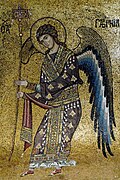 RaphaelSaint · ArchangelNov 8
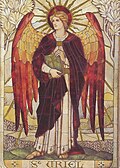 UrielSaint · ArchangelNov 8
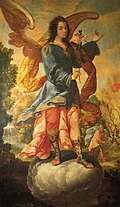 BarachielSaint · ArchangelNov 8
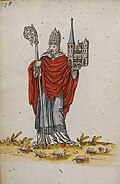 WillehadSaint · Bishop of BremenNov 8
 SelaphielSaint · ArchangelNov 8
 TysilioSaint · Welsh bishop and princeNov 8
 Paul AnsimovHieromartyr · ArchpriestNov 8
 Maria ShvarnovnaRight-Believing · Grand Princess of VladimirNov 8
 Agathangelos of LerinNew Martyr · New Martyr of LerinNov 8