Saint
Willehad
Bishop of Bremen
Christian missionary and bishop of Bremen from 787, who died in 789.
- Feast
- November 8old style November 21
- Reposed
- 7898th century
- Place
- Nordenham
- Order
- Hierarchs
Life
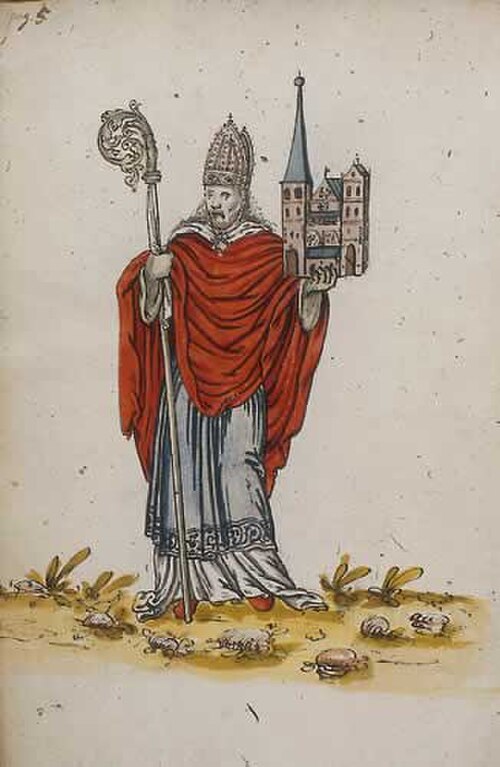
Saint Willehad was an Anglo-Saxon missionary to the Frisians and Saxons and the first bishop of Bremen, from 787 until his death on 8 November 789. The Church commemorates him on 8 November. He is venerated mainly in the West, and since 2006 also in the Berlin and German diocese of the Russian Orthodox Church, as a locally venerated saint.
The missionary He was born in Northumbria around 740 or 745 and was probably trained at York under Ecgbert, being a friend of Alcuin. He was ordained and, around 766 or 770, went to Frisia, where he preached at Dokkum and in Overijssel, continuing the work of Saint Boniface, killed by the Frisians in 754. Amid dangers he barely escaped several times, once when the Frisians wanted to kill him, another time when pagans grew furious that he and his companions had torn down some temples.
At the assembly of Paderborn in 777 Saxony was divided into missionary regions, and the zone between the Weser and the Elbe, called Wigmodia, was given to him. From 780, at the command of Charlemagne, he preached in the region of the lower Weser. Two years later, in 782, the Saxons under Widukind rose against Charlemagne, and Willehad was forced to flee to Frisia. Several of his helpers and friends were killed. Taking the opportunity, he went to Rome and reported on his work to Pope Adrian I.
On his return he withdrew for two years to the monastery of Echternach, in present-day Luxembourg, where he worked in the scriptorium and gathered his missionary team again. After Widukind accepted baptism in 785 and Charlemagne had conquered Saxony, he returned to his earlier regions.
Bishop of Bremen On 13 July 787 he was consecrated bishop, at Worms, in the presence of Charlemagne, and the part of Saxony and Frisia near the mouth of the Weser was assigned to him as his diocese. He chose Bremen as his see, first mentioned in documents in 782, and built a wooden cathedral there. He also built a small church at Blexen. The cathedral was dedicated in 789 on the feast of All Saints, 1 November, and Ansgar praised it for its beauty.
After a week, on 8 November 789, he died at Blexen on the Weser, today part of Nordenham, according to some sources of a high fever. He was buried in the cathedral at Bremen. He did not live to see the founding of the diocese in 805.
Veneration His Life was written at the monastery of Echternach, and Archbishop Ansgar composed a preface that the age regarded as a masterpiece. Ansgar also placed his relics in the cathedral, in 860, and believers came to them from Bremen, Hildesheim, Osnabrück and Münster. In the same year a sick girl from Wege travelled to his grave and was healed, and the village is thus first mentioned in documents. At the Reformation the relics were lost. Icons show him in episcopal vestments, with a church in his hand, overthrowing idols.
Commemorated the same day November 8
 GabrielSaint · ArchangelNov 8
 MichaelSaint · Archangel, Chief of the heavenly hostsNov 8
 Adeodatus I of RomeSaint · Bishop of RomeNov 8
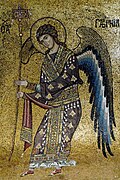 RaphaelSaint · ArchangelNov 8
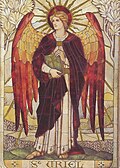 UrielSaint · ArchangelNov 8
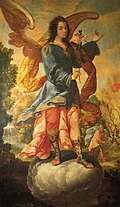 BarachielSaint · ArchangelNov 8
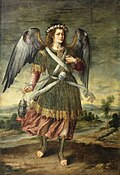 SelaphielSaint · ArchangelNov 8
 The Four Crowned MartyrsHoly MartyrsNov 8
 TysilioSaint · Welsh bishop and princeNov 8
 Paul AnsimovHieromartyr · ArchpriestNov 8
 Maria ShvarnovnaRight-Believing · Grand Princess of VladimirNov 8
 Agathangelos of LerinNew Martyr · New Martyr of LerinNov 8