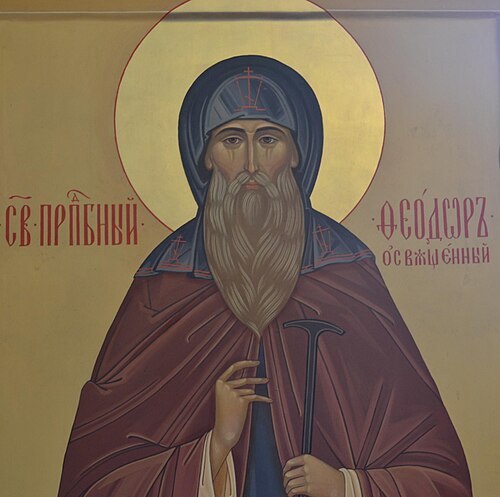
Venerable
Theodore the Sanctified
Successor of St. Pachomius
Successor of St. Pachomius, who saved the first cenobitic federation from collapse; died in 368.
- Feast
- May 16old style May 29
- Reposed
- 3684th century
- Place
- Tabenna
- Order
- Venerables
Life
Saint Theodorus the Sanctified (Theodorus of Tabennese, Abba Theodorus), a venerable father, was the disciple and successor of Saint Pachomius the Great, who saved the first cenobitic federation of monasteries, the Koinonia, from collapse. He was born around 314 (in another source, 316) in Upper Egypt and fell asleep in 368 (in another source, 367). His feast is on 16 May (in the Roman Catholic Church, 28 December).
Youth
According to tradition, he was born into a wealthy and noble Christian family and received an excellent education. Early on he turned aside from the excesses of his parents and, at fourteen, left his parents' house secretly and settled in a monastery in the diocese of Sne, near the modern Esna (in one source, the monastery of Latopolis). A brother from his monastery stayed with Pachomius at Tabennese while travelling and on returning proclaimed the virtues of the Koinonia. Praying and weeping, Theodorus became determined that his destiny lay with Pachomius. Although a Pachomian monk at first would not take him to Tabennese because of his wealthy background, Theodorus followed the visiting monk, and his persistence (and lack of obedience) paid off. Pachomius, informed by God of his coming, received him with love, and he quickly integrated into the community at Tabennese, around 328. He quickly became a favorite of Pachomius, lived an enviably ascetic life and took on the title of "comforter of the brothers." Theodorus asserted his influence openly (which brought reprimands from Pachomius) and remained for a long time a prominent figure at Tabennese, though never given any position in the monastic hierarchy.
Service in the Koinonia
Pachomius had the custom of gathering the brothers on Sundays for his instructions. One such evening he suddenly gave the word to Theodorus. Obeying his teacher, Theodorus spoke what the Lord inspired in him, and Saint Pachomius and the brothers listened standing. Some of the elder brothers were scandalized that a novice read them the teaching and left. At the end of the gathering Pachomius said that they had turned from the Lord's mercy and, if they did not repent of their pride, it would be hard for them to attain eternal life. After this he appointed Theodorus steward of the monastery of Tabennese, after several new monasteries had been built. Retiring to the monastery of Phbow, Pachomius gave Theodorus full control over Tabennese, but recalled him from the position after seeing several monks under his watch violate the rule without reprimand. Having failed to prove his governing ability and once more in a position no higher than where he had started, Theodorus became a personal assistant to Pachomius and remained quiet for some years. Despite his clear ability and fame, Pachomius refused to grant him any authority; the old man's failing health would soon change things.
When Pachomius fell gravely ill and seemed near death, he had named no successor, and several brothers pleaded with Theodorus to assert himself as head of the Koinonia after the sick man died. Though it is said that he did not want the rank of a father or this world's glory, he consented. Pachomius recovered, however, and, hearing of Theodorus's decision, exiled him. After living in solitude in constant weeping and prayer, Pachomius forgave him and let him live among the brothers again. Normality returned, but Pachomius never again fully trusted his former protege.
After the death of Pachomius
In 348 (in another source, 347) Pachomius died, naming the brother Petronios as his successor, not the clearly more able Theodorus. The death of Petronios later that year left Apa Horsiesios in charge, and Theodorus, loved by all, retired to the distant monastery of Phnoum. Though Theodorus practiced full submission to the new leader, troubles soon arose in several Pachomian monasteries, which viewed Horsiesios as weak. Many of the elder brothers abandoned all obedience, refusing to work or communicate and demanding a new leader. The federation of monasteries was falling apart, and Theodorus rushed to Tabennese to calm the rebels. Soon after his arrival Theodorus was the de facto leader, though he said he acted only in the name of Horsiesios. For eighteen years he governed from Pachomius's old headquarters at Phbow, with methods much firmer than his predecessors, among them constantly shifting the offices and locations of the most ambitious monks. In spite of this shifting, the Koinonia was ruled in peace for nearly two decades; then Theodorus predicted he would soon die, and within a few months his prediction came true. Horsiesios again took his place at the head, in title and authority.
Esteem and writings
Saint Athanasius the Great held him in great honour; at his death he sent the brotherhoods a long letter, in which he spoke eloquently of the virtues and struggles of Abba Theodorus, and for the comfort of the monks wrote: "...now, beloved and most longed-for brethren, do not weep for Theodorus, for he is not dead, but sleepeth (Matthew 9:24). Let no one, remembering him, shed tears, but let each emulate his life, for one must not grieve for one gone to the place without grief." He was called "the Sanctified" because he was the first in his monastery to be ordained priest (according to the Russian source). Like those of Pachomius and the other leaders of the Koinonia, his sermons were recorded by his followers, and some of his correspondence with other Christian figures of the time has survived. The most substantial of these writings, in Coptic and believed to come from his hand, is a set of three instructions, made up of small lessons and rules.
Commemorated the same day May 16
 Brendan of ClonfertVenerable · Irish AbbotMay 16
 VitusMartyr · of SicilyMay 16
 Nicholas MystikosSaint · Patriarch of ConstantinopleMay 16
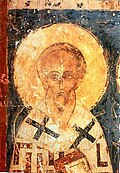 Alexander of JerusalemHieromartyr · Bishop of JerusalemMay 16
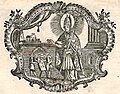 Honoratus of AmiensSaint · Bishop of AmiensMay 16
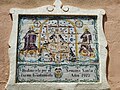 Peregrine of AuxerreHieromartyr · First Bishop of AuxerreMay 16
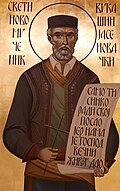 Vukašin MandrapaNew Martyr · Elder of KlepciMay 16
 PossidoniusSaintMay 16
 Ephraim of PerekomVenerable · Founder of Perekom MonasteryMay 16
 Musa of RomeVenerable · Virgin of RomeMay 16
 Vincent KrdžićSaint · Metropolitan of SkopjeMay 16
 Theodore of VršacHieromartyr · Bishop of VršacMay 16