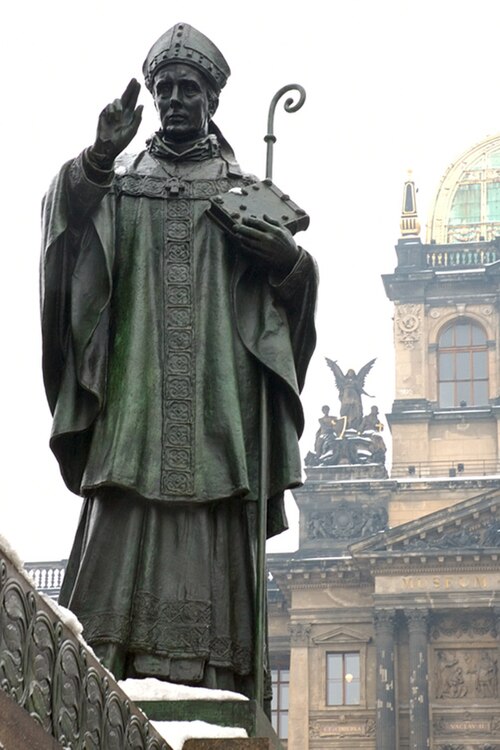
Hieromartyr
Adalbert of Prague
Bishop of Prague
Bishop of Prague and missionary, killed by pagans near the Baltic Sea in 997.
Life
Saint Adalbert of Prague (in Czech Vojtěch, in Polish Wojciech) was bishop of Prague and a missionary to the Hungarians, the Poles and the Prussians, who was killed by pagans on the Baltic coast on 23 April 997. He is honoured as a saint of the undivided Church in the West, where he is the patron of Bohemia, Poland and the archdiocese of Esztergom, and he is commemorated on 23 April, including in the calendar of Latin saints used by Orthodox communities of the Western rite.
He was born about 956 (some say 952) at Libice in Bohemia, into the Slavnik family, one of the two most powerful families of the land. His mother, Střezislava, may have belonged to the Přemyslid house. As a child he survived a grave illness, and his parents decided to dedicate him to the service of God. He studied for about ten years at Magdeburg under Archbishop Adalbert, whose name he took at Confirmation. After his teacher's death in 981 he returned to Bohemia, was ordained priest by Bishop Dietmar of Prague, and in 982, though he was below the canonical age, he was chosen to succeed him as bishop.
Though he came from a wealthy family, he avoided comfort and luxury and was known for his charity and austerity. For six years he preached and prayed, but the Bohemians kept deeply rooted pagan customs, and he made little headway. He spoke against the slave trade, polygamy and idolatry, and met opposition from the secular powers and from the clergy. In 988 he went to Rome, and lived for two years in the Benedictine monastery of Saints Boniface and Alexis on the Aventine.
In 992 Archbishop Willigis of Mainz, to whom Prague was subject, told him to return, and he did. On 14 January 993, with Benedictine monks from Italy, he founded the monastery of Břevnov, then outside Prague. Another attempt to convert his people failed, and in 995 he returned to the Aventine. Soon afterwards Duke Boleslaus II killed his five brothers and destroyed Libice, so that he could no longer live safely in Bohemia.
The pope ordered him to resume his see, but Adalbert believed he would not be allowed to, and asked instead to be a missionary. In June 996 he began a journey through France and Germany, and stayed at the court of Emperor Otto III, who became his friend. He then went to Hungary, where he probably baptized Duke Géza and his son Stephen. In March 997 he came to the court of Duke Bolesław the Brave at Gniezno.
From there he set out for Prussia with his half-brother Radim (Gaudentius) and the priest Benedict. He baptized at Gdańsk on Sunday, 11 April, and entered Prussian land around 17 April. He dismissed his escort. The Prussians received them coldly, held an assembly, and ordered them to leave, which they did. Adalbert soon returned. On 22 April, the missionaries crossed again toward another settlement, where a guard recognized them as the men earlier expelled. The people turned hostile. The oldest accounts differ on the details of what followed. They agree that Adalbert was killed on 23 April 997, that his companions were not harmed, and that his head was cut off. One life names a pagan priest, Sicco, who struck first with a spear. The reasons are not clear. Bolesław bought back the body, according to tradition for its weight in gold.
He was canonized in Rome, most probably on 29 June 999, only two years after his death. Otto III built churches in his honour at Aachen, Rome and elsewhere and received an arm of the saint, which was placed in the church on the Tiber Island in Rome. In the year 1000, Otto came to Gniezno to venerate the relics, and the city became the seat of an archbishopric, which gave Poland its own ecclesiastical province. In 1038 the Czech duke Břetislav I took the relics from Gniezno and carried them to Prague, where they were laid in Saint Vitus Cathedral. The bronze doors of Gniezno cathedral, made about 1175, show his life in eighteen scenes. The oldest Czech and Polish hymns, Hospodine, pomiluj ny and Bogurodzica, are traditionally attributed to him, though this is not confirmed.
Commemorated the same day April 23
 GeorgeGreat Martyr · The Trophy-BearerApr 23
 Alexandra FeodorovnaPassion-Bearer · Empress of RussiaApr 23
 Alexandra the EmpressMartyr · Empress, martyr of NicomediaApr 23
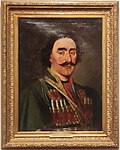 Solomon I the GreatRight-Believing · King of ImeretiApr 23
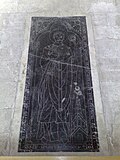 Gerard of ToulSaint · Bishop of ToulApr 23
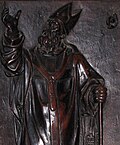 Marolus of MilanSaint · Archbishop of MilanApr 23
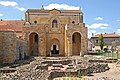 Felix, Fortunatus and AchilleusMartyr · Martyrs of ValenceApr 23
 Therinus of ButhrotumSaintApr 23
 Athanasius the MagicianMartyrApr 23
 Lazarus the BulgarianNew MartyrApr 23
- Sophia of KleisouraVenerableApr 23
- AlcheachSaintApr 23