Great Martyr
George
The Trophy-Bearer
Roman soldier from Cappadocia who confessed Christ and was killed at Nicomedia under Diocletian.
- Feast
- April 23old style May 6
- Reposed
- 3034th century
- Place
- Nicomedia
- Order
- Great Martyrs
Life
The holy Great Martyr George, the Trophy-bearer, was an officer in the Roman army who received the crown of martyrdom in the time of Diocletian's persecution, in the year 303. He is one of the best-loved saints of the Church, called upon as protector of soldiers and of the wronged. The acts of his martyrdom survive in several versions with many legendary details, and the Synaxarion has kept from them what follows.
Family and youth
According to the Synaxarion, George was born about the year 275 in Cappadocia, of Christian parents. His father, Gerontius, died a martyr for Christ when the boy was ten. His mother, Polychronia, came from Lydda in Palestine, and she went back there with her son, where she had estates. At eighteen George entered the Roman army. His courage and bearing soon made him known; he rose in rank, received the title of count, and was valued by the Emperor Diocletian.
The confession
In the year 303 Diocletian gathered the two Caesars and his generals in the capital of the East to decide on the destruction of Christianity. George, then twenty-eight years old, stood up and said aloud that it was wrong to shed holy and innocent blood and to force Christians to bow to idols, and he proclaimed the divinity of Christ. Neither the advice nor the promises of the emperor moved him.
The tortures
George was cast into prison with his feet in stocks and a heavy stone on his chest. The next day he was bound to a wheel set with sharp blades, which tore his body. Then a voice from heaven said, "Fear not, George, for I am with you"; an angel loosed him, and his wounds were healed. When he appeared before Diocletian again, two of the emperor's officers, Protoleon and Anatolius, came forward with a thousand soldiers and confessed Christ. All were put to death.
Diocletian then ordered him thrown into a pit of quicklime, where he stayed three days and three nights. The soldiers found him standing and praying. Shoes with red-hot nails did not harm him, nor did the scourging. The sorcerer Athanasius, summoned to undo his "spells", gave him two poisons to drink, one that brings madness and one that brings death, and George drank them after praying and was unharmed. Athanasius fell on his knees and confessed himself a Christian, and the emperor had him killed. Empress Alexandra also confessed Christ; she was imprisoned and died in prison, at prayer, before she could be beheaded.
His death
In prison George saw Christ, who announced the crown of martyrdom to him. In the morning Diocletian wished to take him to the temple of Apollo to sacrifice. George entered, made the sign of the Cross, and the idol fell and broke into pieces. The crowd and the priest of the idols demanded his death, and he was beheaded with the sword. His servant Pasicrates took his holy relics, together with those of his mother, Saint Polychronia, and carried them to Lydda in Palestine. The Romanian site Doxologia also records two miracles for which the Church honours him: he raised a dead man, and he drove a demon out of an idol.
The place of his martyrdom is given differently. Later Greek versions name Nicomedia, but the oldest centre of his veneration is Lydda, also called Diospolis, where his tomb is. Scholars think he died for the faith probably at the end of the third or the beginning of the fourth century.
Veneration
The cult of Saint George is attested from the fifth century, perhaps even from the fourth. Pope Gelasius I wrote in 494 that he was among those saints whose deeds are known to God. A church of his at Lydda already stood when the Arabs arrived, and its dedication and the placing of his relics there are remembered on 3 November. His tomb at Lydda can still be seen.
Relics of the saint are kept at the Athonite monasteries of Iviron, Xenophontos and Zographou, at Pheneos in Corinthia, at Thebes and elsewhere. Zographou also keeps an icon of the saint given by Stephen the Great.
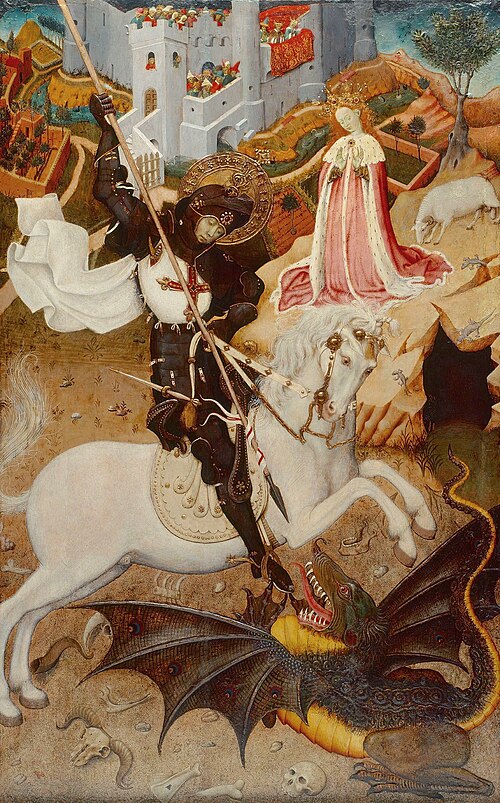
The icon that shows him on horseback, piercing a dragon with his spear, is met in the Church from early times as a sign of the victory over evil. The story of the maiden rescued from the dragon is much later: its earliest known form comes from a Georgian source of the eleventh century and reached Europe in the twelfth.
The Orthodox Church celebrates him on 23 April. When the day falls before Pascha, the feast is moved to the Monday after Pascha. He is also commemorated on 3 November, for the dedication of the church at Lydda, and on 10 November, for the memory of his torments, in the Greek Church. Countless churches and monasteries bear his name.
Commemorated the same day April 23
 Alexandra FeodorovnaPassion-Bearer · Empress of RussiaApr 23
 Adalbert of PragueHieromartyr · Bishop of PragueApr 23
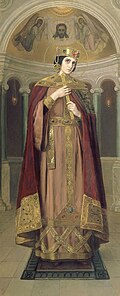 Alexandra the EmpressMartyr · Empress, martyr of NicomediaApr 23
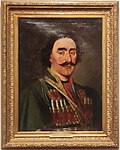 Solomon I the GreatRight-Believing · King of ImeretiApr 23
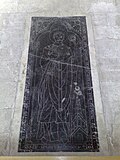 Gerard of ToulSaint · Bishop of ToulApr 23
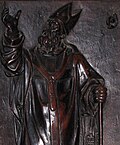 Marolus of MilanSaint · Archbishop of MilanApr 23
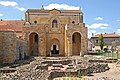 Felix, Fortunatus and AchilleusMartyr · Martyrs of ValenceApr 23
 Therinus of ButhrotumSaintApr 23
 Athanasius the MagicianMartyrApr 23
 Lazarus the BulgarianNew MartyrApr 23
- Sophia of KleisouraVenerableApr 23
- AlcheachSaintApr 23