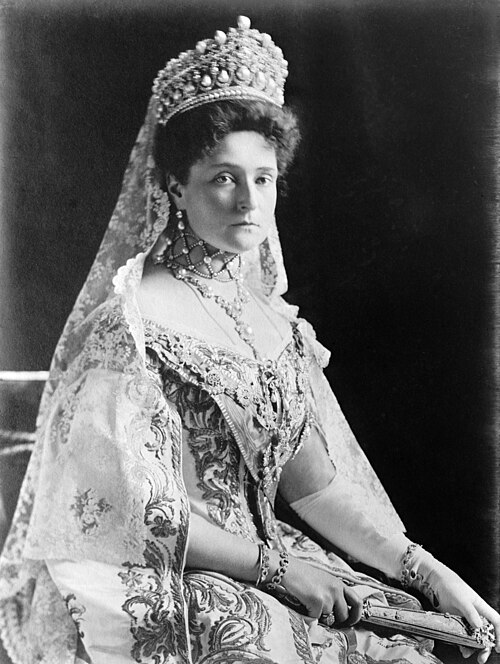
Passion-Bearer
Alexandra Feodorovna
Empress of Russia
Wife of Tsar Nicholas II, killed with her family at Yekaterinburg in 1918.
Life
The Holy Passion-Bearer Empress Alexandra Feodorovna, born Princess Alix of Hesse-Darmstadt, was the last empress of Russia, the wife of Tsar Nicholas II. She was killed together with her husband and her five children at Yekaterinburg, in the night of 17 July 1918, and was canonized by the Russian Orthodox Church in the year 2000 among the passion-bearers.
Childhood
She was born on 6 June 1872 at Darmstadt, the daughter of Grand Duke Louis IV of Hesse and by Rhine and Princess Alice of the United Kingdom, daughter of Queen Victoria. She was baptized in the Lutheran rite on 1 July 1872. In November 1878 an epidemic of diphtheria took her mother and one of her sisters, and little Alix, who had recovered, became more withdrawn. She then spent much time with her grandmother Queen Victoria in England and was raised in English traditions. Her father died in March 1892.
Betrothal and marriage
In 1884, at the wedding of her sister Elisabeth to Grand Duke Sergei in Saint Petersburg, Alix met the heir to the Russian throne, Nicholas. They stayed in touch over the following decade. In April 1894, at her brother's wedding, Nicholas proposed to her. She hesitated at first, because she would have to pass from Lutheranism to Orthodoxy, but she accepted. She received Holy Chrismation and the name Alexandra Feodorovna, and on 14 November 1894 (26 November, new style) she married Nicholas. They had five children, the Grand Duchesses Olga, Tatiana, Maria and Anastasia, and the Tsarevich Alexei.
Family and trials
Alexei was born with hemophilia, a disease that Alexandra had inherited, through her grandmother, from Queen Victoria. The boy's illness shaped her relations with spiritual advisers and healers, among them Grigori Rasputin, whose connection with the imperial family later drew political criticism and rumour. Alexandra supported preserving the Russian autocracy. How great her influence over Nicholas was, and how great her responsibility for the decisions of the government, remains a matter of debate among historians. Known for her faith, during the First World War, when her husband was at the front, she remained as regent of the empire and helped care for the wounded.
Imprisonment and martyrdom
After Nicholas's abdication in March 1917, Alexandra and the family were held under house arrest and then taken to Yekaterinburg. On 17 July 1918 she, Nicholas and their five children, Olga (22), Tatiana (21), Maria (19), Anastasia (17) and Alexei (13), were killed by the Bolsheviks in the Ipatiev House, together with several members of their household and their dogs.
Veneration
Her remains, with those of her husband and some of the children, were laid to rest in Saint Petersburg, in the Cathedral of Saints Peter and Paul. In 2000 the Russian Orthodox Church canonized her as Saint Alexandra, passion-bearer, together with her husband and children. She is commemorated on 17 July, the day of the killing, and her name day is 23 April in the old style.
Commemorated the same day April 23
 GeorgeGreat Martyr · The Trophy-BearerApr 23
 Adalbert of PragueHieromartyr · Bishop of PragueApr 23
 Alexandra the EmpressMartyr · Empress, martyr of NicomediaApr 23
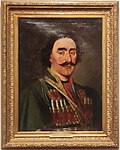 Solomon I the GreatRight-Believing · King of ImeretiApr 23
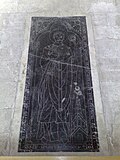 Gerard of ToulSaint · Bishop of ToulApr 23
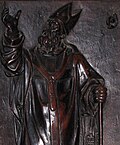 Marolus of MilanSaint · Archbishop of MilanApr 23
 Felix, Fortunatus and AchilleusMartyr · Martyrs of ValenceApr 23
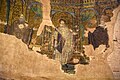 Therinus of ButhrotumSaintApr 23
 Athanasius the MagicianMartyrApr 23
 Lazarus the BulgarianNew MartyrApr 23
- Sophia of KleisouraVenerableApr 23
- AlcheachSaintApr 23