Hieromartyr
Alexander Grivsky
A Russian priest put to death for his faith in Christ in 1918, during the communist persecution.
- Feast
- October 11old style October 24
- Reposed
- 191820th century
- Order
- Martyrs
Life
Saint Hieromartyr Alexander Grivsky (1874 to 1918) was a priest in the village of Podoklinye, in the Pskov province, and was shot by the Cheka of Porkhov on 11 October 1918, for "counter-revolutionary preaching". He is commemorated on 24 October (11 October by the old calendar), on 7 February with the synaxis of the new martyrs, and on 11 July with the saints of Pskov.
He was born on 25 May 1874 in the church settlement of Bolchino, Porkhov district, into the family of Archpriest Simeon Afanasievich Grivsky, of a family known in the Pskov province, many of whom served in education, culture and the Church. The archpriest's three sons, Alexander, Sergius and Nikandr, attended the Pskov seminary and became priests. In the persecutions of the twentieth century all three died as martyrs: Alexander was shot by the Cheka in 1918, Nikandr was sentenced to ten years in the camp, fell gravely ill at Solovki and died in the camps in 1940, and Sergius, the youngest, was arrested in 1937, gave way under pressure, was condemned to death and shot on 3 December 1937 in the Pskov prison.
Service at Podoklinye
Alexander studied at the Pskov seminary. The family was not wealthy, and his father could not always find the means to pay for the schooling of the three sons, so Alexander was often on the list of debtors. He was first psalm-reader at the church of Dubki, then, from 1900, at the Nativity church in Chirskaya, where the wonder-working icon of the Mother of God Hodegetria of Chirskaya was kept; there he served seven years. In 1907 he was ordained priest and assigned to the church of Sine-Nikola, Opochka district, where he stayed a year. Then, with the blessing of Archbishop Arsenius (Stadnitsky), he was moved to the church of the Theophany at Podoklinye, where was kept the icon of the Mother of God "Joy and Consolation" of Vatopedi, a copy given in the 1860s by the blind wanderer Gregory Shiryaev. The village lay on the road to the Nikandr Hermitage, to which tens of thousands of pilgrims came, and Father Alexander received the pilgrims with food and shelter in his house. From the church registers it can be seen that almost daily he performed baptisms, weddings and funerals in his parish of three thousand. He had no children and gave himself with all the more zeal to pastoral service. He taught religion at two schools, was a member of the board of the church school at Porkhov and, on 6 May 1911, received the priest's hip-cloth for his labours. His wife, Nina Simeonovna, a graduate of the Empress Maria Institute in Saint Petersburg, was a teacher.
Martyrdom
Then came the year 1917. Reprisals began against the "class enemy", the Orthodox clergy. Father Alexander could not be silent before the lawlessness being done everywhere; from the pulpit he began to speak a bold word in defence of the faith and of the people's holy things, defiled by the men of the new power. His word took on a character of rebuke, and many understood that the Bolsheviks would not forgive him his sermons. In the autumn of 1918 he was arrested and taken to the prison at Porkhov. According to the letter of the dean, Archpriest Eugene Lebedev, to Metropolitan Arsenius of 18 October 1918, on 11 October the priest Alexander Grivsky had been shot at Porkhov, by decision of the Extraordinary Commission, leaving his wife a widow, without children. To the diocese's inquiry the Cheka answered, on 21 November 1918, that he was shot for "belonging to the counter-revolutionary current and pogrom preaching in church".
At his arrest he was cruelly beaten. A young woman in a black leather jacket, of the Cheka group, a terror of the region, took part in the arrest. Father Alexander could no longer stand; he fell, but the beating did not stop. He was lifted by hands and feet and thrown onto a cart; when the cart started, his legs could be seen twitching in convulsions. He was taken to Porkhov and shot on 11 October 1918 outside the town, at a place called "Peski" (the Sands). His grave has not been found. His wife had been present at the arrest and barely escaped with her life. She stayed in Podoklinye and went on working as a teacher, later hiding as the wife of a "servant of the cult"; simple people helped her, and she lived to great old age and was buried in the local cemetery. Father Alexander was one of the first priests shot in the Pskov diocese, as a bold pastor who was not afraid to turn the word of rebuke against the regime. He served the Church eleven years.
Commemorated the same day October 11
 Philip the DeaconApostle · One of the Seven DeaconsOct 11
 Bruno the GreatSaint · Archbishop of CologneOct 11
 Philotheus KokkinosSaint · Patriarch of ConstantinopleOct 11
- Arsacius of TarsusSaintOct 11
 Leo of OptinaVenerable · Elder of Optina MonasteryOct 11
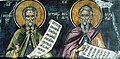 Theodore and Theophanes the BrandedHoly Confessors · Brothers from JerusalemOct 11
 Firminus of UzèsSaint · Bishop of UzèsOct 11
- Sisinnius ISaint · Patriarch of ConstantinopleOct 11
 Sanctinus of MeauxSaint · Bishop of Meaux and VerdunOct 11
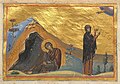 Zenaida and PhilonellaHoly Unmercenary Healers · Unmercenary physicians of TarsusOct 11
 Nicasius of RouenHieromartyr · Apostle of the VexinOct 11
 Theophanes the BrandedConfessor · Metropolitan of NicaeaOct 11