Hieromartyr
Alexander Pokrovsky
A Russian priest who died a martyr for his faith in Christ during the communist persecution.
- Feast
- November 14old style November 27
- Reposed
- 193720th century
- Order
- Martyrs
Life
Saint Hieromartyr Alexander Pokrovsky (1879 to 1937) was a priest in Moscow and then in the village of Vasilevskoe, in the Moscow region, spent three years in the Solovki camp, and was shot on 27 November 1937 at Butovo. He is commemorated on 27 November, on 29 May with the new martyrs of Butovo, on 23 August with the new martyrs and confessors of Solovki, and on 5 September with the saints of Moscow. He was numbered among the saints by decision of the Holy Synod of 21 August 2007.
Childhood and ministry
He was born on 14 August 1879 in the village of Kazanovo, Ruza district, into the family of the psalm-reader Michael Pokrovsky, who had six daughters and four sons and lived very poorly. Often their bread did not last until the new harvest, and the parents sent the children to borrow bread from neighbours. From ten years of age the children helped with the work, sowed, gathered the grain, mowed hay, and the father had bought them small scythes. When the elder children went away to the seminary, the father sold half the hay to pay for their journey; they did not come home for Christmas and Pascha for lack of money, coming only after the end of the course. In 1897 Alexander finished the church school at Volokolamsk, and in 1905 the Bethany seminary, then was a teacher at a village school. In 1906 he was ordained deacon at the church of the Engineering School in Moscow, and in 1909 moved to the church of Saint Prince Vladimir in Starosadsky Lane, where he was also teacher of religion. In 1910 his father fell gravely ill and had to retire, and all the family's care, in which there were still three unmarried sisters, fell on the shoulders of the deacon Alexander; he then bore a heavy burden of material want. In 1919 he was ordained priest and served at the church of Saint Elizabeth at the Dorogomilovo cemetery.
After the revolution life was harder still and he looked for earnings, not shrinking from any work: he worked at the Tatar commissariat, as accountant at a food depot of a workers' cooperative, as statistician at the Moscow census, as doorkeeper. From 1923 he served only in the church. He was a zealous and bold preacher; in one sermon he said that in the present time seeds of unbelief were being sown in every corner of the country, and that this had become so fashionable that any sign of religious feeling threatened loss of one's job, and asked his hearers not to believe that science made divine revelation unnecessary.
First arrest and Solovki
On 12 August 1929, in the father's house, several people who did not know one another gathered almost at once: a cousin of the priest's wife with his brother-in-law, a young Komsomol member of twenty-one, and the daughter of a general of the imperial army, who had died in 1926. Most had come to have a memorial service for relatives. Learning that the young man was a Komsomol member, the father said that under Soviet power priests were doing well, that they were sent to Solovki free and fed there free, while the Communists themselves remained religious and went secretly to church. Talk turned to how the leaders of the government and Stalin travelled and how well they were guarded; the general's daughter said that both before the revolution and now the leaders were well guarded; after this conversation she probably sent a denunciation to the OGPU, where the conversations were presented as a plan for an assassination. On 15 August 1930 the father was arrested. He was accused of being "a member of an active counter-revolutionary organization aiming to commit several terrorist acts against the leaders of the Soviet Union and above all comrade Stalin". The investigation lasted two months and, although the investigators could not prove an intent to assassinate, they wrote in the indictment that conversations about terror had taken place at his dwelling. On 30 November 1930 the OGPU troika sentenced him to ten years in the camp and he was sent to Solovki; other people from his circle were also arrested and sentenced, while the Komsomol member and the drinkers were released. On 10 June 1933 he was released early from the Solovki camp and went to Kolomna, but Kolomna had come within the hundred-kilometre zone of Moscow, and he moved to Volokolamsk, where he worked as a stableman. At the NKVD they told him: "Do not serve any more." His wife, Nadezhda Sergeevna, also urged him to give up, but he heeded neither the counsel of God's enemies nor that of loving relatives, and again strove to receive a place to serve.
Martyrdom
He later served at the New Vasilievskaya church in the village of Vasilevskoe, Lotoshino district, until his arrest on 12 November 1937. He was accused of counter-revolutionary agitation, convicted under article 58-10 and sentenced to capital punishment. On 27 November 1937 he was shot, together with many clergy and laymen, at Butovo.
Commemorated the same day November 14
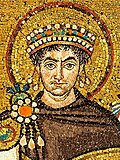 Justinian the GreatRight-Believing · Byzantine EmperorNov 14
 PhilipApostle · The ApostleNov 14
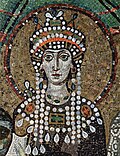 TheodoraRight-Believing · Byzantine EmpressNov 14
 Gregory PalamasSaint · Archbishop of ThessalonicaNov 14
 DubriciusSaint · Welsh bishopNov 14
- Alberic of UtrechtSaint · Bishop of UtrechtNov 14
 Dimitry BenevolenskyHieromartyr · ArchpriestNov 14
 Fantinus the YoungerVenerableNov 14
 Alexander BykovHieromartyr · PriestNov 14
- Anna ZertsalovaMartyr · Spiritual writerNov 14
 George IzvekovHieromartyr · Archpriest and composerNov 14
 Prokopy TitovHieromartyr · Archbishop of Kherson and NikolaevNov 14