
Saint
Amphilochius of Iconium
Bishop of Iconium
Fourth-century bishop of Iconium from a distinguished Cappadocian family, who died between 394 and 403.
- Feast
- November 23old style December 6
- Reposed
- 3944th century
- Place
- Konya
- Order
- Hierarchs
Life
Saint Amphilochius of Iconium was bishop of Iconium in the fourth century, from a distinguished Cappadocian family, a friend and disciple of Saint Basil the Great and a relative of Saint Gregory of Nazianzus. He was born around 339 or 344 and died between 394 and 403. He was a defender of the divinity of the Holy Spirit against the Macedonians. He is commemorated on 23 November in the Orthodox Church and on 22 November in the Catholic Church.
Youth and calling
His father, also named Amphilochius, was a renowned orator and lawyer, and his mother, Livia, was remarkable for gentleness and wisdom. He is believed to have been a first cousin of Gregory of Nazianzus, and Basil and Gregory called him son and child, which shows that he was some fifteen years younger. He studied law at Antioch under Libanius and worked as an advocate at Constantinople. According to one source, in 371 he gave up the profession when he was accused of taking bribes; though cleared through the intercession of Gregory, he renounced the bar. According to others he was a judge.
He then withdrew to Cappadocia, at Gregory's urging, and lived in ascetic struggle and in reading Scripture, on a plot on Mount Ozizala, near his father. At that time he was drawn into the circle of Saint Basil and lived for a while in his charitable settlement, the Basiliad, at Caesarea. Basil, valuing his theological formation, wanted to make him a bishop, but Amphilochius refused.
Ministry
In 374 he nevertheless became bishop of Iconium, in the new province of Lycaonia, and its first metropolitan. It is believed that Basil had a part in this. He remained in close touch with Basil until his death in 379, and with Gregory of Nazianzus, whom he accompanied to the Second Ecumenical Council at Constantinople in 381. There he met Blessed Jerome. In 376 he presided at a synod of the bishops of Lycaonia at Iconium, which received the Creed of Nicaea and condemned those who denied the divinity of the Holy Spirit. He also presided in 390 over the synod at Side in Pamphylia, which condemned the Messalian heresy. It is also said that his prayers brought healings.
He remains in the history of theology for his defence of the divinity of the Holy Spirit. Saint Basil dedicated to him the work On the Holy Spirit. He himself wrote a similar work, now lost, which he read to Jerome at Constantinople. The well-known story of his audience with the emperor Theodosius and the emperor's son, Arcadius, shows his attitude to Arianism. When the emperor rebuked him for not bowing to his son too, he answered that the Lord of all turns with loathing from those who are ungrateful to His Son, their Saviour.
Writings
Most of his work has been lost. Eight homilies survive, including the oldest known sermon on the Presentation of the Lord and one on Mid-Pentecost. There is also the Synodical Letter to the bishops of a neighbouring province, against the Macedonians, the only work certainly his. The Iambics to Seleucus, with an important catalogue of the canonical writings, are of doubtful authenticity, as is the treatise against false asceticism, directed against the Encratites and Apotactites of Lycaonia. His thought follows that of the Cappadocians, but he introduced the phrase modes of being, expressing the relation between the hypostases, which later spread widely.
He lived to a great age. Saint Gregory of Nazianzus called him a bishop without blemish, an angel and a herald of the truth.
Commemorated the same day November 23
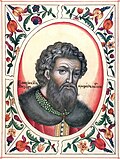 Alexander NevskyRight-Believing · Prince of Novgorod and VladimirNov 23
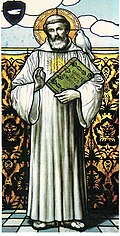 ColumbanusVenerable · Irish missionary and monastery founderNov 23
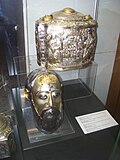 Dionysius I of ConstantinopleSaint · Patriarch of ConstantinopleNov 23
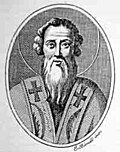 Gregory of AgrigentoSaint · Bishop of AgrigentoNov 23
 Grigol PeradzeNew Martyr · Georgian archimandrite and theologianNov 23
 Trudo of HesbayeSaint · Apostle of HesbayeNov 23
 Metrophanes of VoronezhSaint · First Bishop of VoronezhNov 23
 Alexandra BryachislavnaRight-Believing · Wife of Alexander NevskyNov 23
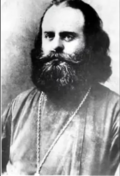 Philip RaspopovHieromartyr · PriestNov 23
 Seraphim ThievartVenerable Martyr · HieromonkNov 23
- Sisinius of CyzicusConfessorNov 23
- Adalbert of CasauriaVenerableNov 23