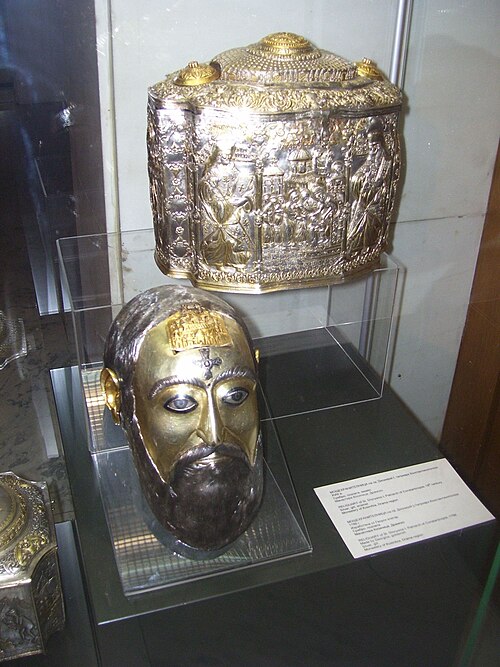
Saint
Dionysius I of Constantinople
Patriarch of Constantinople
Ecumenical Patriarch from 1466 to 1471 and from 1488 to 1490, who died in 1492.
- Feast
- November 23old style December 6
- Reposed
- 149215th century
- Place
- Constantinople
- Order
- Hierarchs
Life
Saint Dionysius I, also called the Wise, was ecumenical patriarch of Constantinople twice, from 1466 or 1467 to 1471 and from 1488 to 1490. He fell asleep in 1492 and is venerated as a saint in the Orthodox Church, on 23 November.
He was born at Dimitsana, in the Peloponnese. He attended the school of the monastery of Philosophou in his birthplace and came young to Constantinople, where he was a monk at the Mangana monastery. He was a disciple and spiritual son of Saint Mark of Ephesus, who ordained him priest. At the fall of Constantinople, in 1453, he was seized and taken as a slave to Adrianople, but was ransomed by the archon Kyritzes (probably Demetrios Apokaukos, one of the two Greek secretaries of Sultan Mehmed II). After his release he enjoyed the esteem of Mara Branković, daughter of the Serbian despot Đurađ Branković and wife of Sultan Murad II, who remained a Christian all her life and had great influence on Mehmed. With her support Patriarch Gennadius Scholarios made him metropolitan of Philippopolis (Plovdiv), around 1455.
In 1466-1467 the patriarchal throne was contested by two parties. Mara Branković, indignant at the simony of one of the candidates, went to the sultan and obtained, with a gift of two thousand gold pieces, the elevation of Dionysius, who belonged to neither side. He was most probably made patriarch at the end of 1466, for on 15 January 1467 he signed an act by which the Synod stripped the laymen George Galesiotes and Manuel Christonymos of all ecclesiastical rank. These soon regained their influence and opposed him, supported by the partisans of Symeon I. In 1467 he recognised Gregory the Bulgarian as metropolitan of Kyiv and all Rus, which worsened relations with Moscow. Under his patriarchate, in 1469, the relics of Saint John of Rila were brought from Tarnovo to Rila monastery.
Dionysius held the patriarchate under Mara's protection until the end of 1471, when his opponents accused him of having converted for a time to Islam and of being circumcised. A synod judged him; although he showed all that he was not circumcised, he was deposed, and Symeon I was set in his place. He withdrew to the monastery of Eikosifinissa (Kosinitsa) in Drama. In July 1488, elected patriarch again, at the urging of Greek public opinion, by a synod called by Sultan Bayezid II, though very old and against his will, he remained in his monastery. In 1490 he resigned because of age and returned to the monastery, of which he is considered the second founder, since he enlarged it with several buildings. He fell asleep in 1492 and was buried there. Under Patriarch Joachim I he was numbered among the saints. A service in his honour was composed by Chrysanthus, protosyncellus of the metropolis of Xanthi, and completed in 1819 by the hieromonk Hilarion the Sinaite. His relics were kept at the monastery of Eikosifinissa, except for a particle given in 1881 to the skete of Saint Andrew on Athos and another in 1955 to Dimitsana.
Commemorated the same day November 23
 Alexander NevskyRight-Believing · Prince of Novgorod and VladimirNov 23
 ColumbanusVenerable · Irish missionary and monastery founderNov 23
 Amphilochius of IconiumSaint · Bishop of IconiumNov 23
 Gregory of AgrigentoSaint · Bishop of AgrigentoNov 23
 Grigol PeradzeNew Martyr · Georgian archimandrite and theologianNov 23
 Trudo of HesbayeSaint · Apostle of HesbayeNov 23
 Metrophanes of VoronezhSaint · First Bishop of VoronezhNov 23
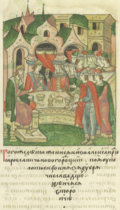 Alexandra BryachislavnaRight-Believing · Wife of Alexander NevskyNov 23
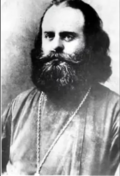 Philip RaspopovHieromartyr · PriestNov 23
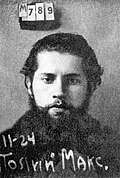 Seraphim ThievartVenerable Martyr · HieromonkNov 23
- Sisinius of CyzicusConfessorNov 23
- Adalbert of CasauriaVenerableNov 23