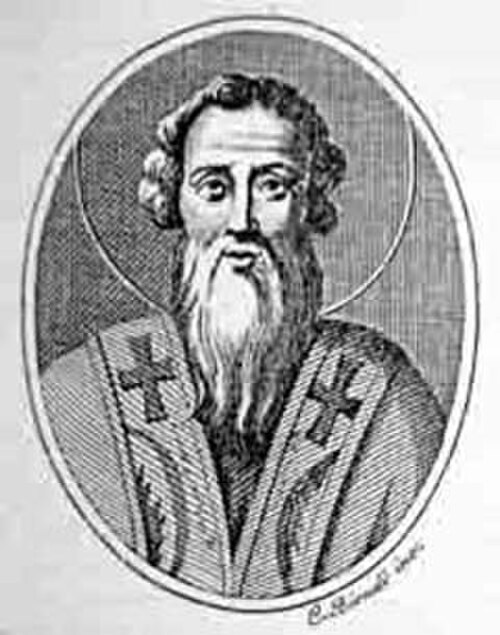
Saint
Gregory of Agrigento
Bishop of Agrigento
Bishop of Agrigento from 590 and a correspondent of Pope Gregory the Great; died around 630.
- Feast
- November 23old style December 6
- Reposed
- 6307th century
- Place
- Agrigento
- Order
- Hierarchs
Life
Saint Gregory of Agrigento was bishop of Agrigento in Sicily from the year 590 and corresponded with Pope Gregory the Great. A long Greek life of him, half legendary, survives, and the Church remembers him on 23 November. He died about 630, according to some sources.
According to his life he was born in 559 near Agrigento to his mother Theodote. At eighteen he set out on a pilgrimage to the Holy Land, travelling through Carthage to Tripoli, and was almost sold into slavery by a ship-owner in Carthage. The account of his travels has a romantic tone and seems to have influenced the tenth-century Life of Gregentios. At Jerusalem he was ordained deacon by Patriarch Makarios II, then returned to Agrigento by way of Constantinople and Rome.
In 590 two factions with their candidates for the vacant see travelled to Rome to ask the pope's decision. Pope Gregory passed over both and consecrated Gregory of Agrigento, who was found hiding in a monastery garden out of reluctance before so high an office. The life credits him with a fine education in classical literature, rhetoric and theology. He is said to have read the Life of Basil the Great and the Passion of the Holy Maccabees many times, and at a bishop's request he interpreted the writings of Gregory the Theologian to a group of deacons. His biographer praises him as a second Chrysostom. By a miracle he was able to fast continually, and healings are attributed to him.
By 591 he was falsely accused and imprisoned by accusers named Sabinus and Crescentius, according to the life. A papal letter of August 591 ordered him to appear, together with the bishops of Catania and Palermo, before the subdeacon Peter, the pope's agent. In November 592 the pope wrote to Maximian of Syracuse, demanding that Gregory's accusers and the documents be sent to Rome without delay. Some sources say he was deposed by 594, but the pope names him as bishop in a letter of January 603.
The life was written by Leontios of the monastery of San Saba in Rome and survives in twenty manuscripts. Scholars agree neither on the date of its writing nor on its historical value: some regard it as largely legendary, others as a valuable source for Sicily and Rome in the seventh century. The Synaxarion of Constantinople places him in the time of the emperor Justinian II, much later. A commentary on Ecclesiastes is also ascribed to him, but this attribution too is doubted.
Commemorated the same day November 23
 Alexander NevskyRight-Believing · Prince of Novgorod and VladimirNov 23
 ColumbanusVenerable · Irish missionary and monastery founderNov 23
 Amphilochius of IconiumSaint · Bishop of IconiumNov 23
 Dionysius I of ConstantinopleSaint · Patriarch of ConstantinopleNov 23
 Grigol PeradzeNew Martyr · Georgian archimandrite and theologianNov 23
 Trudo of HesbayeSaint · Apostle of HesbayeNov 23
 Metrophanes of VoronezhSaint · First Bishop of VoronezhNov 23
 Alexandra BryachislavnaRight-Believing · Wife of Alexander NevskyNov 23
 Philip RaspopovHieromartyr · PriestNov 23
 Seraphim ThievartVenerable Martyr · HieromonkNov 23
- Sisinius of CyzicusConfessorNov 23
- Adalbert of CasauriaVenerableNov 23