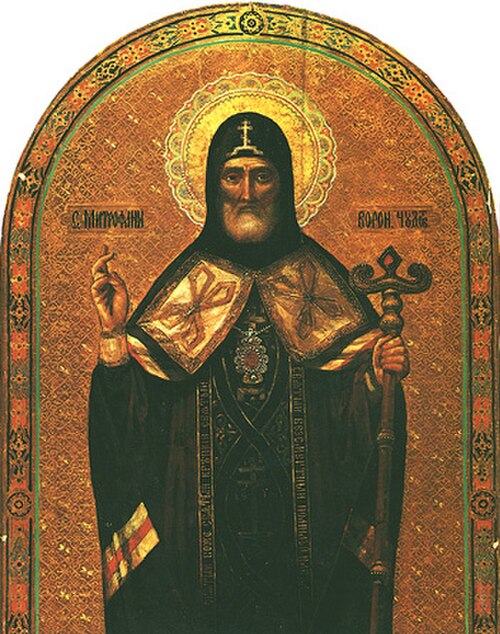
Saint
Metrophanes of Voronezh
First Bishop of Voronezh
First bishop of Voronezh, appointed in 1682 and reputed to work miracles; died in 1703.
- Feast
- November 23old style December 6
- Reposed
- 170318th century
- Place
- Voronezh
- Order
- Hierarchs
Life
Saint Metrophanes of Voronezh, Hierarch, was the first bishop of Voronezh, appointed in 1682, venerated as a wonderworker, who died in 1703. His relics, found whole, worked great healings, and his glorification took place in 1832. He is remembered on 23 November (the day of his repose), on 19 July, on 7 August and on 4 September.
Family and monasticism
His parents were of the clerical estate; in the saint's own words, “I was born into this world of pious parents and was raised by them in the unstained piety of the Eastern Church, in the Orthodox faith.” He was born on 6 November 1623 in the village of Antilokhovo (today in the Ivanovo region) and was given the name Mikhail. He was married and had a son, John (in some sources he was a parish priest in the village of Sidorovskoe). At forty he was widowed. In 1663 he was tonsured a monk with the name Metrophanes at the Zolotnikov Hermitage, in honour of the Dormition of the Mother of God, near Suzdal. He was known for his strict monastic life, and as early as 1665, at the request of the brotherhood of the Kosmin monastery at Yakhroma, he was made abbot of that monastery. During his abbacy a new church of the Saviour was built there, provided with all that was needed. From 1675 he was abbot of the Holy Trinity monastery at Unzha, patronized by the ruling house of the Romanovs; under his leadership a new stone church of the Annunciation, with refectory and bell tower, was built, consecrated in 1680. In 1677, at the commission of Patriarch Joachim, he inspected the churches in the villages along the Vetluga and replaced in the churches of Galich and of Yuryevets on the Volga the old printed service books with the new ones. In 1680, together with the abbacy at Unzha, he was named administrator of the Unzha district, which included ninety-four churches.
Bishop of Voronezh
In 1682 he was appointed bishop of Voronezh, the first hierarch of the newly founded see, which had earlier belonged to the diocese of Ryazan, but the hierarchs there did not visit Voronezh and its surroundings, which lay on the far periphery of their vast diocese. Many inhabitants had no respect for religion, the education of the pastors was very low, the influence of the Old Believers, who had fled persecution to what was then Russia's frontier, was great, and the diocese had only a hundred and eighty-two churches, too few for its extent and for the ever-growing population. Monastic life was in decline, and lay benefactors often interfered in the inner life of the monasteries. The saint said: “with us it is a border place, and people of every rank have grown used to living subject to no one, by their own will.” At the end of August 1682 the bishop arrived in his diocese. His life gives this assessment: as a good steward who cares for church property he sought to increase the means of his poor diocese and carefully put its church economy in order. But his chief care was the pastoral concern for the salvation of the souls of the rational flock entrusted to him by the Lord: with love and mercy he ploughed the field of human hearts, to sow in them the saving seed of the word of God; only in extreme cases did he turn to severe measures to root out vices.
Under Bishop Metrophanes the boundaries of the diocese were fixed and extended. In place of the old cathedral of the Annunciation at Voronezh a new one was built, of stone, five-domed, consecrated in 1692, the largest building of the city at that time. The number of churches in the diocese rose to two hundred and thirty-nine; two new monasteries were founded and a skete was converted into a monastery; the monasteries were placed under episcopal oversight and financial order was set up. He took measures to raise the moral level of both monastics and married clergy, cared for their authority and defended priests from oppression by laymen. He was a strict but just archpastor. He fought actively against the influence of the Old Believers, preached much and opened schools in the villages, where settlers from Little Russia who knew letters taught. He did much almsgiving; in the words of his biographer, “his episcopal house was a house of refuge for all the sorrowing, an inn for travellers, a hospital for the sick and a resting place for the poor.”
Bishop Metrophanes and Tsar Peter I
Bishop Metrophanes supported Peter I, who set up at Voronezh a shipyard to build the fleet that took part in the Azov campaign of 1696. In his sermons he supported this undertaking of the tsar, as ruling hierarch he helped the building of ships, donated large sums to shipbuilding and thought it possible to borrow technical knowledge from the West. The tsar, in turn, respected the saint, and at the bishop's petition reduced the taxes of some Voronezh monasteries. The saint was nevertheless, in general, critical of Peter's Westernizing policies. At the funeral the tsar himself carried the coffin.
Repose and veneration
He died on 23 November 1703, in the eightieth year of his life, and was buried in the Annunciation monastery, in the tsar's presence. When, fourteen years later (in 1717), his tomb was opened, his body was found “whole,” and his relics were proclaimed to have healing power. His relics were opened solemnly on 6 August 1832, and on 25 June 1832 he had been numbered among the saints. After Emperor Nicholas I visited his shrine, his fame grew, and large numbers of pilgrims from central Russia began flocking to his tomb at Voronezh. The first church in Moscow in his name was consecrated in 1895. The Bolsheviks confiscated his relics, which were returned to the Russian Orthodox Church in 1989. An ornate statue of Saint Metrophanes stands in front of the Annunciation Cathedral, where his relics are kept.
Commemorated the same day November 23
 Alexander NevskyRight-Believing · Prince of Novgorod and VladimirNov 23
 ColumbanusVenerable · Irish missionary and monastery founderNov 23
 Amphilochius of IconiumSaint · Bishop of IconiumNov 23
 Dionysius I of ConstantinopleSaint · Patriarch of ConstantinopleNov 23
 Gregory of AgrigentoSaint · Bishop of AgrigentoNov 23
 Grigol PeradzeNew Martyr · Georgian archimandrite and theologianNov 23
 Trudo of HesbayeSaint · Apostle of HesbayeNov 23
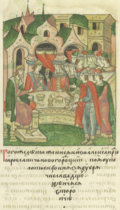 Alexandra BryachislavnaRight-Believing · Wife of Alexander NevskyNov 23
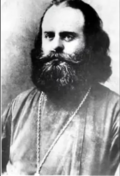 Philip RaspopovHieromartyr · PriestNov 23
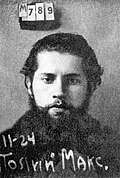 Seraphim ThievartVenerable Martyr · HieromonkNov 23
- Sisinius of CyzicusConfessorNov 23
- Adalbert of CasauriaVenerableNov 23