Venerable Martyr
Anastasius of the Kiev Caves
Deacon of the Kiev Caves Lavra
Monk and deacon of the Kiev Caves Lavra who lived in the late eleventh or the twelfth century.
- Feast
- January 22old style February 4
- Era
- unknown
- Order
- Martyrs
Life
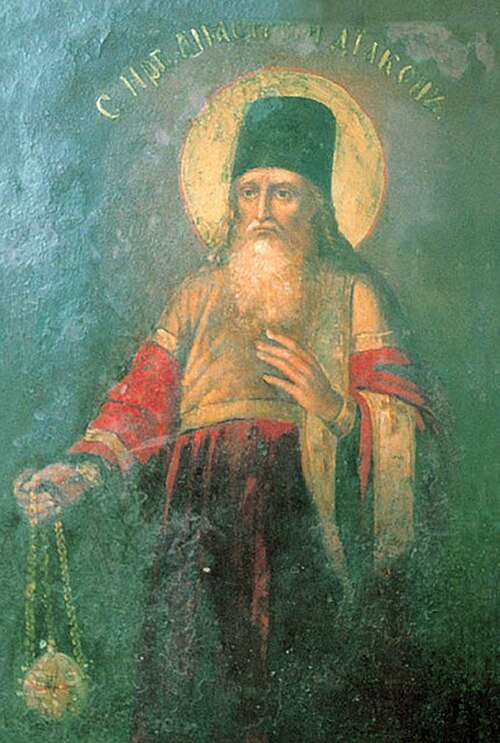
Venerable Martyr Anastasius of the Caves was a monk and deacon of the Kyiv Caves Lavra, who lived at the end of the eleventh century or in the twelfth and died on 22 January. He is honoured as a venerable martyr and is remembered on 22 January and on 28 September, in the synaxis of the venerable fathers of the Near Caves (on the old calendar). The Serbian source places him at the end of the twelfth century and the beginning of the thirteenth.
What is known of him
The Teraturgima, written by the hieromonk Athanasius Kalnofoysky, calls him a brother in Christ of Venerable Titus, the priest of the Caves, and for this reason he is presumed to have been his contemporary. The rank of deacon is given to him by the Description of the Russian Saints, known from copies of the end of the seventeenth century, and by manuscript calendars. Nothing has been preserved about his martyrdom, and only his kontakion, troparion and sticheron call him venerable martyr and faster. The service of the synaxis of the Near Caves says that he had a special boldness before God and that all his requests were granted. A Ukrainian source says he died at about thirty to forty years of age. The dates of his life and death differ and cover a span from the end of the eleventh century to the beginning of the thirteenth, only the day of his death, 22 January, being known.
Veneration and image
Local veneration began at the end of the seventeenth century, when Archimandrite Varlaam Yasinsky of the Caves established the celebration of the synaxis of the venerable fathers of the Near Caves. Veneration throughout the Church began after the permission of the Holy Synod, in the second half of the eighteenth century, to enter the names of several Kyivan saints in the general church calendars. His relics rest in the Near Caves, not far from the relics of the twelve Greek masters who worked on the building of the Great Church of the Caves (the Dormition cathedral).
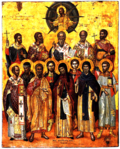
A late eighteenth-century iconographic manual requires the saint to be painted thus: grey-haired, with a beard longer than that of Saint Gregory the Theologian, a kamilavka on his head, a black robe lined with green, holding the robe on his left side with his right hand and the left hand to his heart, fingers raised.
Commemorated the same day January 22
 TimothyHieromartyr · Bishop of EphesusJan 22
 Anastasius the PersianVenerable MartyrJan 22
 Irene of RomeSaint · Wife of St. CastulusJan 22
 Antiochus the MonkVenerable · Monk and writer of PalestineJan 22
 Gaudentius of NovaraSaint · Bishop of NovaraJan 22
- BlesillaVenerable · Disciple of Saint JeromeJan 22
 Macarius of BelyovVenerable · Founder of Makaryev MonasteryJan 22
 Manuel of AdrianopleHieromartyr · Bishop of AdrianopleJan 22
 Joseph SamakosVenerableJan 22
- Vissarion of the AgathonosVenerable · Monk of Agathonos MonasteryJan 22
- AmhalghaidhSaintJan 22
- Anastasius the DeaconVenerable Martyr · Deacon of the Kiev CavesJan 22