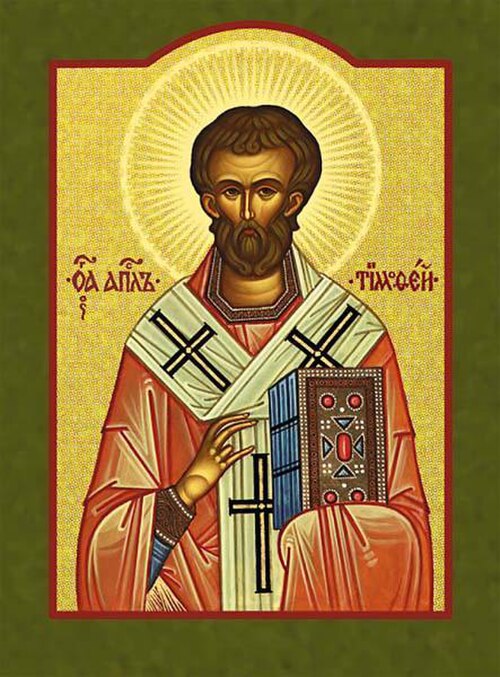
Hieromartyr
Timothy
Bishop of Ephesus
Disciple of the Apostle Paul, first bishop of Ephesus, killed around the year 97.
- Feast
- January 22old style February 4
- Reposed
- 971st century
- Place
- Ephesus
- Order
- Martyrs
Life
The Holy Hieromartyr Timothy was the beloved disciple and fellow worker of the Holy Apostle Paul, one of the Seventy Apostles and the first bishop of Ephesus. The two pastoral epistles of Paul are addressed to him. The Church commemorates him on 22 January (the Menaion date; Churches that keep the old calendar mark it on 4 February by the civil calendar).
Childhood and calling
Timothy came from Lystra in Lycaonia, in Asia Minor. His father was a Greek, and his mother, Eunice, was a Jewish woman who believed in Christ, as did his grandmother Lois. Paul praises both for their sincere faith (2 Timothy 1:5) and says Timothy had known the Holy Scriptures from infancy.
When Paul and Barnabas first came to Lystra, Paul healed a man lame from birth, and many in the city believed. According to the Synaxarion the young Timothy and his family were among them. When Paul returned with Silas, Timothy was already a believer well spoken of by the brethren at Lystra and Iconium. Paul took him along and, as the Acts of the Apostles relate, circumcised him because of the Jews of those places, since his father was a Greek.
Disciple and fellow worker
From then on Timothy was almost never apart from Paul. The apostle calls him his beloved and faithful son in the Lord. He sent him to Thessalonica to strengthen the brethren in the faith, and also to Corinth and to Philippi. To the Philippians he writes that he has no one else like him in spirit.
Timothy's name stands beside Paul's at the opening of several epistles: both letters to the Thessalonians, the second to the Corinthians, and those to the Philippians, to the Colossians and to Philemon. The Epistle to the Hebrews speaks of his release from prison. Paul's letters also show a gentle man, at times timid and often unwell. For this reason the apostle advises him to drink no longer only water but to take a little wine for his stomach and his frequent ailments (1 Timothy 5:23).
Bishop of Ephesus
According to the Synaxarion Paul appointed him bishop of the Church of Ephesus, which he shepherded for fifteen years. The two pastoral epistles were written to him, with teaching on the order of the Church, on the choice of ministers and on guarding sound faith. In them stand words that have stayed alive in the Church: let no one despise your youth, but be an example to the believers in speech, conduct, love, faith and purity (1 Timothy 4:12). In Russian practice they are inscribed on the back of the priest's cross.
When Paul was in prison at Rome and knew that his end was near, he summoned his faithful disciple for a last meeting (2 Timothy 4:9). In the same epistle the apostle bears witness of himself that he has finished the race and kept the faith.
Martyrdom
Timothy ended his life as a martyr at Ephesus. The pagans were keeping a festival in honour of their idols and carrying their images through the city with songs and unclean ceremonies. The bishop, zealous for the glory of God, tried to halt the procession and to speak to the people about faith in Christ. The crowd fell on him, beat him, dragged him along the ground and finally stoned him.
The sources do not agree on the year. The Acts of Timothy, an apocryphal work probably of the fifth century, speak of the year 97 and of a bishop eighty years old, while synaxaria give other years, among them 93. We therefore say only that his sacrifice took place toward the end of the first century.
Relics and veneration
In the fourth century his holy relics were moved from Ephesus to Constantinople and laid in the Church of the Holy Apostles, near the tombs of Saint Andrew and Saint Luke. Western tradition holds that part of them reached Italy in the thirteenth century, at Termoli.
The Church honours him as one of the Seventy Apostles. His troparion praises his gentleness and temperance, and the kontakion names him together with the Venerable Anastasios the Persian, who is kept on the same day. In the Roman Catholic Church he is commemorated with Titus on 26 January.
Commemorated the same day January 22
 Anastasius the PersianVenerable MartyrJan 22
 Irene of RomeSaint · Wife of St. CastulusJan 22
 Antiochus the MonkVenerable · Monk and writer of PalestineJan 22
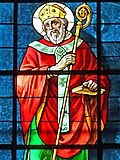 Gaudentius of NovaraSaint · Bishop of NovaraJan 22
- BlesillaVenerable · Disciple of Saint JeromeJan 22
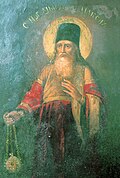 Anastasius of the Kiev CavesVenerable Martyr · Deacon of the Kiev Caves LavraJan 22
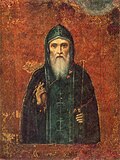 Macarius of BelyovVenerable · Founder of Makaryev MonasteryJan 22
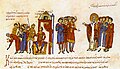 Manuel of AdrianopleHieromartyr · Bishop of AdrianopleJan 22
 Joseph SamakosVenerableJan 22
- Vissarion of the AgathonosVenerable · Monk of Agathonos MonasteryJan 22
- AmhalghaidhSaintJan 22
- Anastasius the DeaconVenerable Martyr · Deacon of the Kiev CavesJan 22