Venerable
Blesilla
Disciple of Saint Jerome
Roman widow of a senatorial family, daughter of Saint Paula and disciple of Jerome, who died in 384.
- Feast
- January 22old style February 4
- Reposed
- 3844th century
- Place
- Rome
- Order
- Venerables
Life
Blesilla (Blaesilla, 364-384) was a young widow of a senatorial family of Rome, daughter of Saint Paula and sister of Saint Eustochium, a disciple of Saint Jerome. She died at twenty. She is venerated as a saint in the Western tradition (in the Roman Catholic Church), with commemoration on 22 January; she has no formal canonization in the Orthodox Church, and her veneration comes from the writings of Jerome. Almost all we know of her is due to these writings.
Her life
She was born at Rome in 364, into a wealthy aristocratic family, the eldest daughter of Paula, widow of the senator Toxotius. Toxotius's brother had been vicarius of Rome and proconsul of Africa. Blesilla had three sisters, among them Eustochium. Both Paula and Eustochium belonged to the "vigorous Christian community" of Rome in the fourth century, made up of wealthy women like Paula and Asella and advised by Jerome. Blesilla was described as "a beautiful, talented young girl who loved the merry life of aristocratic Rome"; she enjoyed the theatre, dinner parties and socializing with other young people. At eighteen she married Furius, a son of Titiana, who was as devoutly Christian as Blesilla's mother. Her husband died after seven months, leaving her a wealthy widow. She mourned him, but, as historians note, was too young to forgo the exciting life she loved; she lived as other young widows of the time did, lavishly spending her time and money on dress, appearance and parties, enjoying her freedom. Jerome, who advocated asceticism and strict fasting as a spiritual discipline, because he believed it helped his followers control the flesh and focus more on God, chastised her for "her frivolous life".
Shortly after her husband's death Blesilla became ill with a fever; she recovered and became "a changed woman". The writer Joan Carroll Cruz says that she "yielded to the promptings of grace" and chose to spend "the rest of her short life in great austerity". She studied Scripture, learned to speak Greek with a perfect accent, learned Hebrew in a few months, carried books with her wherever she went and demanded that Jerome write commentaries for her to study. Jerome said of her gifts of mind: "Who can recall without a sigh the earnestness of her prayers, the brilliancy of her conversation, the tenacity of her memory, and the quickness of her intellect?" She inspired Jerome to translate the book of Ecclesiastes. She lived as an ascetic, in plain clothes, with strict fasts that greatly weakened her. The historian John Matthews conjectured that her behaviour was due to depression and a response to a life-threatening illness. Her family grew alarmed at her declining health. She could not withstand the demands her asceticism made on her body and died within four months, in 384, at twenty; the Russian source says simply that she died of fever, after living in seclusion.
After her death
According to Jerome's letter to Paula, in which he describes Blesilla's death, Paula was so overcome with grief at her daughter's funeral that she collapsed in the procession and had to be carried away unconscious. Jerome, trying to console her, called Blesilla "the victor in the struggle against Satan". Historians say that Blesilla's death caused "bitter controversy" in Rome. Many were outraged at her premature death and blamed Jerome; his urging Paula not to mourn her, and his dismissal of complaints that her grief was excessive, were seen as heartless and turned Roman opinion against him. The Romans saw that she had been killed by fasting and demanded that monks be expelled from Rome. Jerome, secretary to Pope Damasus I, had drawn the hostility of the Roman clergy and their supporters by his criticism of them. Damasus died in December 384; shortly afterwards an inquiry was begun about the relationship between Jerome and Paula and he was forced to leave his post. He left Rome for Antioch, before heading for Jerusalem. Paula and Blesilla's younger sister Eustochium soon followed; they do not seem to have blamed him for Blesilla's death but were certain that "she had died in a state of grace". Jerome spent the last thirty-four years of his life as an ascetic supported by Paula, who founded a double monastery for him and herself at Bethlehem.
Modern scholars have linked Blesilla's case with anorexia nervosa; this is a modern interpretation, not a report of the ancient sources: some have called her "the first victim of anorexia nervosa described in the literature", while others have pointed out that refusal of food was for the ascetics of the past a means of spiritual transcendence, not a pursuit of the "perfect body" as with patients today. It is suggested that her motives may also have included a desire to earn the love and approval of Jerome, her mother and her sister.
Commemorated the same day January 22
 TimothyHieromartyr · Bishop of EphesusJan 22
 Anastasius the PersianVenerable MartyrJan 22
 Irene of RomeSaint · Wife of St. CastulusJan 22
 Antiochus the MonkVenerable · Monk and writer of PalestineJan 22
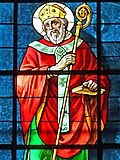 Gaudentius of NovaraSaint · Bishop of NovaraJan 22
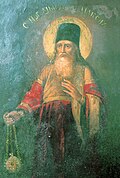 Anastasius of the Kiev CavesVenerable Martyr · Deacon of the Kiev Caves LavraJan 22
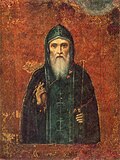 Macarius of BelyovVenerable · Founder of Makaryev MonasteryJan 22
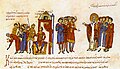 Manuel of AdrianopleHieromartyr · Bishop of AdrianopleJan 22
 Joseph SamakosVenerableJan 22
- Vissarion of the AgathonosVenerable · Monk of Agathonos MonasteryJan 22
- AmhalghaidhSaintJan 22
- Anastasius the DeaconVenerable Martyr · Deacon of the Kiev CavesJan 22