
Hieromartyr
Arsenius Troitsky
Archpriest
Russian archpriest executed at the Butovo firing range on 17 November 1937; canonized in 2001.
- Feast
- November 6old style November 19
- Reposed
- 193720th century
- Place
- Butovo firing range
- Order
- Martyrs
Life
Holy Hieromartyr Arseny Troitsky was an archpriest of the Russian Orthodox Church, born on 28 October 1880 in the Tver governorate and shot in November 1937 at the Butovo firing range (the source says 17, with a question mark, and 19 November). He was canonized by decision of the Holy Synod of 22 February 2001, for veneration throughout the Church. He is commemorated on 6 (19) November, in the Synaxis of the New Martyrs and Confessors of Russia and in the Synaxis of the New Martyrs of Butovo.
He was born into the family of a priest. In 1903 he graduated from the Tver seminary. On 17 October 1903 he was ordained priest for the church of the Holy Prophet Elijah in the village of Selikhovo, Korcheva district. In 1916 he received the kamilavka, and on 17 February 1917 was raised to the rank of archpriest and appointed assistant dean of the 1st district of the Korcheva district. He took an active part in the work of the charitable society dedicated to the Holy Great Martyr Barbara, carried on religious and educational activity and organized pilgrimages to Orthodox holy places.
On 26 January 1923 he organized an assembly of the clergy and laity of the Kirm district, with the aim of opposing the Renovationists. The assembly unanimously adopted a resolution holding the propaganda of the reformist ideas of the Living Church wholly impermissible and harmful to the well-being of the Orthodox Church. For writing the text of the resolution, Arseny Troitsky was arrested and on 16 May 1923 sentenced to 3 years' imprisonment. After his release in 1926 he returned to service in the village of Selikhovo. On 15 August 1930 he was arrested on the charge of counter-revolutionary activity and anti-Soviet agitation. He did not admit guilt. An OGPU troika sentenced him to 3 years of exile at Aktyubinsk (Kazakhstan). After returning from exile he served in the church of the Protection of the Mother of God in the village of Vlasovo, Shatura district, Moscow region.
He was arrested on 28 October 1937, together with all the clergy of the Protection church (3 priests and 2 deacons). At the interrogation of 4 November, under threats, he signed the records drawn up by the investigator, confessing to leading a counter-revolutionary group. He was moved to the Taganka prison in Moscow. At the interrogation of 16 November he took a firm stand and refused to sign false testimony. Asked whether he admitted guilt as the head of a counter-revolutionary group of clergy, he answered that he did not admit guilt of counter-revolutionary activity; he did not deny that he had been rector of the church, but all gathered and discussed questions of religious rites, and he had not expressed his thoughts against the Soviet power; he said that all the evidence shown to him was a slander on him. The troika of the UNKVD for the Moscow region sentenced him to death by decision of 17 November 1937. He was shot and buried at the Butovo firing range. He was rehabilitated on 24 August 1956. In the town of Konakovo in the Tver region there is a chapel of the holy hieromartyr Arseny (Troitsky).
Commemorated the same day November 6
 Paul the ConfessorSaint · Bishop of ConstantinopleNov 6
 IlltudVenerable · Abbot of Llantwit MajorNov 6
 Herman of KazanSaint · Archbishop of KazanNov 6
 Barlaam of KhutynVenerable · Founder of Khutyn MonasteryNov 6
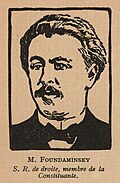 Ilia FondaminskyNew Martyr · Russian writer and political activistNov 6
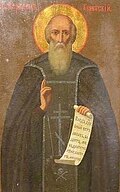 Varlaam of KeretVenerableNov 6
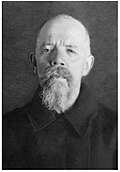 Constantine LyubomudrovHieromartyr · PriestNov 6
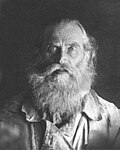 Varlaam NikolskyVenerable Martyr · AbbotNov 6
 Nikita DelektorskyHieromartyr · Bishop of Nizhny TagilNov 6
- Demetrianus of ChytroiSaint · Bishop of ChytroiNov 6
 Luke of the CavesVenerable · Monk of the Kyiv Caves LavraNov 6
- Seraphima GorshkovaVenerable Martyr · NunNov 6