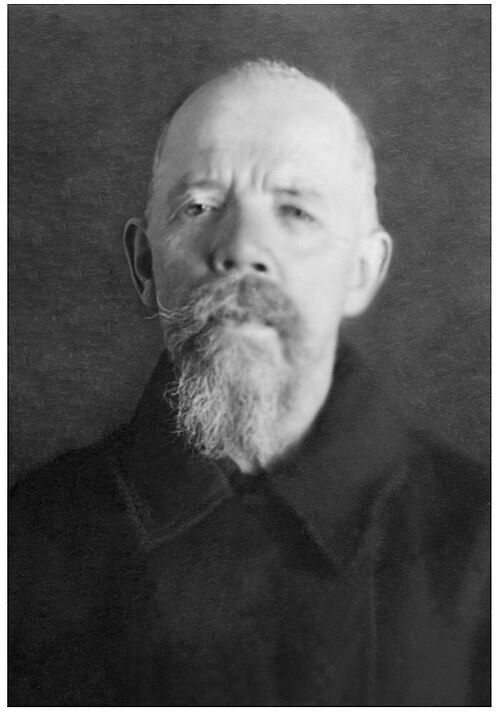
Hieromartyr
Constantine Lyubomudrov
Priest
Priest born in 1879 into a psalm-reader's family of eight children, shot at the Butovo firing range in 1937.
- Feast
- November 6old style November 19
- Reposed
- 193720th century
- Place
- Butovo firing range
- Order
- Martyrs
Life
Saint Constantine Lyubomudrov, hieromartyr (1879 to 1937), was a priest, teacher and archivist, rector of the church of the Sorrows in Moscow, shot at Butovo on 19 November 1937 and buried in the common grave there. Our source calls him a hieromartyr and gives his commemoration on 19 November (6 November Old Style), but does not say when and by whom he was canonized.
Childhood and early service
He was born on 27 July 1879 in the village of Georgievskoye on the Lekhta, today in the Yaroslavl region, in the family of the psalm reader of the village church, one of eight children. In 1889 he entered the church school at Yaroslavl, then the church singing school, which he finished in 1896, and was appointed psalm reader at the Pyatnitskaya church in Yaroslavl. In 1900 he was appointed teacher at the school of the Smolensk church, and from 1902 at the Feodorovskaya school. He also taught arithmetic at the Sunday school for adults, and in 1903 was singing teacher at the Nativity girls' school. In May 1903 he was ordained deacon at the Nativity monastery in Rostov. In the same year he married Maria Mikhailovna Belkina. They had a daughter, Alevtina (1905), the twins Sophia and Vera (1906, Vera lived nine months) and a son, Michael (1908).
Priest and scholar
On 11 June 1908 he was ordained priest and appointed second priest of the Transfiguration Sebastianovo convent, in a hard-to-reach place in the forest on the river Sokhot, about forty kilometres from Poshekhonye. At thirty-two he was left a widower. In 1911 he was moved as rector to the church of Saint Nicholas in the village of Markovo, in the Rostov district, and became teacher of religion at the village school.
In 1914 he entered the Moscow Archaeological Institute as a free listener, in the archival section. In 1917 he finished it with a silver medal, with the thesis "Saint Demetrius of Rostov and his Sermons", received the title of learned archivist and was accepted as full member of the institute. At the same time he was a free listener at the Moscow Theological Academy, from 1 March 1916 also its employee as steward, and from 1 September 1917 a first-year student. The Academy had to leave its buildings in the Lavra, and in 1919 studies were broken off. In 1919 he was appointed priest, and from 1921 rector of the church of the Sorrows on Bolshaya Ordynka in Moscow.
Arrests, exile and martyrdom
He served at the church of the Sorrows until 15 April 1932, when he was arrested. At the interrogation he said that he did not give sermons against the government but preached strictly in a churchly spirit. Charged with anti-Soviet agitation, he was sentenced on 10 May 1932 to five years of exile in Kazakhstan and sent to Alma-Ata. Returning in 1935, he was not allowed to settle in Moscow as a former prisoner and moved to Mozhaysk. On 29 October 1937 he was arrested again and imprisoned in the Taganka. On 17 November the indictment was drawn up: that after his return he had resumed counter-revolutionary activity, gathering around him "reactionary" believers, making collections for the exiles and serving in secret in the homes of like-minded people. On the same day an NKVD troika sentenced him to death, and on 19 November 1937 he was shot and buried in an unknown common grave at the Butovo firing range near Moscow. Metropolitan Hilarion (Alfeyev) wrote in 2020 the story "The Last Day of a Man Condemned to Death", about him.
Commemorated the same day November 6
 Paul the ConfessorSaint · Bishop of ConstantinopleNov 6
 IlltudVenerable · Abbot of Llantwit MajorNov 6
 Herman of KazanSaint · Archbishop of KazanNov 6
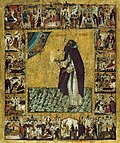 Barlaam of KhutynVenerable · Founder of Khutyn MonasteryNov 6
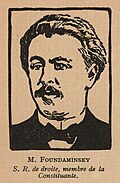 Ilia FondaminskyNew Martyr · Russian writer and political activistNov 6
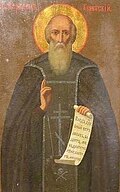 Varlaam of KeretVenerableNov 6
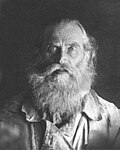 Varlaam NikolskyVenerable Martyr · AbbotNov 6
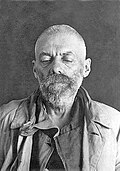 Nikita DelektorskyHieromartyr · Bishop of Nizhny TagilNov 6
- Demetrianus of ChytroiSaint · Bishop of ChytroiNov 6
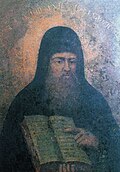 Luke of the CavesVenerable · Monk of the Kyiv Caves LavraNov 6
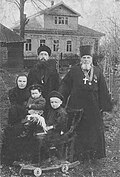 Arsenius TroitskyHieromartyr · ArchpriestNov 6
- Seraphima GorshkovaVenerable Martyr · NunNov 6