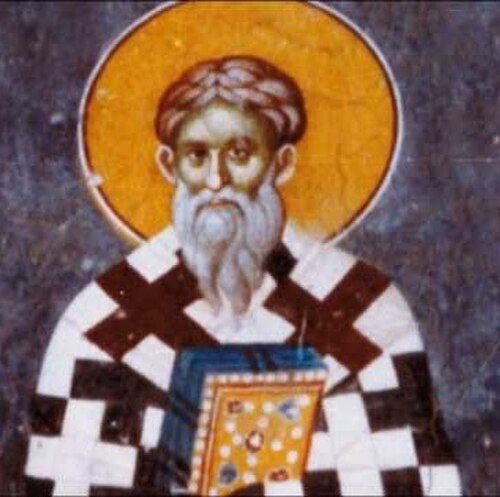
Saint
Paul the Confessor
Bishop of Constantinople
Sixth bishop of Constantinople, elected in 337, caught up in the Arian controversy; died around 350.
- Feast
- November 6old style November 19
- Reposed
- 3504th century
- Place
- Göksun district
- Order
- Hierarchs
Life
Saint Paul the Confessor was bishop of Constantinople during the Arian controversies, from 337 until about 350. Three times he was driven from his throne and three times restored, and in the end he suffered in exile, killed by strangulation. The Church keeps his memory on 6 November as a confessor of the faith of Nicaea.
Beginnings
Paul came from Thessalonica. At Constantinople he served as a presbyter and as secretary to the aged bishop Alexander. When Alexander died, the Orthodox and the Arians came into open conflict in the capital, and the Orthodox party prevailed. According to the traditional dating Paul was elected and consecrated in 337 by the bishops who happened to be in the city. More recent scholars debate the exact years of his first episcopate, some placing it later, around 340.
The exiles
The emperor Constantius II, who had been away from the capital and had not been consulted, was angered. He gathered a synod of Arian bishops, declared Paul unfit and banished him, putting Eusebius of Nicomedia in his place. Paul took refuge in the West, in the domain of the emperor Constans, and came to Rome. There he found other exiled hierarchs, Athanasius of Alexandria, Marcellus of Ancyra and Asclepas of Gaza. Pope Julius I examined their cases one by one, found them faithful to the Council of Nicaea, received them into communion and wrote to the bishops of the East on their behalf.
After Eusebius died in 341, Paul returned to Constantinople. The Arians set Macedonius against him, and the city was shaken by riots. The general Hermogenes, sent by the emperor to drive the bishop out, was killed by the crowd, who set his house on fire. Constantius hurried to the capital, cut the people's grain allowance by half and ordered Paul expelled again.
In about 344 or 346 Paul regained his see, compelled by the threats of Constans, who had written to his brother that otherwise he would make war. Paul nevertheless remained in danger from the hostility of the Arians. After Constans died in 350, Constantius ordered him removed from the city for the last time and Macedonius installed in his place.
Martyrdom
Paul was taken in chains from place to place as far as Cucusus in Cappadocia (other sources say Armenia). According to the Russian, Greek and Serbian accounts, his Arian killers strangled him with his own omophorion while he was serving the Divine Liturgy. Another account says that he was shut up in a dark place and left to starve, and when he was found still alive after six days, he was strangled and his death was given out as the result of a short illness. The Serbian sources place his death in 351.
Veneration
His body was brought to Ancyra, and in 381, by order of the emperor Theodosius the Great, his relics were solemnly moved to Constantinople. They were later carried to Venice, where they are kept to this day; the sources give the years 1236 or 1326 for this transfer. The Orthodox Church commemorates him on 6 November.
Commemorated the same day November 6
 IlltudVenerable · Abbot of Llantwit MajorNov 6
 Herman of KazanSaint · Archbishop of KazanNov 6
 Barlaam of KhutynVenerable · Founder of Khutyn MonasteryNov 6
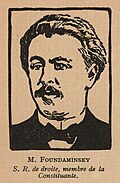 Ilia FondaminskyNew Martyr · Russian writer and political activistNov 6
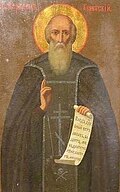 Varlaam of KeretVenerableNov 6
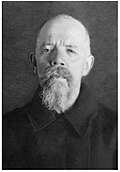 Constantine LyubomudrovHieromartyr · PriestNov 6
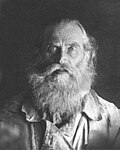 Varlaam NikolskyVenerable Martyr · AbbotNov 6
 Nikita DelektorskyHieromartyr · Bishop of Nizhny TagilNov 6
- Demetrianus of ChytroiSaint · Bishop of ChytroiNov 6
 Luke of the CavesVenerable · Monk of the Kyiv Caves LavraNov 6
 Arsenius TroitskyHieromartyr · ArchpriestNov 6
- Seraphima GorshkovaVenerable Martyr · NunNov 6