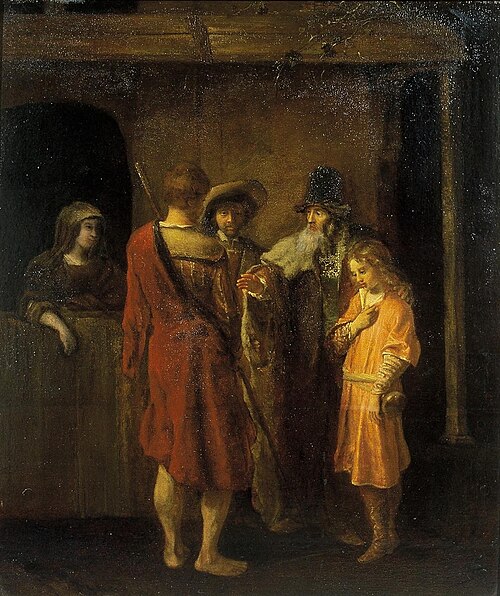
Righteous
Benjamin
The Patriarch
Youngest son of Jacob and Rachel, ancestor of the tribe of Benjamin.
- Feast
- December 13old style December 26
- Reposed
- 1500 BC15th century BC
- Place
- Canaan
- Order
- The Righteous
Life
Benjamin was the twelfth and youngest son of the patriarch Jacob and the second and last son of Rachel, the ancestor of the tribe of Benjamin. The Orthodox Church remembers him among the righteous of the Old Testament, on the Sundays before the Nativity of the Lord, when the Holy Forefathers and the Holy Fathers of the Lord according to the flesh are honoured.
Birth and name
According to the book of Genesis, Benjamin was born in the land of Canaan, on the road from Bethel to Ephrath, that is Bethlehem, while Jacob was returning from Mesopotamia. Unlike Joseph, who was born in Paddan-Aram, he is the only son of Jacob born in the promised land.
Rachel died in giving birth. In the pangs of death she named him Ben-oni, son of my sorrow, but his father called him Benjamin, interpreted as son of the right hand or son of the south. Rabbinic commentators, among them Rashi, added the reading son of my days, a son of old age. The Bible says nothing of Benjamin's burial, and Jewish, Christian and Islamic tradition alike honours him as a righteous man.
The best loved of the brothers
When Joseph was sold into Egypt, Jacob came to cherish Benjamin with a special love, because he was the only child of Rachel left to him. So when the famine came and the ten elder brothers went down to Egypt for grain, Jacob refused to send Benjamin as well, fearing that some harm would befall him.
Reuben and Judah offered themselves as surety for the young man, and in the end Jacob yielded. Joseph, by now ruler in Egypt and unrecognised by his brothers, gave Benjamin at the meal a portion five times larger than the others and was moved to tears at the sight of him. Then he had his silver cup placed in Benjamin's sack and demanded that Benjamin remain as his slave. Judah offered to stay in his place, for the sake of their father. Then Joseph made himself known to his brothers and called them all to Egypt, together with Jacob.
The blessing of Jacob
At the end of his life, Jacob blessed his sons. Of Benjamin he said: Benjamin is a ravenous wolf; in the morning he devours the prey, and at evening he divides the spoil (Genesis 49:27). The commentators quoted by Orthodox sources take the words not as a reproach to Benjamin but as a picture of the warlike nature of his tribe. For the Fathers of the Church the words also carried a prophetic sense, seen in the Apostle Paul, who began as a persecutor of the Church and became the teacher of the nations.
Moses also blessed the tribe: The beloved of the Lord shall dwell in safety by Him (Deuteronomy 33:12).
The tribe of Benjamin
Genesis names the sons of Benjamin, ten in number (Genesis 46:21). His tribe, the smallest of the twelve, received a small but important territory north of Jerusalem, between Judah and Ephraim, with Jericho, Gibeon and part of Jerusalem. From it came the judge Ehud, the first king of Israel, Saul, and, after the Babylonian exile, Mordecai and Esther. In the New Testament the Apostle Paul recalls that he is of the race of Israel, of the tribe of Benjamin (Romans 11:1).
Skilled warriors, whose slingers were proverbial in Israel, the Benjamites once stood against all the other tribes, after the sin at Gibeah, in the war told in the book of Judges, and the tribe was nearly wiped out before it was restored. After the division of the kingdom it stayed faithful to the house of David, together with Judah.
Veneration
Scripture says nothing of Benjamin's end. Later rabbinic tradition counts him among the four ancient Israelites who died without sin, with Chileab, Jesse and Amram, and the Quran mentions him as a righteous child who stayed with Jacob when the older brothers plotted against Joseph.
The Orthodox Church remembers Benjamin among the righteous before the Law and under the Law, on the Sunday of the Holy Forefathers and on the Sunday before the Nativity. His veneration is thus tied to the waiting for Christ of all those who believed in God before He came.
Commemorated the same day December 13
 SolomonProphet · King of IsraelDec 13
 JacobRighteous · The Patriarch IsraelDec 13
 LucyMartyr · of SyracuseDec 13
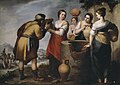 RebeccaRighteous · The MatriarchDec 13
 DeborahProphet · Prophetess and JudgeDec 13
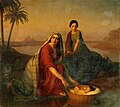 MiriamProphet · Sister of Moses and AaronDec 13
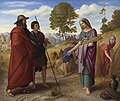 RuthSaint · Ancestor of the LordDec 13
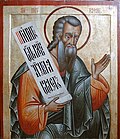 NathanProphet · The ProphetDec 13
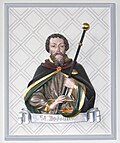 JudocVenerable · Hermit of Breton birthDec 13
 HezronRighteous · Ancestor of the SaviorDec 13
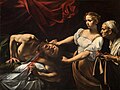 JudithSaint · Widow who saved BethuliaDec 13
 Dosoftei of MoldaviaSaint · Metropolitan of MoldaviaDec 13