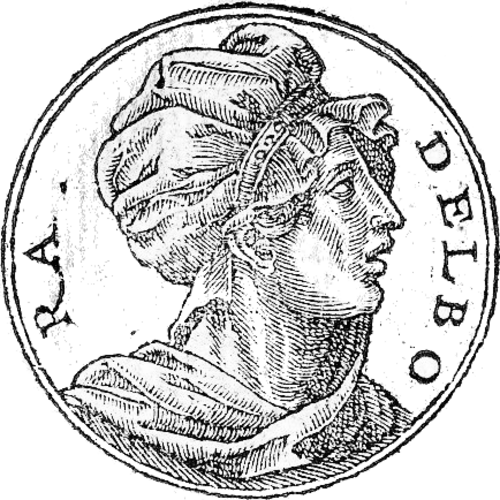
Prophet
Deborah
Prophetess and Judge
Prophetess and fourth judge of Israel, the only woman judge in the Holy Scriptures.
- Feast
- December 13old style December 26
- Born
- 1204 BC12th century BC
- Place
- Ramah in Benjamin
- Order
- Prophets
Life
The Holy Prophetess Deborah was a prophetess and the fourth judge of Israel, the only woman judge in Holy Scripture. Her story is found in the Book of Judges, chapters 4 and 5. The Church remembers her on the Sunday of the Holy Forefathers, before the Nativity of the Lord.
Judge of Israel
Scripture says of Deborah that she was a prophetess, the wife of Lappidoth, and that she was judging Israel at that time. Her name means "bee" in Hebrew. She sat under a palm tree, called "the palm of Deborah", in the hill country of Ephraim, between Ramah and Bethel, and the children of Israel came up to her for judgment. The words "wife of Lappidoth" have also been understood differently: since lappid means "torch" or "lightning", some have seen in them a "fiery woman". Jewish tradition counts her among the seven prophetesses of Israel.
The war with Jabin
For twenty years the children of Israel had been oppressed by Jabin, king of Canaan, who reigned at Hazor. The commander of his army was Sisera, who had nine hundred chariots of iron. Deborah sent for Barak, the son of Abinoam, from Kedesh in Naphtali, and told him that the Lord commanded him to gather ten thousand men of Naphtali and Zebulun and lead them to Mount Tabor. The Lord would draw Sisera, with his chariots and his army, to the river Kishon and give him into Barak's hand.
Barak answered that he would go only if she went with him. Deborah agreed, but told him that the glory of the victory would not be his, for the Lord would sell Sisera into the hand of a woman. She rose and went with him to Kedesh. On the day of the battle she said to him: "Up, for this is the day in which the Lord has given Sisera into your hand. Has not the Lord gone out before you?" Barak went down from Mount Tabor with the ten thousand men, and the Lord routed Sisera and all his army.
Sisera fled on foot to the tent of Jael, the wife of Heber the Kenite, whose family was at peace with Jabin. Jael received him, gave him milk and covered him, and when he fell asleep she drove a tent peg into his temple. Barak, who was pursuing him, found him dead. So the word of Deborah was fulfilled, and Israel prevailed over Jabin.
The Song of Deborah
Chapter 5 of Judges tells the same event again, in verse. The song is ascribed to Deborah and Barak. It begins by praising the Lord because the people offered themselves willingly for the fight. The song calls Deborah "a mother in Israel" and summons her: "Awake, awake, Deborah."
The tribes that came to the battle are praised, while Reuben, Gilead, Dan and Asher are rebuked for staying at home. The song says that the stars fought from heaven against Sisera and that the river Kishon swept the enemies away. Jael is blessed among women. The song ends with the prayer that all the enemies of the Lord may perish, and that those who love Him be like the sun when it rises in its strength.
Scholars hold that the song may date as early as the twelfth century before Christ and that, together with the Song of the Sea in Exodus, it is the oldest Hebrew poetry that survives. After the victory the land had rest for forty years.
Veneration
Scripture says nothing about the end of Deborah's life. The Epistle to the Hebrews, in its list of those who triumphed by faith, names Barak. The Church remembers her as a prophetess who guided the people with wisdom, and the fact that God worked through her shows that His grace takes no account of the difference between man and woman.
Deborah is honoured on the Sunday of the Holy Forefathers, a Sunday between 11 and 17 December, on which the Church remembers the righteous of the Old Testament, those before the Law and those under the Law.
Commemorated the same day December 13
 SolomonProphet · King of IsraelDec 13
 JacobRighteous · The Patriarch IsraelDec 13
 LucyMartyr · of SyracuseDec 13
 RebeccaRighteous · The MatriarchDec 13
 BenjaminRighteous · The PatriarchDec 13
 MiriamProphet · Sister of Moses and AaronDec 13
 RuthSaint · Ancestor of the LordDec 13
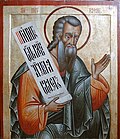 NathanProphet · The ProphetDec 13
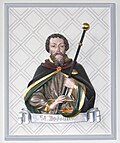 JudocVenerable · Hermit of Breton birthDec 13
 HezronRighteous · Ancestor of the SaviorDec 13
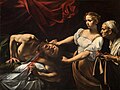 JudithSaint · Widow who saved BethuliaDec 13
 Dosoftei of MoldaviaSaint · Metropolitan of MoldaviaDec 13