Venerable
Judoc
Hermit of Breton birth
Breton noble, son of King Juthael of Brittany, who renounced wealth and rank to become a priest and hermit.
- Feast
- December 13old style December 26
- Reposed
- 6687th century
- Place
- Saint-Josse
- Order
- Venerables
Life
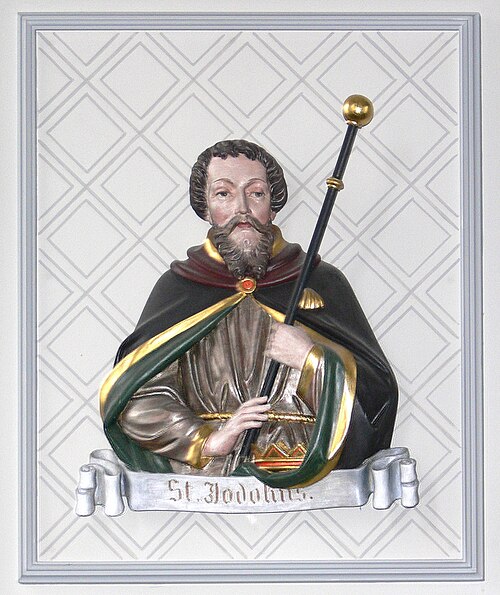
The Venerable Judoc (Jodoc, Josse) was a Breton noble of the seventh century, son of King Juthael of Brittany, who renounced wealth and rank, received the priesthood and lived as a hermit in a forest on the coast near the mouth of the river Canche. He fell asleep, according to tradition, in the year 668.
According to tradition, Judoc was the son of King Juthael of Brittany and the brother of the saints Judicael and Winnoc. Around 636 he renounced his inheritance and wealth and set out on a pilgrimage to Rome. On the way he was ordained priest and became chaplain to the lord of Ponthieu. After seven years he became a hermit at a place later called Saint-Josse-sur-Mer, where he remained until his death. An old story says that his body stayed incorrupt and that his followers had to keep cutting his hair after death.
A local cult grew around his grave. In the eighth century the Abbey of Saint-Josse was built where his shrine was kept, a small monastery on the site of his hermitage. In 903, for fear of Norman raids, some of the abbey's monks fled to England, bearing his relics, which were enshrined in the newly built New Minster at Winchester; to mark the event a feast was kept on 9 January. According to Alban Butler, Charlemagne gave the abbey to Alcuin, who made it a hostel for those crossing the Channel; later it was a place of pilgrimage, especially of Flemings and Germans, in the fourteenth and fifteenth centuries. The cult spread from France to the Low Countries, England, Germany and Scandinavia, and the names Josse, Joyce, Joos and Jocelyn became popular. Pierre de Beauvais wrote in the thirteenth century a Life of Saint Judoc in Old French verse. The Suaire de Saint-Josse, a silk cloth woven in north-eastern Iran before 961, wrapped the saint's bones when he was reburied in 1134; today it is in the Louvre. The abbey was closed in 1772 and demolished after 1789, and its church became the parish church of Saint-Josse, where the shrine with his relics stands. In icons he is shown with a pilgrim's staff and a crown at his feet, a sign of the renunciation of his wealth. Chaucer mentions him in the Canterbury Tales. His feast is on 13 December.
Commemorated the same day December 13
 SolomonProphet · King of IsraelDec 13
 JacobRighteous · The Patriarch IsraelDec 13
 LucyMartyr · of SyracuseDec 13
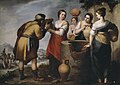 RebeccaRighteous · The MatriarchDec 13
 DeborahProphet · Prophetess and JudgeDec 13
 BenjaminRighteous · The PatriarchDec 13
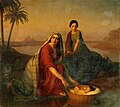 MiriamProphet · Sister of Moses and AaronDec 13
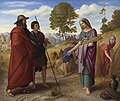 RuthSaint · Ancestor of the LordDec 13
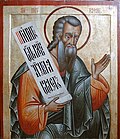 NathanProphet · The ProphetDec 13
 HezronRighteous · Ancestor of the SaviorDec 13
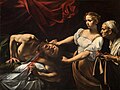 JudithSaint · Widow who saved BethuliaDec 13
 Dosoftei of MoldaviaSaint · Metropolitan of MoldaviaDec 13