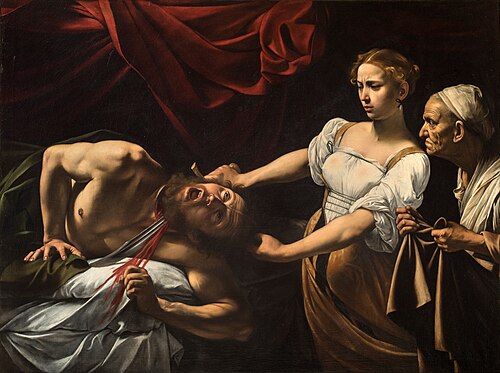
Saint
Judith
Widow who saved Bethulia
Jewish widow who, according to the book that bears her name, delivered her city from the Assyrians.
- Feast
- December 13old style December 26
- Era
- unknown
Life
Judith is the heroine of the Book of Judith, one of the books of the Old Testament received in the Orthodox Church and called deuterocanonical. The book tells of a Jewish widow of the city of Bethulia who delivered her city and her people from the Assyrian army. The name Judith means "praised" or "Jewess" and is the feminine form of Judah.
Nebuchadnezzar, who ruled at Nineveh, sent his commander Holofernes to punish the western peoples who had not submitted to him, the Israelites among them. Holofernes laid waste many lands and approached Judea. When he reached the plain of Esdraelon, he found that the pass toward Jerusalem had been closed by the people of the fortified cities of Bethulia and Betomesthaim, at the order of the high priest. Achior, leader of the Ammonites, urged him to turn back, saying that the Jews are invincible while they remain faithful to their God. Holofernes ordered him bound and handed over to the Israelites, and the people of Bethulia freed him. Holofernes then seized the springs of the city and condemned its people to a slow death by thirst. The people demanded that the elders surrender.
Then Judith arose, a devout widow known for her pure life. She rebuked the elders for putting God to the test, prayed, dressed herself and went out with a maid to the enemy camp. Her beauty drew the attention of Holofernes. When at a banquet he drank heavily and fell asleep, Judith cut off his head and carried it to the city. The next day, at the sight of the head, the Assyrians fled, the Israelites pursued them, and the city was saved.
The book is not in the Hebrew canon, and Protestants call it apocryphal. Most scholars today regard it as a didactic tale rather than a historical source, because the text contains several historical anachronisms. The Church receives it as part of Holy Scripture. From the Renaissance on, Judith has been among the most frequent subjects of art.
Commemorated the same day December 13
 SolomonProphet · King of IsraelDec 13
 JacobRighteous · The Patriarch IsraelDec 13
 LucyMartyr · of SyracuseDec 13
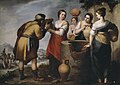 RebeccaRighteous · The MatriarchDec 13
 DeborahProphet · Prophetess and JudgeDec 13
 BenjaminRighteous · The PatriarchDec 13
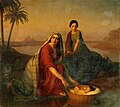 MiriamProphet · Sister of Moses and AaronDec 13
 RuthSaint · Ancestor of the LordDec 13
 NathanProphet · The ProphetDec 13
 JudocVenerable · Hermit of Breton birthDec 13
 HezronRighteous · Ancestor of the SaviorDec 13
 Dosoftei of MoldaviaSaint · Metropolitan of MoldaviaDec 13