Martyr
Cassian of Imola
Saint of the fourth century, venerated at Imola in Italy and commemorated on 13 August.
Life
Holy Martyr Cassian of Imola was a Christian teacher, venerated in northern Italy, who suffered martyrdom for refusing to sacrifice to the Roman gods. Little is known of his life with certainty, but the traditional accounts converge on the details of his martyrdom. The Church commemorates him on 13 August; the traditional date of his martyrdom is 13 August 363, in the time of the emperor Julian the Apostate, though some sources place it in the great persecution of the early fourth century.
Life and martyrdom
According to tradition Cassian was a schoolmaster at Imola, the ancient Forum Cornelii, where he taught grammar and literature. To some of his pupils he also taught shorthand, the forerunner of modern stenography. Besides the learning of the world, he sought to teach the young the foundations of the Christian faith. Some people of the city denounced him to the Roman prefect as the founder of a new religion, and the court ordered him to renounce it and bow to the known gods. Cassian refused and was condemned to death. Some sources also call him bishop of Imola.
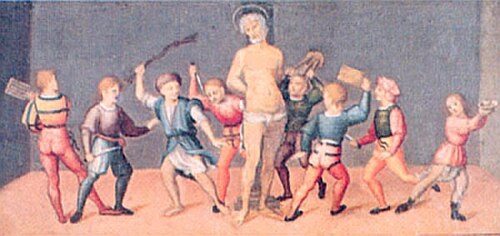
The execution was left to his own pupils, who bound him to a stake and stabbed him with their sharp iron styli, with which they wrote on wooden or wax tablets. Tradition says that the pupils wished to take revenge for the punishments he had given them. It cannot be determined with certainty in which persecution he suffered.
Relics and veneration
The Christians buried him at Imola. After the Edict of Milan in 313 a structure was raised over his grave, and the Christian poet Prudentius visited the place. Later his relics were honored in a rich mausoleum. A settlement bearing his name arose nearby, Castrum Sancti Cassiani. The saint's hand and the column to which he was bound were preserved; the column, with traces of his blood, was found by chance in 1085 and for centuries was kept in the parish church of the Holy Cross.
His veneration was great. Saint Peter Chrysologus, bishop of Ravenna, asked to be buried beside him; the saint appears in the chapel of San Crisologo and in the basilica of Sant'Apollinare Nuovo. From Ravenna the cult spread to Comacchio, then north of the Po. About the middle of the fifth century he is mentioned at Milan. Pope Symmachus (498-514) consecrated an altar in his honor at Rome, and Ennodius, bishop of Pavia, placed part of his relics in a church of the city. The monastery of San Casciano in Val di Pesa and the church of San Cassiano in Venice are dedicated to him.
In the Italian Alps the saint is much venerated; in Tyrol a special office was composed for him, and when the episcopal see was moved to Bressanone in the tenth century, the new cathedral was dedicated to Saints Cassian and Ingenuin. Churches in his honor are also found at Percha and in the Pustertal, at Innsbruck and at Regensburg. On 13 August 1577 the custom began of carrying his relics in procession from the cathedral to the church of the Holy Cross, a custom abolished in 1914.
Cassian is patron of Imola, of the diocese of Bolzano-Bressanone, of Ferrara-Comacchio, of teachers and of parish clerks, and the Brothers of the Christian Schools (La Salle) count him as a patron. He is also patron of Mexico City. Since 1712 a calendar of more than four hundred pages has appeared each year in Bressanone in his honor, "teacher and protector of educators."
Commemorated the same day August 13
 PontianHieromartyr · Bishop of RomeAug 13
 Maximus the ConfessorVenerable · Monk and TheologianAug 13
 EudociaRight-Believing · Empress of ByzantiumAug 13
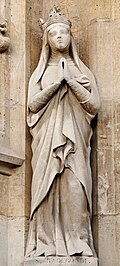 RadegundVenerable · Frankish queen, founder of a conventAug 13
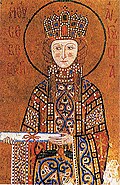 Irene of HungaryRight-Believing · Byzantine EmpressAug 13
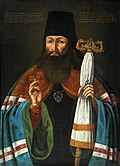 Tikhon of ZadonskSaint · Bishop of VoronezhAug 13
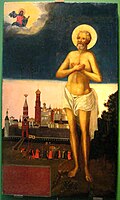 Maxim of MoscowFool-for-Christ · Fool for ChristAug 13
 Seraphim ZvezdinskyHieromartyr · Bishop of DmitrovAug 13
- Seridus of GazaVenerable · Abbot at GazaAug 13
 ConcordiaMartyr · Martyr of RomeAug 13
 Hippolytus of RomeMartyrAug 13
- Abundius of RomeMartyrAug 13