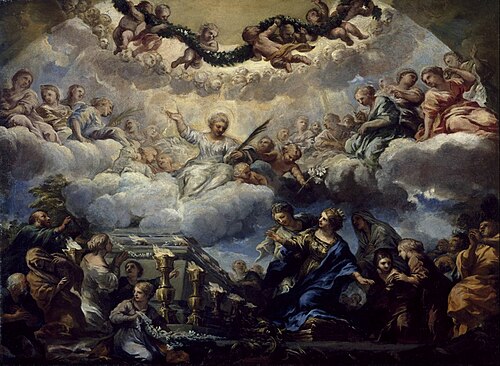
Right-Believing
Constantina
Daughter of Constantine the Great
Eldest daughter of Constantine the Great, venerated as a saint, who died in 354.
- Feast
- February 25old style March 10
- Reposed
- 3544th century
- Place
- Roman Empire
Life
Saint Constantina was the eldest daughter of the emperor Constantine the Great and of Fausta, and she died in 354. She was venerated as a saint, and a medieval legend attributed to her stories unlike what is known of her. She is commemorated in February, on 18 or 25 February.
Family
Constantina, sometimes called Constantia, was born before the middle of the 320s, in the marriage of Constantine to Fausta, daughter of the emperor Maximian. She was the sister of Constantine II, Constans, Constantius II and Helena. In 335 she was married to her cousin Hannibalianus, son of Dalmatius, whom Constantine had made “king of kings” over the Pontic tribes. After Constantine’s death, in the great slaughter of the imperial family in 337, her husband was killed. It is said her father had given her the title Augusta, but the report comes from a single historian and is debated.
Troubled times
From 337 to 350 her name disappears from the sources. In 350, when Magnentius revolted against her brother Constantius, she became directly involved: she used her rank and connections and urged the old commander Vetranio to proclaim himself caesar, to face Magnentius. Magnentius asked for her hand, but Constantius refused. In 351 Constantius gave her as wife to her cousin Constantius Gallus, made caesar of the East, who was much younger than she. They moved to Antioch, where Gallus ruled harshly, and she supported him. They had a daughter, Anastasia, of whose fate nothing is known.
Her end
In 354, when Constantius summoned Gallus, he sent his wife to defend him before her brother. On the way Constantina died of a sudden fever at Caeni Gallicani, in Bithynia. Her body was taken to Rome and placed in a mausoleum begun by her father on the Via Nomentana, which later became the church of Santa Costanza, and her porphyry sarcophagus is now in the Vatican Museums. The historian Ammianus Marcellinus left a harsh judgment of her, but scholars think it must be read with care.
Commemorated the same day February 25
 Felix III of RomeSaint · Bishop of RomeFeb 25
 Æthelberht of KentRight-Believing · King of KentFeb 25
 WalburgaVenerable · Abbess of HeidenheimFeb 25
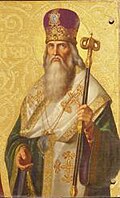 Tarasios of ConstantinopleSaint · Patriarch of ConstantinopleFeb 25
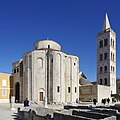 Donatus of ZadarSaint · Bishop of ZadarFeb 25
 Alexander of RomeMartyr · Roman soldierFeb 25
 Reginos of SkopelosHieromartyr · Bishop of SkopelosFeb 25
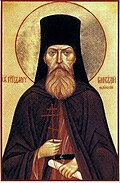 Gennady RebezaVenerable Martyr · Abbot of Bizyukov MonasteryFeb 25
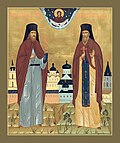 John LabaVenerable Martyr · MonkFeb 25
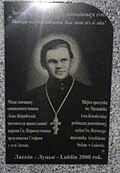 Leo KorobchukHieromartyrFeb 25
- Asclepius of SyriaVenerable · Syrian hermitFeb 25
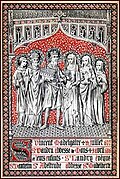 Aldetrudis of MaubeugeVenerable · Abbess of MaubeugeFeb 25