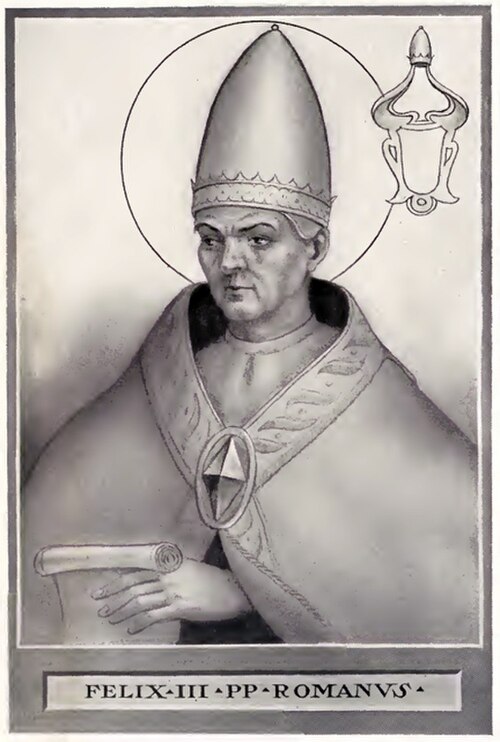
Saint
Felix III of Rome
Bishop of Rome
Bishop of Rome from 483 to 492, who rejected the Henotikon, leading to the Acacian schism.
- Feast
- February 25old style March 10
- Reposed
- 4925th century
- Place
- Rome
- Order
- Hierarchs
Life
Felix III of Rome (called the Second in some lists, because an antipope of the fourth century bore the name Felix) was bishop of Rome from 13 March 483 until his death on 1 March 492. His rejection of the Henotikon began the Acacian schism between Rome and Constantinople. He is venerated as a saint in the Roman Catholic Church on 1 March, and an Orthodox list of Latin Saints of the Orthodox Patriarchate of Rome (the Western rite) includes him on the same day. He does not appear in the Menaion of the Greek or Slavic Churches, and we found no Orthodox commemoration for him in the main Eastern calendars.
Family and election
He was born into a noble Roman family, the Anicii, and was the son of a priest. He was married and widowed before his election and had two children. Through his son Gordianus, a priest, he was an ancestor of Pope Gregory the Great, and some think of Pope Agapetus I as well. The Roman Martyrology of 1576 speaks of him as the ancestor of Gregory the Great.
His election on 13 March 483 broke the old rule that the people of Rome and the emperor should be consulted. Since there was no longer an emperor in the West, the Gothic King Odoacer claimed the right, and his envoy Basilius showed a decree of the late Pope Simplicius that allowed the king's advice in the election. No one opposed it, and Felix was chosen.
The Henotikon and the Acacian schism
In 482 Emperor Zeno, at the suggestion of Patriarch Acacius of Constantinople, had issued the Henotikon, an edict meant to reconcile the supporters of Chalcedon with the Monophysites. It confirmed the condemnations of Eutyches and Nestorius and the anathemas of Cyril of Alexandria, but it avoided saying whether Christ has one nature or two, and it did not mention the Council of Chalcedon. Felix at once repudiated it and wrote a letter of reproach to Acacius.
The emperor had driven the patriarchs of Antioch and Alexandria from their sees, and the Monophysites Peter the Fuller and Peter Mongus had taken their thrones. Felix excommunicated Peter the Fuller at his first synod and Peter Mongus in 484. He sent legates to Constantinople, but they were arrested and, under pressure, agreed to serve with Acacius when the name of Peter Mongus was read in the diptychs. When this became known in Rome, Felix saw it as a betrayal of the faith of Chalcedon. On 22 July 484 he gathered a synod of 77 bishops in Rome, which deposed Acacius and cut him off from the communion of the Church.
The letter of excommunication was brought secretly to Constantinople, and according to a Russian account one of the Akoimetoi monks pinned a copy to the omophorion of the patriarch during the service in Hagia Sophia. Acacius, relying on the emperor, ignored the sentence, and the name of the pope was struck from the diptychs. The schism that followed lasted about thirty-five years and was healed only in 519.
Care for Africa
In North Africa the Arian Vandal kings Genseric and Huneric had persecuted the Catholics for more than fifty years, and many had been rebaptized by the Arians out of fear. When the persecution eased, many wished to return to the Church. Felix convened a synod in 487 and sent the bishops of Africa a letter setting out the conditions on which those who had fallen could be received back.
Repose
Felix reposed on 1 March 492 after a pontificate of eight years, eleven months and twenty-three days, and was buried in the family tomb in the Basilica of Saint Paul outside the Walls. A legend tells that he appeared to his descendant Trasilla, an aunt of Pope Gregory the Great, and called her to heaven; she died on the eve of Christmas, seeing Christ beckon to her.
Commemorated the same day February 25
 Æthelberht of KentRight-Believing · King of KentFeb 25
 WalburgaVenerable · Abbess of HeidenheimFeb 25
 Tarasios of ConstantinopleSaint · Patriarch of ConstantinopleFeb 25
 ConstantinaRight-Believing · Daughter of Constantine the GreatFeb 25
 Donatus of ZadarSaint · Bishop of ZadarFeb 25
 Alexander of RomeMartyr · Roman soldierFeb 25
 Reginos of SkopelosHieromartyr · Bishop of SkopelosFeb 25
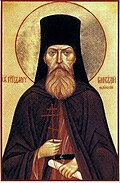 Gennady RebezaVenerable Martyr · Abbot of Bizyukov MonasteryFeb 25
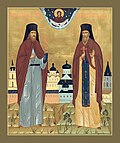 John LabaVenerable Martyr · MonkFeb 25
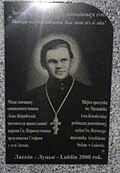 Leo KorobchukHieromartyrFeb 25
- Asclepius of SyriaVenerable · Syrian hermitFeb 25
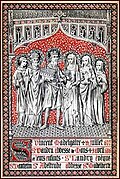 Aldetrudis of MaubeugeVenerable · Abbess of MaubeugeFeb 25