Saint
Donatus of Zadar
Bishop of Zadar
Bishop of Zadar and diplomat of the Dalmatian city-state, at the turn of the 8th and 9th centuries.
- Feast
- February 25old style March 10
- Reposed
- 8119th century
- Place
- Zadar
- Order
- Hierarchs
Life
Donatus (second half of the eighth century to the first half of the ninth) was bishop of Zadar and a leading figure in the diplomacy of the Dalmatian cities, at the turn of the eighth and ninth centuries. He is venerated by the Catholic Church in Zadar and remembered on 25 February. Our sources show no canonization by the Orthodox Church, only a local one, made by the people of the city.
Bishop and envoy
He was born in the second half of the eighth century at Zadar, in Dalmatia. In 801 he became bishop of the city. Zadar, like several other Dalmatian cities, was under Byzantine rule, while almost all the rest of the region was under Charlemagne. The cities left under Byzantine protection were attacked from time to time by neighbours on land and were always threatened from the sea, against which they were almost defenceless. Then, in 805, the people of Zadar decided to send an embassy to the Carolingian emperor, with Bishop Donatus at its head, to conclude an agreement by which the remaining Dalmatian cities would enter his empire. Frankish annals of 805 mention him as an ambassador of the Dalmatian cities to Charlemagne, at Thionville. Charles accepted the proposal and issued a decree by which Dalmatia was recognized as a province of his empire.
The Byzantine emperor Nicephorus I, learning of the agreement, sent a war fleet to the shores of Dalmatia, to restore his rule. After he prevailed, in 812, he organized peace talks at Aachen, to which Donatus too was invited, as representative of Zadar. In the talks Nicephorus forgave the treason of the Dalmatian cities, received their envoys as allies and friends and, as a sign of strengthening the ties between Byzantium and Zadar, gave the city parts of the relics of the Holy Great Martyr Anastasia the Deliverer from Poisons. Bringing the relics to Zadar, Donatus proclaimed Saint Anastasia patroness of the city and diocese and made a marble shrine for her remains. By the tradition given in the English source, Donatus brought the relics from Constantinople, when he was there with the Venetian duke Beatus, sent by Charlemagne to settle the border between the Byzantine Empire and the Croatian lands under his rule. Our sources agree neither on the place from which the relics came nor on the year of his death: one says he died about 811, another shows him present at the talks of 812.
The church and veneration
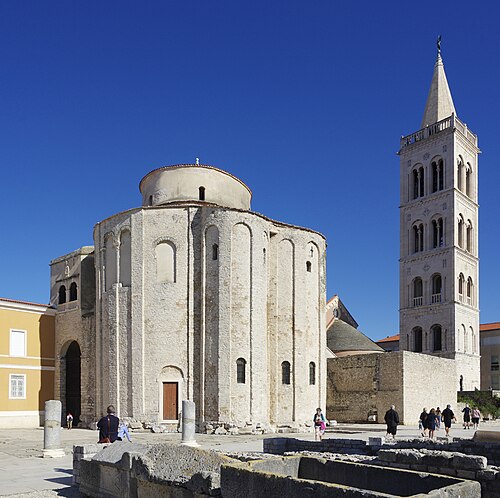
Donatus is credited with beginning the building or enlargement of the church of the Holy Trinity, completed at the beginning of the ninth century. The Venetians later changed its name to the church of Saint Donatus. It is the largest pre-Romanesque building in Croatia and was built on the ruins of the old Roman forum, whose foundations can still be seen today. In the cathedral, the marble sarcophagus preserves the relics of the martyr Anastasia of Sirmium, with an inscription from Donatus's time.
When he returned from Aachen with the peace signed and the relics of the great saint, he gained great authority in the eyes of the people of Zadar. From then on they called him "father of the fatherland", and after his death they placed his body in the church of the Holy Trinity, recently built by him, and, without waiting for a decision of the pope on canonization, proclaimed him a saint themselves. He died about 811 and was buried in his church. After 1809, following the French occupation of Zadar, his bones were moved to the cathedral of Saint Anastasia, where they are today, and for about two centuries no liturgy has been celebrated in the church.
Commemorated the same day February 25
 Felix III of RomeSaint · Bishop of RomeFeb 25
 Æthelberht of KentRight-Believing · King of KentFeb 25
 WalburgaVenerable · Abbess of HeidenheimFeb 25
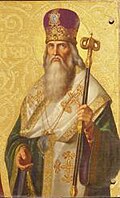 Tarasios of ConstantinopleSaint · Patriarch of ConstantinopleFeb 25
 ConstantinaRight-Believing · Daughter of Constantine the GreatFeb 25
 Alexander of RomeMartyr · Roman soldierFeb 25
 Reginos of SkopelosHieromartyr · Bishop of SkopelosFeb 25
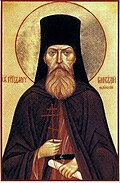 Gennady RebezaVenerable Martyr · Abbot of Bizyukov MonasteryFeb 25
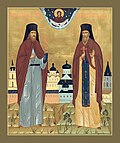 John LabaVenerable Martyr · MonkFeb 25
 Leo KorobchukHieromartyrFeb 25
- Asclepius of SyriaVenerable · Syrian hermitFeb 25
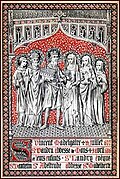 Aldetrudis of MaubeugeVenerable · Abbess of MaubeugeFeb 25