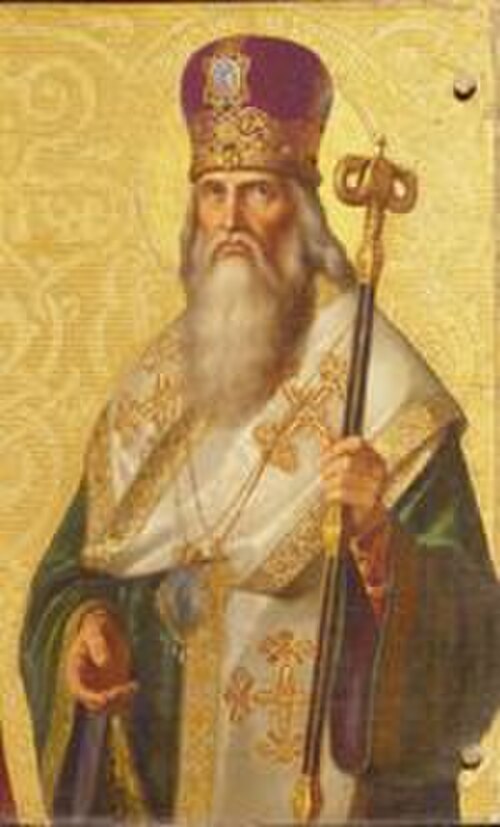
Saint
Tarasios of Constantinople
Patriarch of Constantinople
Patriarch of Constantinople from 784 to 806, who presided over the Seventh Ecumenical Council at Nicaea.
- Feast
- February 25old style March 10
- Reposed
- 8069th century
- Place
- Constantinople
- Order
- Hierarchs
Life
Saint Tarasios, hierarch, was patriarch of Constantinople from 25 December 784 until his death in 806. He presided over the Seventh Ecumenical Council at Nicaea, which ended iconoclasm and confirmed the veneration of the holy icons. He is commemorated on 25 February, and in the Catholic Church on 18 February.
Beginnings
He was born around 730 in Constantinople, into a distinguished family. His parents were named George and Eucratia, and his father was prefect of the city. He was related to important families, among them that of the future Patriarch Photios. He followed the path of imperial administration: he became a senator and then asekretis, that is, imperial secretary, to the emperor Constantine VI and his mother, the empress Irene. He had acquired a good education, both theological and secular.
The election
When Patriarch Paul IV withdrew to a monastery in 784, the empress Irene looked for a successor who would favour the veneration of icons and be ready to follow imperial commands so long as they were not against the faith. The choice fell on Tarasios, who was still a layman. He is said to have accepted with reluctance, setting the condition that the unity of the Church with Rome and the other patriarchs be restored and a council be called on the question of the icons. He was quickly ordained deacon and then priest, and was enthroned on the feast of the Nativity of the Lord in 784. Pope Adrian I did not look kindly on a layman rising to the throne, but he accepted Tarasios’ confession of faith and recognized him as patriarch.
The Seventh Ecumenical Council
The council was first convened in Constantinople, in 786, but mutinous soldiers burst into the church and scattered the assembly. In 787 the delegates met at Nicaea. Tarasios presided over the proceedings, questioned the bishops who had been iconoclasts and discussed the terms for receiving them back into communion. The council condemned iconoclasm and confirmed the veneration of icons, distinguishing the reverence due to images from the worship owed to God alone. Towards the bishops who had repented the patriarch showed gentleness, which stirred the opposition of some monks, led by Theodore the Studite, and brought him charges of leniency towards simony, which he rejected.
Trials under Constantine
In 795 the emperor Constantine VI put away his wife, Maria of Amnia, and wished to marry Theodote. The sources do not agree in every detail, but the memory is kept that Tarasios asked the emperor not to do it, and the new marriage was blessed not by him but by a priest, whom the patriarch then deposed. Many monks were nevertheless displeased with the way the patriarch dealt with the emperor.
Repose
Tarasios guided the Church for twenty-two years and four months. Tradition says that he was merciful to the poor and the wronged and built shelters for them, yet stood firm before the powerful in matters of faith and morals. He fell asleep on 25 February 806. It is told that in the hour of death he was seen defending himself against spirits, saying that he was not guilty of the sins they set before him, and after he gave up his soul his face shone like the light of the sun. The Church honours him for his defence of the icons and for his labour for the peace and unity of the Church.
Commemorated the same day February 25
 Felix III of RomeSaint · Bishop of RomeFeb 25
 Æthelberht of KentRight-Believing · King of KentFeb 25
 WalburgaVenerable · Abbess of HeidenheimFeb 25
 ConstantinaRight-Believing · Daughter of Constantine the GreatFeb 25
 Donatus of ZadarSaint · Bishop of ZadarFeb 25
 Alexander of RomeMartyr · Roman soldierFeb 25
 Reginos of SkopelosHieromartyr · Bishop of SkopelosFeb 25
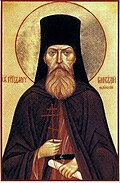 Gennady RebezaVenerable Martyr · Abbot of Bizyukov MonasteryFeb 25
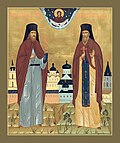 John LabaVenerable Martyr · MonkFeb 25
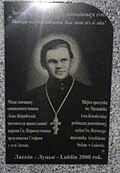 Leo KorobchukHieromartyrFeb 25
- Asclepius of SyriaVenerable · Syrian hermitFeb 25
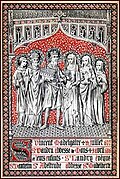 Aldetrudis of MaubeugeVenerable · Abbess of MaubeugeFeb 25