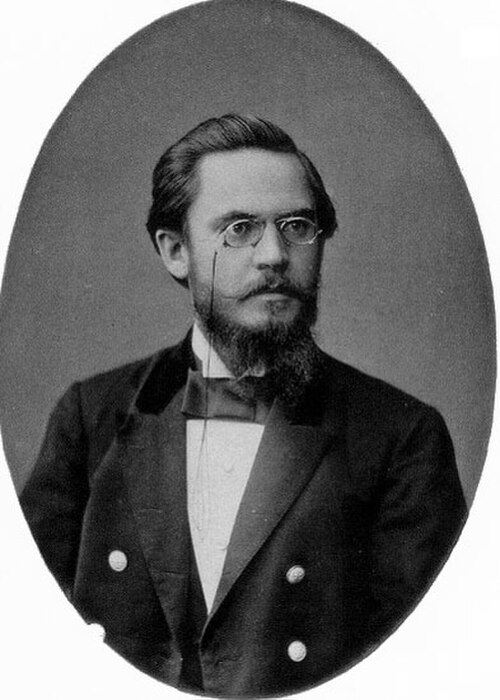
Hieromartyr
Elijah Gromoglasov
Archpriest and theologian
Archpriest and theologian, an expert in church law and the history of the Old Believers, who died a martyr in 1937.
- Feast
- January 29old style February 11
- Reposed
- 193720th century
- Place
- Tver
- Order
- Martyrs
Life
Saint Elijah Gromoglasov, the Hieromartyr (1869 to 1937), was a Russian theologian, archpriest, professor at the Moscow Theological Academy and at Moscow University, and a specialist in church law and the history of the Old Believers. He was a member of the Local Council of 1917 and 1918 and, in the time of Soviet persecution, a priest arrested four times. He was shot at Tver in December 1937 and canonized in 2000.
Childhood and training
He was born to the family of a village deacon, in the village of Eryomshinsky Zavod, in the Temnikov district of Tambov province. He graduated from the theological school at Shatsk (1883), the Tambov seminary (1889) and the Moscow Theological Academy, with the degree of candidate in theology (1893). His candidate's thesis, on whether the sacrament of marriage should be celebrated for those who pass from schism to the Church and had earlier lived in marriage, received the Metropolitan Joseph prize. He remained as a professorial fellow in the chair of church law.
From September 1894 he taught the history and refutation of the Russian schism and local sects at the Penza seminary. From December 1894 he was lecturer at the Moscow Academy, where from 1900 to 1910 he also taught English. In October 1908 he defended his master's thesis, "Definitions of Marriage in the Kormchaya and Their Significance for Research on the Form of the Christian Marriage Contract", which received the Metropolitan Macarius prize.
He was extraordinary professor in the chair of the history of the church schism at the Moscow Academy (1909 to 1911). In 1911 he was dismissed as one of the professors who had joined the so-called liberation movement, on the initiative of Bishop Theodore (Pozdeevsky), who prevented his move to the vacant chair of church law. From 1909 to 1912 he was inspector of classes at the Mariinsky girls' school, and from 1912 to 1916 assistant head of the school department of the Moscow city administration. He also taught Russian literature and world history at a Moscow girls' gymnasium directed by his wife, Lydia, daughter of Prince Nikolai Fyodorovich Dulov.
He was a member of several learned societies, among them the Society of Russian History and Antiquities at Moscow University (1904) and the Russian Archaeological Society (corresponding member from 1909). In 1914 he graduated as an external student from the law faculty of Moscow University with a first-class diploma, and in 1916 he passed oral examinations in church and state law for the degree of master of church law. From 1916 he was lecturer at the law faculty of the university and teacher at the Poltoratskaya higher courses for women. In 1917, after the February revolution, he was restored as professor of the Academy, remaining also at the university until 1921, when he was dismissed for ideological differences with the Soviet power. In 1920 he was elected full professor of the academy, which was then working unofficially.
In the summer of 1917, as an expert on sectarian questions for the Extraordinary Commission of the Provisional Government, he rejected the accusation against Rasputin of belonging to the Khlysts. In 1917 he was also a delegate of the Moscow diocesan congress, a member of the Council beside the administrator of the diocese and chairman of the church administration section of the All-Russian Congress of Clergy and Laity.
The Local Council
From May 1917 he worked in several sections of the Pre-Conciliar Council. He was a member of the Local Council of 1917 and 1918, took part in all three sessions, was deputy chairman of section III and a member of several others, and was elected a member of the Higher Church Council from the laity. He was an ardent supporter of lay participation in the affairs of the Church and of the conciliar principle in its governance. At first he was for synodal governance of the Church and against the restoration of the Patriarchate.
In the discussion of the appeal of Patriarch Tikhon of 19 January 1918, in which the "madmen", meaning the Bolsheviks, were anathematized, he supported the document, saying that the moment of self-determination had come: each must decide before his conscience and the Church whether he is a Christian or not, whether he has stayed faithful to the Church or betrayed Christ. He spoke against permitting a second marriage for clergy and defended the immovability of the canons.
The priest
In February 1922 he was ordained by Patriarch Tikhon, on 18 February deacon and on 20 February priest, for the church of the Holy Martyr Antipas in Moscow. On 22 March 1922 he was arrested. At the trial over the confiscation of church valuables he was sentenced to a year and a half of imprisonment, changed to a year of exile, but he was left in Moscow, held in Butyrka, in the Sokolniki house of correction and in the GPU's internal prison. After release on 1 August 1923 he was temporarily named rector of the church of the Resurrection at Kadashi, and on 30 September the parishioners elected him to that post.
On 8 March 1924 he was arrested again and sentenced by the OGPU Collegium to three years' exile in the Urals, execution deferred. On 19 May 1925 he was arrested a third time and exiled for three years to the village of Surgut, in the Tobolsk district. After exile he was forbidden to live in Moscow and other large cities and settled in Tver, where he served at the church of the icon of the Mother of God "The Unburnt Bush".
He revered Patriarch Tikhon and after his death, in April 1925, was one of the first to foretell his canonization. He said that they believed and knew that the Patriarch would stand before the throne of the Most High as an unashamed labourer of the Church and intercede with unutterable sighs for the Russian Church, whose angel he had been, and that the Lord would have mercy on the Russian Church through the prayers of the Patriarch.
Arrest and martyrdom
In the night of 2 to 3 November 1937 he was arrested a fourth time. He was accused of taking part in a "counter-revolutionary fascist and monarchist organization", supposedly headed by Archbishop Thaddeus (Uspensky). He did not plead guilty, rejected all charges and named no "accomplices". On 2 December 1937 the NKVD troika sentenced him to death. The sentence was carried out two days later. He was buried in a common grave at the Volynskoe cemetery in Tver.
He was canonized on 19 September 1999 as a locally venerated saint of the Tver diocese. In August 2000 the Bishops' Council of the Russian Church numbered him among the New Martyrs and Confessors of Russia for veneration throughout the Church.
His writings
He wrote many studies, among them on the sanctity of marriage, on the Russian schism of the Old Believers and their Belokrinitsa hierarchy, on scholars of church history, on Patriarch Nikon and his first biographer, John Shusherin, on Metropolitan Platon of Moscow, on the Kormchaya, on the temperance movement of Moscow and on the relation between the Church and public renewal. He wrote articles for the Orthodox Theological Encyclopedia and also left verses, published in an anthology of the poetry of Gulag prisoners.
Commemorated the same day January 29
 Gildas the WiseVenerable · British monk and writerJan 29
 AphrahatVenerable · Syriac writerJan 29
 Ashot I the GreatRight-Believing · Prince of IberiaJan 29
 Aquilinus of MilanMartyr · Missionary priestJan 29
 Constantius of PerugiaSaint · Bishop of PerugiaJan 29
 Martyrs of AlapayevskHoly New Martyrs · Members of the Romanov familyJan 29
 Lawrence of TurovSaint · Bishop of TurovJan 29
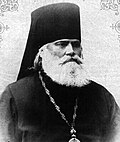 Macarius GnevushevHieromartyr · Bishop of VyazmaJan 29
 Jonah of PermSaint · Bishop of PermJan 29
 Pitirim of PermHieromartyr · Bishop of PermJan 29
- Aphrahat the HermitVenerableJan 29
- Joannicius DmitrievVenerable Martyr · ArchimandriteJan 29