Hieromartyr
Emilian Kireev
A Russian priest who died a martyr for his faith in Christ during the communist persecution.
- Feast
- December 13old style December 26
- Reposed
- 194120th century
- Order
- Martyrs
Life
Holy Hieromartyr Emilian Kireev, a priest, received the crown of martyrdom by shooting on 26 December 1941, near Alatyr in Chuvashia, together with the priest Basil Pokrovsky. He was born in 1903 in the village of Kuzminki in the Ardatov district of the Simbirsk province, in the family of the peasant Alexei Kireev, as the sixth child. The Russian Church numbered him among the New Martyrs and Confessors at the session of the Holy Synod of 6 October 2003.
Childhood and the call to monasticism
Already as a child he used to walk about the garden swinging a bast shoe as if it were a censer. With the years he drew ever closer to the church services. At eighteen his father decided to marry him to Praskovia, daughter of a peasant in the neighbouring village of Savrasovo. Emilian, whose thoughts inclined more and more to monasticism, did not want to marry, grieved and wept, but his father was unyielding.
After the wedding he begged his wife to let him go to a monastery, and she agreed, and he left. In 1922 the monastery where he lived was closed, he returned home and worked on the farm. In 1928 he went to Alatyr, where he began to serve in church as a reader and to prepare for ordination as deacon. But in the village it was learned that he was serving in church, and his nephew, chairman of the collective farm, denounced him to the NKVD.
In 1929, when they came to arrest him, he was not at home, and then, hiding from arrest, he and his wife left for East Kazakhstan, to his brother. There he took a job as reader in the village of Elovka near Barnaul in the Altai. In 1930 he was ordained deacon. But his brother's wife would not tolerate relatives and asked them to leave.
The family fell into want, and the daughter Anastasia fell gravely ill from hunger; he prayed that the Lord would take her to Himself, but the girl recovered. When they set out on the way back, all their money was stolen; a kind woman called them to a local state farm, where he took work as a stableman, in very hard conditions, with only a few kilograms of flour a month for the whole family. Soon money for the journey was sent from home and they returned to their homeland.
Priesthood
In 1932, at Alatyr, the deacon Emilian was ordained priest by Bishop Pamphilus Lyaskovsky of Cheboksary. From 1932 he served in the church of the village of Lyubimovka, from 1935 at Ichiksy and from 1936 at Akhmatovo, in the Alatyr district. Churches were being closed by the authorities one after another. The last place of his service was the church of the First Martyr and Archdeacon Stephen on the outskirts of Alatyr, called the field church, the only one left open in the city.
He served there with the priest Basil Pokrovsky and the deacon Feodor Tarentinov. As a priest, he zealously fulfilled all rules of prayer and all services, and fasted very strictly: from Holy Thursday to the Resurrection of Christ he ate nothing. He prayed mostly at night. His eldest daughter Anastasia told that once, while her father was praying on his knees at night, they heard someone tearing up the boards of the attic and about to enter, all were frightened, but he remained as he was, in prayer; in the morning the attic was in order.
Another time, when he was praying, those in the house heard horses arrive at their house, stop and talk, but Father Emilian paid no attention and went on praying; in the morning there were no tracks on the porch and the snow lay untouched everywhere.
He was also greatly merciful, loved all without partiality, rich and poor, helped everyone, wept with those who wept and rejoiced with those who rejoiced. His love of the poor and of strangers had no limit. In all the years of his priesthood he was persecuted by the authorities: he was often summoned to the NKVD, where he was held long at interrogations, threatened with punishment if he did not renounce the priesthood, then ridiculed that, being young, he did not want to work and deceived the people to earn money.
He was asked to write a statement that God does not exist, in exchange for which he was offered a good job. He always answered: Take me even now, but I will never renounce God. When he went to these meetings, he was ready for arrest and took with him a little bag of rusks, which he left with his daughter Anastasia, who accompanied him.
Arrest and martyrdom
He was arrested on 25 July 1941 and interrogated the same day, then on 3, 4 and 9 August. In 1941 the authorities of Alatyr decided by any means to close the last church in the city, and a huge tax levied on the priests of the field church, which they could not pay, was the pretext for closing, followed by the arrest of the priests.
At the interrogation he denied having conducted agitation and said that he taught about confessing the true faith and loving one another: not to envy, steal, deceive or offend anyone, to believe in God, to keep the fasts, to honour Sundays and Wednesdays and Fridays. On 23 September the investigation ended, on 10 October the indictment was presented, and on 30 October the trial took place, at which the priests bravely denied the charges.
The prosecutor asked the death penalty for Podrezov and ten years of imprisonment for Pokrovsky and Kireev, but the court sentenced all three to death. The joint appeal to the Supreme Court of the RSFSR was rejected.
The priests Basil Pokrovsky and Emilian Kireev were shot, according to a guard, in the evening of 26 December 1941, on the right bank of the river Sura near Alatyr. He is commemorated on 26 December, on 7 February in the Synaxis of the New Martyrs and Confessors of the Russian Church (new style), on 11 July in the Synaxis of the Saints of Chuvashia, and on 26 September in the Synaxis of the Saints of Altai.
Commemorated the same day December 13
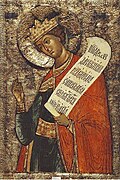 SolomonProphet · King of IsraelDec 13
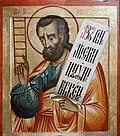 JacobRighteous · The Patriarch IsraelDec 13
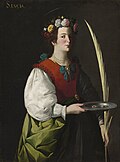 LucyMartyr · of SyracuseDec 13
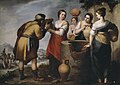 RebeccaRighteous · The MatriarchDec 13
 DeborahProphet · Prophetess and JudgeDec 13
 BenjaminRighteous · The PatriarchDec 13
 MiriamProphet · Sister of Moses and AaronDec 13
 RuthSaint · Ancestor of the LordDec 13
 NathanProphet · The ProphetDec 13
 JudocVenerable · Hermit of Breton birthDec 13
 HezronRighteous · Ancestor of the SaviorDec 13
 JudithSaint · Widow who saved BethuliaDec 13