Venerable
George the Recluse
The God-bearer
A venerable recluse, called the God-bearer, who died in 1068.
- Feast
- July 3old style July 16
- Reposed
- 106811th century
- Order
- Venerables
Life
Holy Venerable George the Recluse, called also the God-bearer, a Georgian, laboured on the Black Mountain and passed to the Lord in the year 1068. On the Black Mountain there were at that time many churches and monasteries, and many from all the Orthodox world longed to settle there. Misunderstandings often arose between monks of different nationalities. The saint found shelter in an inaccessible cleft of a high mountain and was therefore called the Recluse.
The monks of the Black Mountain knew well his holy life. So Venerable George the Athonite, having come to the Black Mountain and going with prayer round all the monasteries of the place seeking a spiritual father, asked to be received precisely by Saint George the Recluse. George the Recluse received the young ascetic and, after instructing him properly, blessed him to labour in the Iveron Monastery on Athos and to continue the translation work of Venerable Euthymius the Athonite. Venerable George went to Athos, but instead of translating books, for seven years fulfilled other obediences. Learning of it, George the Recluse sent a disciple to him with a reproach and ordered him again to translate theological books from Greek into Georgian. George the Athonite humbly submitted to the will of his guide.
Though he lived as a hermit, Saint George the Recluse carried on intense literary activity and had close ties with the writers of Iveron and other Georgian monasteries. He directed Father George the Athonite on the way of writing. At his request and charge, George the Lesser wrote the life and struggles of his guide, Saint George the Athonite. The saint himself copied lives translated by David Mtbevari, of Martha, the mother of Simeon the wonderworker, and of Saint Barlaam the Syro-Caucasian. He passed to the Lord in 1068, after the death of his renowned disciple, George the Athonite.
He is commemorated on 16 July, following the Georgian calendar. He is not included in the present calendar of the Russian Church.
Commemorated the same day July 3
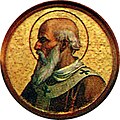 Leo II of RomeSaint · Bishop of RomeJul 3
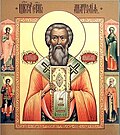 Anatolius of ConstantinopleSaint · Patriarch of ConstantinopleJul 3
- Anatolius of LaodiceaSaint · Bishop of LaodiceaJul 3
 Hyacinth of CaesareaMartyr · Martyr of CaesareaJul 3
 Heliodorus of AltinoSaint · First bishop of AltinumJul 3
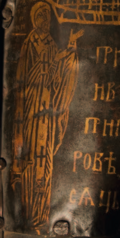 Basil KalikaSaint · Archbishop of NovgorodJul 3
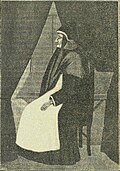 Euphrosyne of KolyupanovoFool-for-Christ · Fool for Christ and hermitJul 3
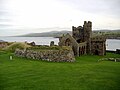 Germanus of ManSaint · First bishop of the Isle of ManJul 3
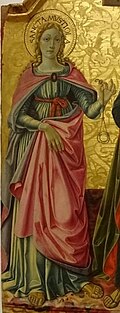 MustiolaMartyr · Martyr of ChiusiJul 3
 Basil Vsevolodovich of YaroslavlRight-Believing · Prince of YaroslavlJul 3
 Anatolius the RecluseVenerable · Recluse of the Kiev CavesJul 3
 John of YarenskVenerableJul 3