Hieromartyr
Gregory Faddeev
A hieromartyr of the Russian Church, who died in 1937.
- Feast
- December 13old style December 26
- Reposed
- 193720th century
- Order
- Martyrs
Life
Holy Hieromartyr Gregory Faddeev, a priest, shone by his martyrdom in the land of Bryansk. He was born on 14 April 1895 in the village of Nevar in the Dmitriev district of Kursk province, and died in a camp on 26 December 1937. He was glorified by the decision of the Holy Synod of 12 October 2007, following the Council of Bishops of 2000.
The infant seemed weak, so he was baptised the next day, in the village church of the Epiphany. His father, Ioann Andreevich, left a widower with three small children and a sick mother, remarried a widow, Xenia Nikolaevna, who had two small children of her own. Being a literate man, he passed an examination as an external candidate and became a psalmist at the village church. With this the Faddeev family entered the clerical estate. The father, the son of a serf cook, had held no land and received it only as a psalmist; he had sworn to give all his children an education.
In 1906, at eleven, Gregory entered the theological school at Rylsk, and in 1910 the seminary at Kursk, which he finished brilliantly in 1916. The three best graduates had the right to free study at the Academy, but his father told him to help his brothers and sisters, seven of them, to finish their studies. The years when the younger ones studied were not easy. At the diocesan school, together with his sister Elena, studied Vera Ivantsova, the daughter of a priest from the village of Bychki, his future wife.
They married, and Gregory was ordained a priest at the church of the Archangel Michael in Krivets, in the Tim district; at the request of the parishioners of Nevar, the diocesan council moved him to his native village. The young priest set about ordering parish life with zeal. A man with an ear for music, he organised a mixed choir, which he trained for a decade, and then two choirs, one of adults and one of children. He had the little singers explain what they had understood of what they sang and rejoiced at a right answer, and corrected a wrong one with love. In this way the children learned much of Holy Scripture well.
Those close to him remembered him as a kind, attentive and helpful man. He and his wife knew homeopathy and, in a time with no medical help in the villages, treated sick neighbours free of charge. Once he nursed for a long time his nearest neighbour, who had been badly burned. In 1922 and 1923, when the orphanage in Kuznetsovka was closed, he took into his family a girl from the orphanage, whom he prepared for secondary school; she fell ill with tuberculosis and died in 1926. He also took into his home a sick and helpless woman, a friend of his late mother, nursed her and buried her as a relative.
From the time of collectivisation dark days began. The kulaks were ordered to hand over an enormous quantity of grain in a very short time, and in the village there were four such families: Fr Gregory, his father and two brothers who were millers. In 1929 he was sentenced by the people's court to two years in prison and three years of expulsion from the region, for failure to deliver grain. The families of those sentenced were put out into the street; he already had three small children and his wife was expecting a fourth. In the summer of 1930 his sister Tatiana, a young teacher, went to fetch their father and her brother, worn out with lice and hunger. The father was freed without restrictions, and the priest without the right to live in Kursk region. He settled in the town of Sevsk, in Bryansk region. For a time he lived in the village of Khlebtovo, seven kilometres from Nevar, and came secretly at night to see his family; many from Nevar went at Pascha to Khlebtovo, where he blessed the Easter breads. One night, on the eve of the feast of the icon of the Mother of God of the Three Hands (25 July), he secretly baptised the unbaptised children of the village.
In 1930 he was appointed priest at the church of the icon of the Mother of God Seeking of the Lost in the village of Shvedchikovy Dvory, in the Sevsk district. He opposed the Renovationist movement and was close to Archpriest Varlaam Popov, the dean of Sevsk. Thanks to his preaching, collective farmers came to church in whole brigades. In 1936 he was ordered to deliver ninety kilograms of meat, and the church psalmist, the nun Xenia (Agafonova), collected money from the parishioners and paid for the meat for him. He was offered, as a literate man, to leave the priesthood for state service, but firmly refused.
On 28 July 1937 he was arrested. In the morning, as he was preparing to serve the Liturgy, he was called to the village council and did not return. The night before, at his house in Sevsk, a search had been made and the Reserved Gifts, his appointment from the bishop of Bryansk, his cassock, epitrachelion, cuffs, the Menaion for August, the Euchologion, the Bible and other books were taken. On 3 August the nun Xenia gathered the believers of the village, who resolved to send a delegation to Sevsk with a petition for his release. The priest did not admit the invented charges of anti-Soviet agitation. On 16 and 17 September 1937 the troika sentenced him to ten years in a labour camp. In the autumn his wife received word from him: he wrote that he had arrived at the camp after a hard journey, with fifty others, and that it was very cold. The letter ended with the words: Vera, look after the children, may they grow up to be real people. Farewell, we shall not see each other again.
The calendar says briefly that he was shot on 26 December 1937, but in February 1991 his daughter, Elena Ivashkova, received from the archive of the Ministry of the Interior of Komi the reply that he was serving his sentence in Ukhtizhemlag and died on 26 December 1937 of dysentery, the place of burial being unknown. He was rehabilitated on 27 July 1988.
He is commemorated on 26 December, on 7 February, in the Synaxis of the New Martyrs and Confessors of the Russian Church, on 11 February, in the Synaxis of the Saints of Komi, on 1 August, in the Synaxis of the Saints of Kursk, and on 3 October, in the Synaxis of the Saints of Bryansk (new style).
Commemorated the same day December 13
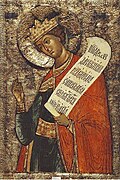 SolomonProphet · King of IsraelDec 13
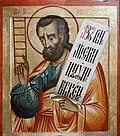 JacobRighteous · The Patriarch IsraelDec 13
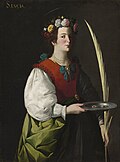 LucyMartyr · of SyracuseDec 13
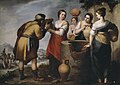 RebeccaRighteous · The MatriarchDec 13
 DeborahProphet · Prophetess and JudgeDec 13
 BenjaminRighteous · The PatriarchDec 13
 MiriamProphet · Sister of Moses and AaronDec 13
 RuthSaint · Ancestor of the LordDec 13
 NathanProphet · The ProphetDec 13
 JudocVenerable · Hermit of Breton birthDec 13
 HezronRighteous · Ancestor of the SaviorDec 13
 JudithSaint · Widow who saved BethuliaDec 13