Martyr
Gymnasius of Byzantium
Martyr of Byzantium, who suffered for the Christian faith.
- Feast
- September 27old style October 10
- Era
- unknown
- Order
- Martyrs
Life
Holy Martyr Gymnasius of Byzantium is commemorated in the calendar among the companions of Holy Martyr Callistratus, though the text we rely on gives him no particular place in the narrative. We tell below the story of Callistratus and his soldiers.
Callistratus was from Carthage. His grandfather, Neoscorus, had served under Emperor Tiberius in Palestine, under Pontius Pilate, and had been a witness of the Passion, death and Resurrection of the Lord. His father was a Christian and brought him up in the faith. Like his father, Callistratus became a soldier, of good and gentle conduct among his pagan comrades. At night he rose to pray. A soldier sleeping near him heard him calling on the name of Jesus Christ and denounced him to the commander, who wished to force him to sacrifice to idols. Callistratus firmly refused. He was beaten and dragged, wounded, over sharp stones, then sewn into a leather sack and thrown into the sea. The sack tore on a rock, and the saint, upheld by dolphins, came out unharmed onto dry land. Seeing the miracle, forty-nine soldiers believed in Christ.
The commander threw Callistratus and the believers into prison, after beating them mercilessly. In prison Callistratus preached and strengthened the soldiers for martyrdom. Brought again to judgment, they confessed the faith, and were bound hand and foot and thrown into a pond, but the bonds fell away. They stood in the water with shining faces, rejoicing in their baptism by martyrdom. Above their heads a crown of light was seen, and a voice was heard: Take courage, Callistratus, with your flock, and go to rest in the eternal dwellings. The earth shook, and an idol nearby fell and broke. Another one hundred and thirty-five soldiers believed in the Lord Jesus Christ.
The commander feared an uprising in the army and did not judge them again; he shut Callistratus and his company in prison once more. At night the martyrs were cut to pieces with swords. Their remains were buried by the one hundred and thirty-five soldiers who were left alive, and later a church was built at the place of their suffering, as the saint had foretold. The martyrs are commemorated on 10 October (new style).
Commemorated the same day September 27
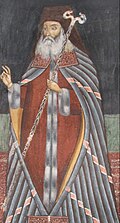 Anthim the IberianHieromartyr · Metropolitan of Ungro-WallachiaSep 27
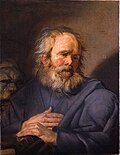 John MarkApostle · Companion of Paul and BarnabasSep 27
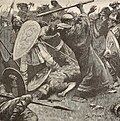 Sigebert of East AngliaRight-Believing · King of East AngliaSep 27
 Sabbatius of SolovkiVenerable · Co-founder of Solovki MonasterySep 27
 Zenas the LawyerApostle · Apostle of the SeventySep 27
 Caius of MilanSaint · Bishop of MilanSep 27
 Peter of KrutitsyHieromartyr · Metropolitan of KrutitsySep 27
- Flavian of AntiochSaint · Patriarch of AntiochSep 27
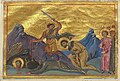 Callistratus of CarthageMartyrSep 27
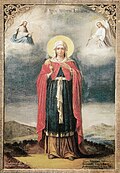 Aquilina of ZagliveriNew MartyrSep 27
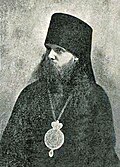 Herman KosolapovHieromartyr · Bishop of VolskSep 27
- AdheritusSaintSep 27